This glossary contains a list of 15 field-specific terms related to my field of study, which is health science.
antibody
noun
Antibodies are specialized, Y-shaped proteins produced by your immune system to find, bind to, and neutralize foreign invaders like bacteria, viruses, and toxins. They are also known as immunoglobulins.
Example: The body produces an antibody to help fight infections and protect itself against harmful viruses and bacteria.
fr: anticorps
atom
noun
An atom is the basic building block of matter and the smallest unit of a chemical element that retains its chemical properties.
Example: A water molecule is formed with two atoms of hydrogen and an atom of oxygen.
fr: atome
bacteria
noun
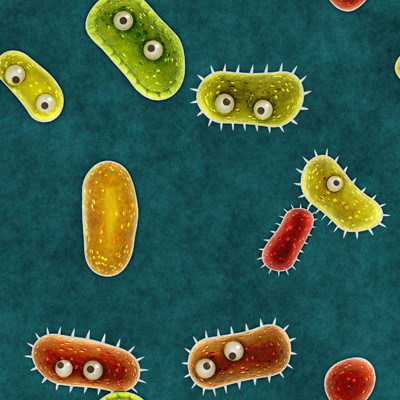
Bacteria are microscopic, single-celled prokaryotic organisms that lack a membrane-bound nucleus and reproduce independently through binary fission.
Example: Some bacteria can cause infections, while others help keep our bodies healthy.
fr: bactérie
biology
noun
Biology is the natural science that studies life, living organisms, and their physical and chemical processes.
Example: Biology is the course that all health science students must complete in order to graduate from cegep.
fr: biologie
cell
noun
A cell is the basic structural, functional, and biological unit of all known living organisms.
Example: The human body contains millions of cells.
fr: cellule
decay
verb
Decay refers to the slow process of breaking down, rotting, or declining in strength, health, or condition
Example: Bacteria help decay dead plants and animals, returning nutrients to the soil.
fr: pourriture
DNA
noun
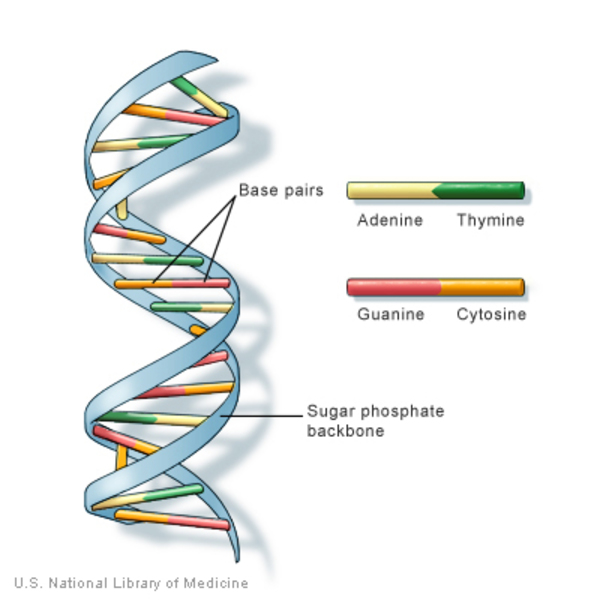
DNA (deoxyribonucleic acid) is the hereditary molecule that stores genetic instructions for the development, function, growth, and reproduction of all known living organisms.
Example: DNA contains the genetic information that determines many of our inherited characteristics.
fr: ADN
genetic
adjective
Genetic is an adjective that relates to genes, heredity, or the origin and development of something.
Example: Some diseases are caused by genetic mutations that can be passed down from parents to their children.
fr: génétique
metabolism
noun
Metabolism is the set of life-sustaining chemical reactions that happen inside living organisms to convert food into energy, build and repair tissues, and eliminate wastes.
Example: Metabolism is the process by which the body converts food into energy to function properly.
fr: métabolisme
organ
noun
An organ is a collection of different tissues joined together to form a structural and functional unit that performs a specific task in a multicellular organism.
Example: The heart is an important organ that pumps blood throughout the body.
fr: organe
organism
noun
An organism is any individual living system—such as a plant, animal, fungus, protist, bacterium, or archaeon—that can grow, reproduce, maintain internal stability, and respond to its environment.
Example: Every living organism needs energy and nutrients to survive and grow.
fr: organisme
pathogen
noun
A pathogen is any microscopic organism, agent, or particle—such as a virus, bacterium, fungus, or parasite—that can cause a disease or infection in a host.
Example: A pathogen is a microorganism or other infectious agent that can cause disease in humans, animals, or plants.
fr: pathogène
physician
noun
A physician (medical doctor) is a licensed healthcare professional who promotes, maintains, and restores health by diagnosing and treating injuries, illnesses, and diseases.
Example: The physician examined the patient carefully before diagnosing the illness and recommending treatment.
fr: médecin
vaccine
noun
A vaccine is a medical treatment that helps your body's immune system recognize and fight disease.
Example: A vaccine helps protect the body against certain diseases by training the immune system to recognize and fight pathogens.
fr: vaccin
virus
noun
A virus is a submicroscopic, infectious agent that consists of a segment of genetic material (DNA or RNA) enclosed in a protective protein coat called a capsid.
Example: A virus can infect living cells and cause illnesses such as the flu or the common cold.