Hi, my name is Adam Fettouchi, and I am studying Natural Sciences at Ahuntsic College. I made this glossary to help future electrical engineer understand scientific terms. It contains 15 words related to Electrical Engineer. Each word includes a simple definition, an audio pronunciation to help with correct pronunciation, and a short example sentence. Some words also include an image to make them easier to understand. This glossary will certainly be useful to those interested in the subject.
Conductivity
noun
A material's ability to allow heat, electricity, or sound to pass through it.
Example: Construction material is aluminium, CONDUCTIVITY 173 W/mK, cost £1.65/Kg.
fr: Conductivité
Derating
noun
Operating an electrical, electronic, or mechanical device below its maximum rated capacity to ensure safety, reduce heat stress, and prolong its lifespan.
Example: The device requires derating at high temperatures.
fr: Déclassement
Electromagnetic compatibility (EMC)
noun
The ability of electrical and electronic systems to function correctly in their shared environment without causing or suffering from unacceptable electromagnetic interference.
Example: The device has good EMC.
fr: Compatibilité électromagnétique (CEM)
Harmonics
noun
Frequencies that are whole-number multiples of a base frequency.
Example: Harmonics can affect power quality.
fr: Harmoniques
Impedance
noun
The total opposition that an electrical circuit presents to the flow of an alternating current (AC), combining both regular resistance and frequency-dependent reactance.
Example: The cable has high impedance.
fr: Impédance
Inrush current
noun
The maximum instantaneous input current drawn by an electrical device the exact moment it is first turned on.
Example: The motor has a high inrush current.
fr: Courant d'appel
Interoperability
noun
The ability of different products, systems, or devices to communicate, share data, and work together effectively.
Example: The systems have good interoperability.
fr: Interopérabilité
Mitigation
noun
The process or result of making something less severe, dangerous, painful, harsh, or damaging.
Example: Mitigation reduces electrical noise.
fr: Atténuation
Overvoltage
noun
A condition where the electrical voltage in a circuit or system rises above its normal, designed, or rated maximum limit.
Example: Overvoltage can damage the equipment.
fr: Surtension
Permittivity
noun
A material's ability to store electrical energy in an electric field.
Example: The material has high permittivity.
fr: Permittivité
Redundancy
noun
Having duplicate parts, components, or data so a system keeps working if one part fails.
Example: Redundancy improves system reliability.
fr: Redondance
Selectivity
noun
The quality or power of carefully choosing specific things, people, or signals while ignoring others.
The imaginary parts of electrical admittance that measures how easily alternating current (AC) flows through a reactive component like a capacitor or an inductor.
Example: The circuit has high susceptance.
fr: Susceptance
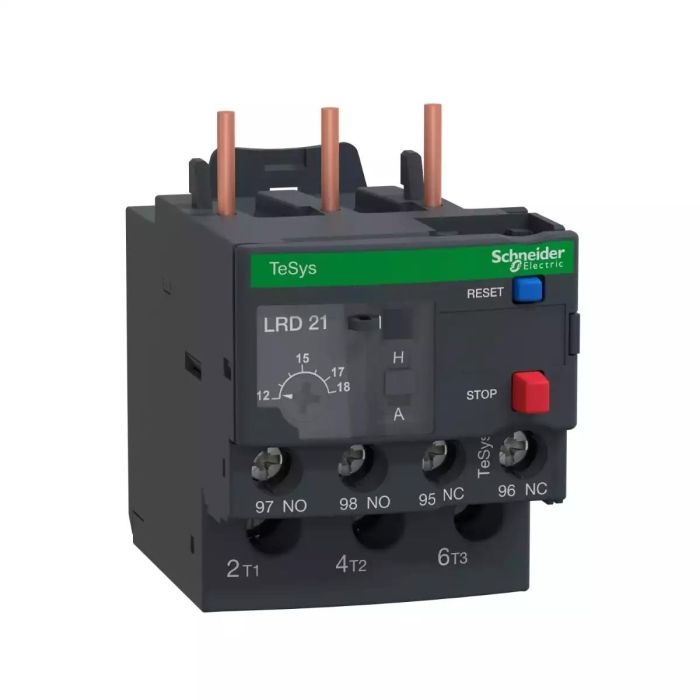
Thermal overload
noun
A hazardous condition in an electrical system—most commonly an electric motor—where excessive current flows for a prolonged period, generating heat that threatens to melt insulation and destroy equipment.
Example: Thermal overload can damage the motor.
fr: surcharge thermique
Transient
noun
Lasting for only a short time, temporary, or staying somewhere briefly before moving on.
Example: A transient can cause a sudden voltage spike.