This glossary provides a clear and concise overview of key terms used in psychology. It is designed to help students and readers understand fundamental concepts related to human behavior, mental processes, and emotional functioning. Covering topics such as learning, memory, personality, and social interaction, this collection serves as a useful reference for building a strong foundation in psychology.
Attention
Noun
Attention is the cognitive process of selectively concentrating on specific information while ignoring irrelevant stimuli, allowing the brain to manage limited mental resources. It acts as a filter to focus consciousness on particular objects, tasks, or ideas. It is critical for learning, memory, and decision-making.
Example: Thus we can see how the visual nature of cinema can help to represent just how different ancient Rome was to modern society, and can raise important historical questions by drawing ATTENTION to the fact that much of what made Roman society is lost to us, something that can be hard to do in literature.
en: Attention
Behaviorism
Noun
Behaviorism is a systematic approach to psychology focusing on objective, observable behaviors rather than internal mental states, positing that all behaviors are learned through environmental interactions (conditioning). It emphasizes that external stimuli and reinforcement shape actions, with key types including methodological and radical behaviorism.
Example: However, in the limited space provided, this essay examines how Cognitivism, BEHAVIORISM and Constructivism view the role of L1, input and output in SLA and analyzes how these key issues explain certain features of my learning of Persian such as the course-book design, grammar and vocabulary.
en: Behaviorisme
Classical Conditioning
Noun
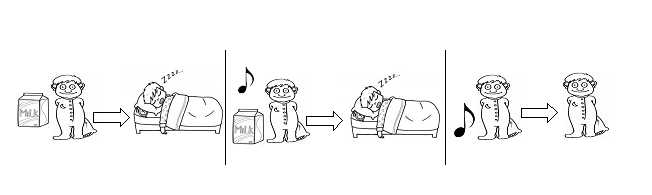
Classical conditioning, also known as Pavlovian or respondent conditioning, is an associative learning process where a previously neutral stimulus becomes associated with an automatic, involuntary biological response.
Example: Phobias are often explained as the result of CLASSICAL CONDITIONING, much like Pavlov's dogs.
en: Conditionnement classique
Cognition
Noun
Cognition refers to the mental processes involved in acquiring, storing, retrieving, and using knowledge and information. It encompasses all conscious and unconscious mental activities, including thinking, perception, attention, memory, and judgment, serving as the brain's mechanism for interacting with the world.
Example: Both versions consider space and time to be human intuitions, but the stronger version goes on to make a: "negative ontological claim about objects outside our COGNITION."
en: Cognition
Emotion
Noun
Emotion is a complex,, three-part reaction pattern—involving subjective experience, physiological arousal, and behavioral response—used to process significant life events. It is a conscious, intense feeling (e.g., joy, anger, fear) that serves to motivate, organize action, and deal with personally significant matters.
Example: In comparison, Stephen sees the lyrical form as simply 'an instant of EMOTION' (p.233), similar to the emphasis on sensations and emotional states at the beginning.
en: Émotion
Long-Term Memory
Noun
Long-term memory (LTM) is the brain's nearly permanent, high-capacity storage system for information, experiences, and skills, holding data for minutes to a lifetime. It moves information from short-term memory through consolidation, organizing it into conscious explicit memories (facts/events) or unconscious implicit memories (skills/behaviors).
Example: Patients with this disorder usually suffer from some retrograde amnesia as well, but their primary deficit is the inability to store any new information in LONG-TERM MEMORY.
en: Mémoire à long terme
Memory
Noun
Memory is the cognitive faculty of encoding, storing, and retrieving information, experiences, and skills over time to influence future action. It is essential for learning, personal identity, and navigating daily life, functioning through sensory, short-term, working, and long-term systems. It also refers to computer storage or a material's ability to return to a former state.
Example: It is clear the long small room is a MEMORY; this is implied by the phrase 'when I look back', as well as the fact that the first three quatrains are mainly in past tense.
en: Mémoire
Motivation
Noun
Motivation is the internal and external driving force that initiates, guides, and maintains goal-oriented behaviors. It is the psychological impetus—encompassing biological, emotional, social, and cognitive forces—that compels a person to act, sustain effort, and pursue objectives.
Example: Financial merit and non-financial recognition can improve employee MOTIVATION (this was not arranged in the 2001 restructure, resulting in discontent).
en: Motivation
Neuroplasticity
Noun
Neuroplasticity, or brain plasticity, is the brain's lifelong ability to reorganize its structure, functions, and neural connections in response to learning, experience, or injury. It enables the nervous system to continuously rewire itself, forming new neural pathways to adapt to new information, environmental changes, or recovery from damage.
Example: The brain’s NEUROPLASTICITY allows it to adapt and change in response to new experiences.
en: Neuroplasticité
Operant Conditioning
Noun
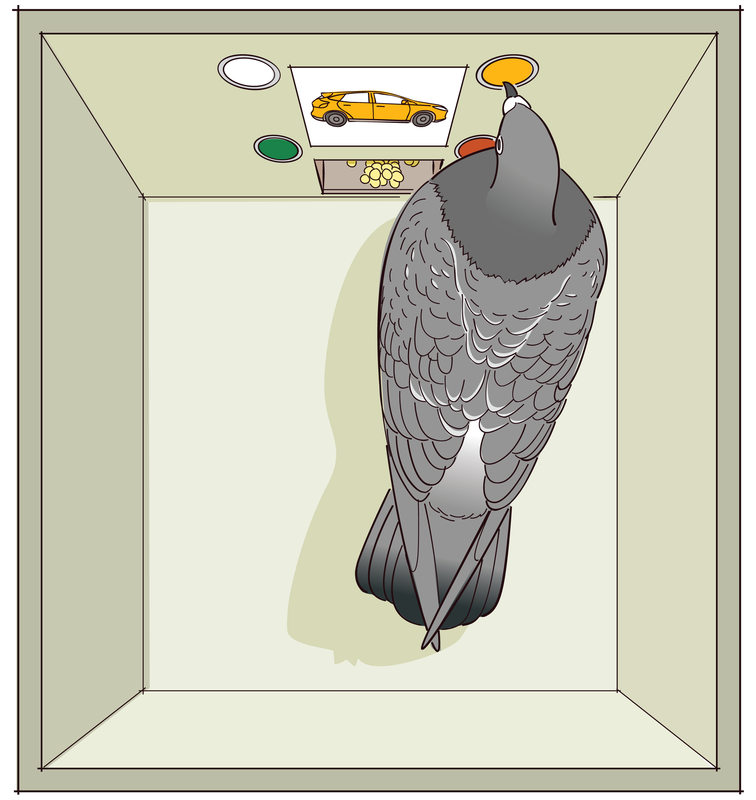
Operant conditioning is a learning method introduced by B.F. Skinner where voluntary behaviors are modified through reinforcement (reward) or punishment. It uses consequences to increase or decrease the likelihood of a behavior recurring, meaning actions followed by positive outcomes are repeated, while those followed by negative ones are not.
Example: It is a type of therapy that that combines classical conditioning and OPERANT CONDITIONING. Classical conditioning predicts the aversive event that will follow a certain behavior and OPERANT CONDITIONING "teaches" through negative reinforcement, how to prevent the event from occurring.
en: Conditionnement opérant
Perception
Noun
The neurophysiological processes, including memory, by which an organism becomes aware of and interprets external stimuli.
Example: Think of the grasping hands and feet which primates possess, and their convergent eyes which provide them with great depth PERCEPTION.
en: Perception
Punishment
Noun
The imposition of an undesirable consequence, pain, or penalty upon an individual or group in response to breaking rules, laws, or norms. It serves to enforce discipline, discourage behavior repetition, or provide retribution. Common forms include fines, incarceration, or loss of privileges.
Example: We have already seen the crime and PUNISHMENT of Lycaon, and he is shown to be rightly punished, his crime being something most people would find horrific.
en: Punition
Reinforcement
Noun
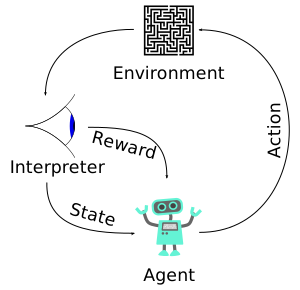
The process of encouraging or establishing a belief or pattern of behavior, especially by encouragement or reward.
Example: Classical conditioning predicts the aversive event that will follow a certain behavior and operant conditioning "teaches" through negative REINFORCEMENT, how to prevent the event from occurring.
en: Renforcement
Short-Term Memory
Noun
Short-term memory is the brain’s temporary storage system that holds limited information (roughly 3–7 items) for a very brief period, typically 15 to 30 seconds, without active rehearsal.
Example: They also help in sorting new information and are believed to be responsible for SHORT-TERM MEMORY.
en: Mémoire à court terme
Working Memory
Noun
Working memory is a cognitive system that acts as a temporary "mental workspace," holding and manipulating limited information for short periods.
Example: At the crux of a WORKING MEMORY, is the central executive which is the most significant and essential component.