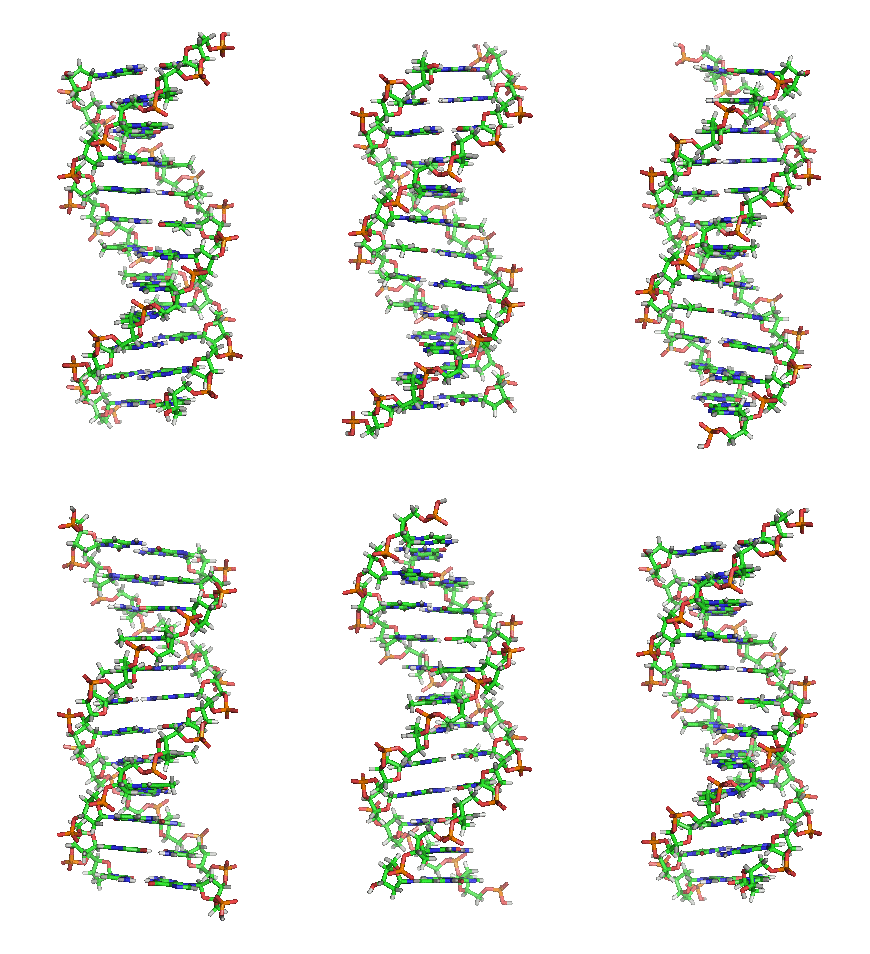
The primary molecule for storing and transferring energy in all living cells, often called the "energy currency" of life. It powers essential processes like muscle contraction, nerve impulses, and chemical synthesis by releasing energy through the hydrolysis of its phosphate.
Example: During photorespiration, ADENOSINE TRIPHOSPHATE (ATP) is used up and no sugar is produced.
en: adénosine triphosphate (ATP)
amino acid
noun
A simple organic compound containing both a carboxyl (—COOH) and an amino (—NH2) group.
Example: They are formed in a condensation reaction with amino acids: - source () And a peptide bond is formed between the carbonyl group of one AMINO ACID and the amino group of the other to form a polypeptide. Each AMINO ACID is specifically placed due to the action of translation which occurs in cells.
en: acide aminé
anabolism
noun
The synthesis of complex molecules in living organisms from simpler ones together with the storage of energy; constructive metabolism.
Example: The synthesis (ANABOLISM) and breakdown (catabolism) of most compounds occurs by a number of steps.
en: anabolisme
carbohydrates
noun
Carbohydrates are organic macronutrients made of carbon, hydrogen, and oxygen that serve as the primary energy source for the body.
Example: Some CARBOHYDRATES are digestible by humans and therefore provide an important source of energy, whereas others are indigestible and therefore do not provide energy.
en: glucides
catabolism
noun
The breakdown of complex molecules in living organisms to form simpler ones, together with the release of energy; destructive metabolism.
Example: The synthesis (anabolism) and breakdown (CATABOLISM) of most compounds occurs by a number of steps.
en: catabolisme
deoxyribonucleic acid (DNA)
noun
The primary hereditary molecule in almost all living organisms, residing in the cell nucleus to store genetic instructions for growth, development, and function.
Example: Factors in favour of mitochondrial and chloroplast endosymbiosis Mitochondria, chloroplast and hydrogenosomes contain own DNA1 (DEOXYRIBONUCLEIC ACID) Mitochondria and chloroplasts possess circular naked DNA without any histones 12 , similar to that in prokaryotes, which synthesise certain proteins in the respiratory chain.
en: acide désoxyribonucléique (ADN)
enzyme
noun
A substance produced by a living organism which acts as a catalyst to bring about a specific biochemical reaction.
Example: Lactose intolerance is believed to develop when milk is not consumed for a long period of time, some people then fail to produce the ENZYME lactase as the body believes the individual is weaned from breast milk and no longer needs the ENZYME.
en: enzyme
glycolysis
noun
The breakdown of glucose by enzymes, releasing energy and pyruvic acid.
Example: Pyruvate kinase is an enzyme involved in GLYCOLYSIS.
en: glycolyse
lipid
noun
Lipids are a diverse group of hydrophobic (water-insoluble) organic compounds, including fats, oils, waxes, and steroids, made primarily of carbon, hydrogen, and oxygen.
Example: It was concluded that the methods are generally reliable in determining protein, LIPID, water and mineral values in fish and meat.
en: lipide
macromolecule
noun
A molecule containing a very large number of atoms, such as a protein, nucleic acid, or synthetic polymer.
Example: Thus, vesicles were produced in which pieces of naked DNA of a sufficient length to generate specific MACROMOLECULE generating systems, were caught and incorporated.
en: macromolécule
metabolism
noun
Metabolism is the set of life-sustaining chemical reactions in cells that convert food into energy for breathing, circulating blood, and repairing cells. It involves two balanced processes: catabolism (breaking down nutrients to release energy) and anabolism (using energy to build components like muscles).
Example: They serve as the currency of protein nutrition and METABOLISM.
en: métabolisme
nucleotide
noun
A nucleotide is the fundamental building block (monomer) of nucleic acids like DNA and RNA.
Example: As the name suggests, GCAP activates guanylate cyclase (GC) that catalyses synthesis of cGMP from GTP supplied be the guanine NUCLEOTIDE cycle, which comprises guanylate kinase (GK) and nucleoside diphosphate kinase (NDPK).
en: nucléotide
oxidation
noun
A fundamental process involving the loss of electrons from a molecule, atom, or ion, often resulting in an increased oxidation state.
Example: Chemical changes that can be detected during freezing and frozen storage are protein denaturation, lipid OXIDATION, enzymic browning, flavour deterioration, and degradation of pigments and vitamins.
en: oxydation
protein
noun
Essential biomolecules (macromolecules) composed of one or more long chains of amino acids linked by peptide bonds.
Example: Yet this genome encodes less than 2% of the PROTEIN-coding genes in the bacterium E. coli .
en: protéine
ribonucleic acid (RNA)
noun
Ribonucleic acid (RNA) is a vital, typically single-stranded nucleic acid present in all living cells and some viruses, acting as a messenger and executor for DNA's genetic instructions. Composed of ribose sugar, phosphate, and bases (adenine, uracil, cytosine, guanine), RNA enables protein synthesis, regulates gene expression, and aids in cellular reactions.
Example: The largest or L-segment encodes an RNA polymerase transferred to the host during uncoating.