My name is Nassa Hadjed, and I am currently in my third year of Civil Engineering. I created this glossary to improve my technical English vocabulary related to road infrastructure, asphalt paving, and quality control in public works. As part of my academic training, I am preparing for an internship that I plan to continue abroad, where English will likely be the primary working language.
This glossary focuses on key terms used in pavement construction, including asphalt materials, layer thickness, compaction, and laboratory testing. Understanding these technical terms is essential for communicating effectively on construction sites, reading specifications, and interpreting quality control reports.
The glossary contains 15 specialized terms commonly used in paving operations and roadwork inspection. For each term, I included the part of speech, a clear definition, a translation, and an example sentence to show how the word is used in a professional context.
To create this glossary, I selected terms frequently used in civil engineering standards, technical manuals, and quality control procedures related to asphalt works. The definitions were based on engineering references and common industry terminology.
I invite readers to use this glossary as a study tool to strengthen their technical vocabulary and improve their professional communication skills in English, especially in the field of transportation infrastructure and public works.
Asphalt
Noun
A mixture of aggregates and bitumen used for road pavement construction.
Example: Edington and Edington quote the examples of ASPHALT - surfaced paths in the Rocky Mountain National Park of the USA, the use of limestone chippings on a bed of plastic sheeting to protect erosion - susceptible peat in the North York Moors National Park in the UK and the use of wood chips on paths along the shores of Derwent Water in the Lake District National Park.
en: Enrobé
Base Course
Noun
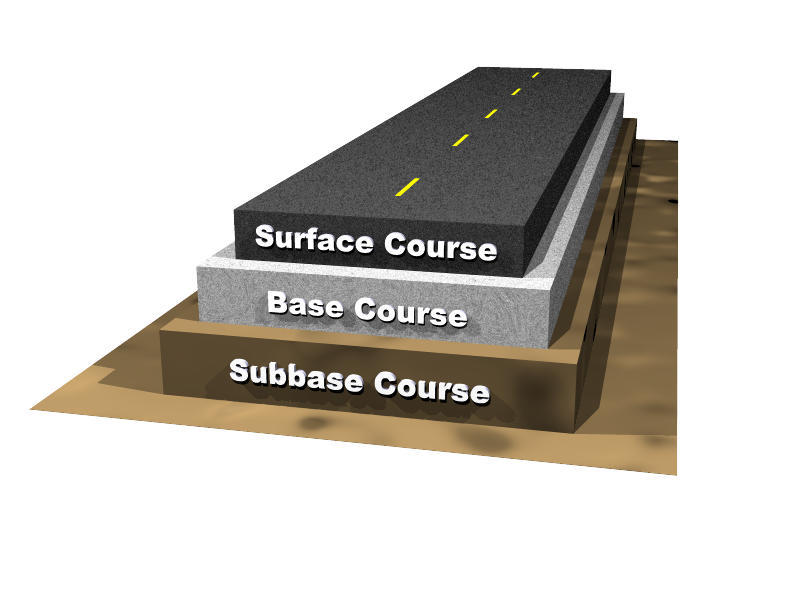
A base course is the structural layer of material (commonly crushed stone, gravel, or asphalt) placed directly beneath the wearing surface and above the subbase or subgrade in pavement construction. Its primary roles are to distribute traffic loads, provide drainage, and prevent frost damage to the road.
Example: The base course must be properly compacted before paving.
en: Couche de base
Bearing capacity
Noun
Bearing capacity is the maximum average contact pressure between a foundation and soil, representing the soil's ability to safely support structural loads without shear failure or excessive settlement. It ensures stability for structures, bridges, and roads by determining safe allowable pressures, typically measured in kilopascals (kPa)
Example: The geotechnical report indicates that the stiff clay has a high allowable bearing capacity, allowing for a spread footing design rather than deep piles
en: Capacité portante
Bitumen
Noun
Bitumen is a dense, highly viscous, and sticky form of petroleum, often called asphalt or tar, which acts as a heavy hydrocarbon binder
Example: He evidently considered that all pottery of that period was intended to be reduced black or grey, and thought that black burnished were actually coated with BITUMEN.
en: Bitume
Compaction
Noun
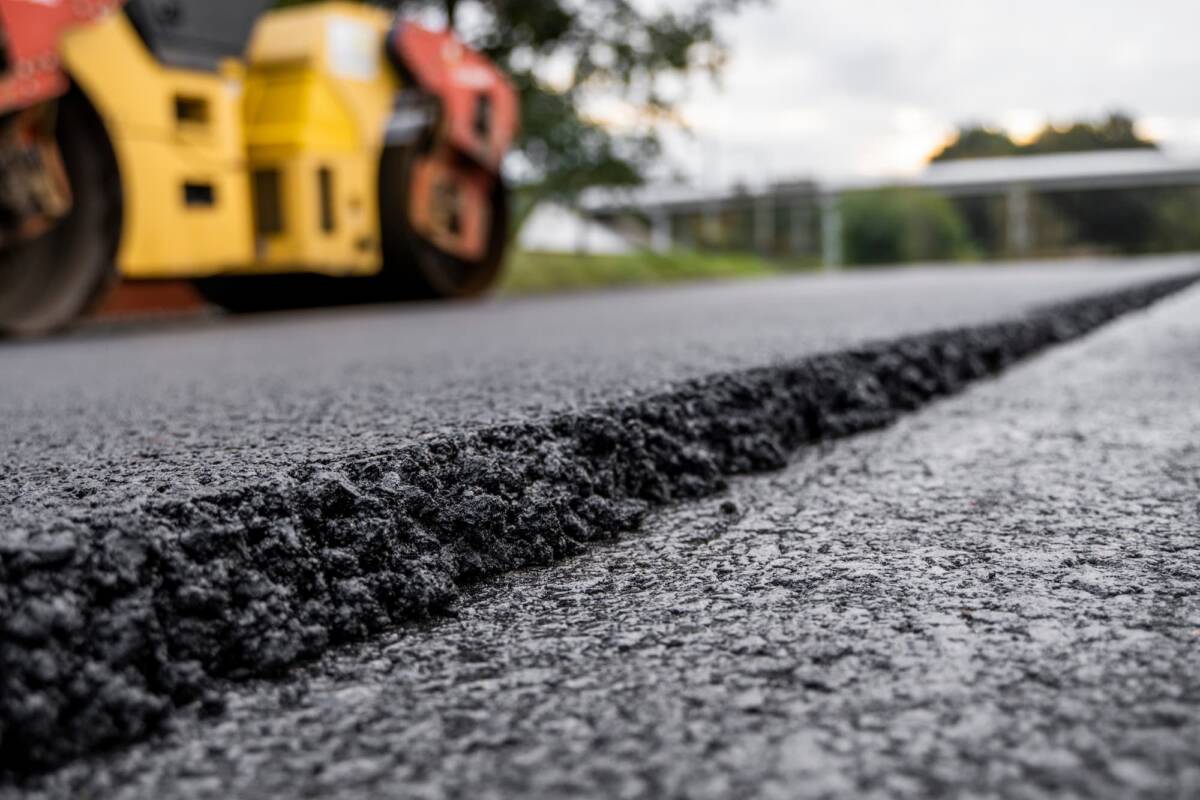
Compaction of asphalt is the critical, final mechanical process of applying force—usually via rollers—to newly laid hot mix asphalt to reduce air voids, increase density, and interlock aggregates. This crucial step ensures a durable, smooth, and load-bearing surface while preventing premature failure like cracking and rutting.
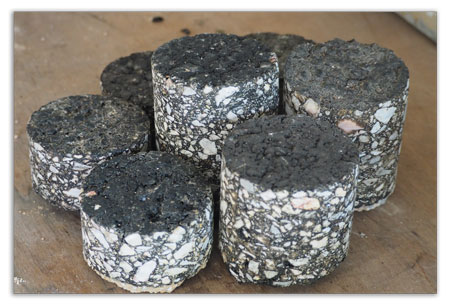
A core sample in civil engineering is a cylindrical specimen of material—typically concrete, rock, or soil—extracted from a structure or the ground using a rotary hollow core drill. It is used to analyze subsurface conditions, assess concrete strength, verify structural integrity, and identify composition flaws
Example: Before beginning the highway expansion, the geotechnical team analyzed several core samples of the subsurface rock to assess its load-bearing capacity.
en: Échantillon carotté
Density
Noun
In physics and chemistry, density is the ratio of an object's mass to its volume. It is an intrinsic property, meaning it doesn't change regardless of how much of the substance you have
Example: Density tests were performed on site.
en: Densité
Gradation
Noun
Gradation in civil engineering refers to the distribution of particle sizes within a sample of aggregate (like sand, gravel, or crushed stone), usually determined via sieve analysis to classify it as well-graded, poorly graded, or gap-graded. It is critical for maximizing density, minimizing air voids, and improving the strength, stability, and workability of concrete and asphalt.
Example: He found, for example, that cover values for vegetation, litter and bare ground were distinct between sites that had been moderately and severely affected with a less distinct GRADATION occurring between slightly and moderately disturbed sites, and that noticeable exposure of mineral soil occurred only after the vegetation cover was reduced by c. 40 per cent. Once this had happened, however, the soil was subject to compaction and crusting as well as erosion by sheetwash. At the most disturbed sites shrub and herb species were considerably reduced in density and diversity as the amount of bare ground, up to 45 per cent at some sites, in
en: Granulométrie
Layer thickness
Noun
Layer thickness is the vertical dimension of an individual material layer applied or deposited in manufacturing, construction, or coating processes. It is a critical parameter determining surface quality, structural integrity, and resolution, commonly measured in microns or millimeters
Example: The layer thickness must comply with project specifications
en: épaisseur de pose
Milling
Noun
Milling in civil engineering, often called pavement milling or cold planing, is the precise removal of a top layer of asphalt or concrete from roads, bridges, or parking lots using specialized machinery. It is primarily used to restore surfaces to a uniform, level condition, remove irregularities, and prepare for resurfacing without total demolition
Example: The city department initiated a milling project to remove the top two inches of worn-out asphalt, creating a smooth, clean surface for the new pavement overlay, as detailed in the Facebook post.
en: Planage
Pavement structure
Noun
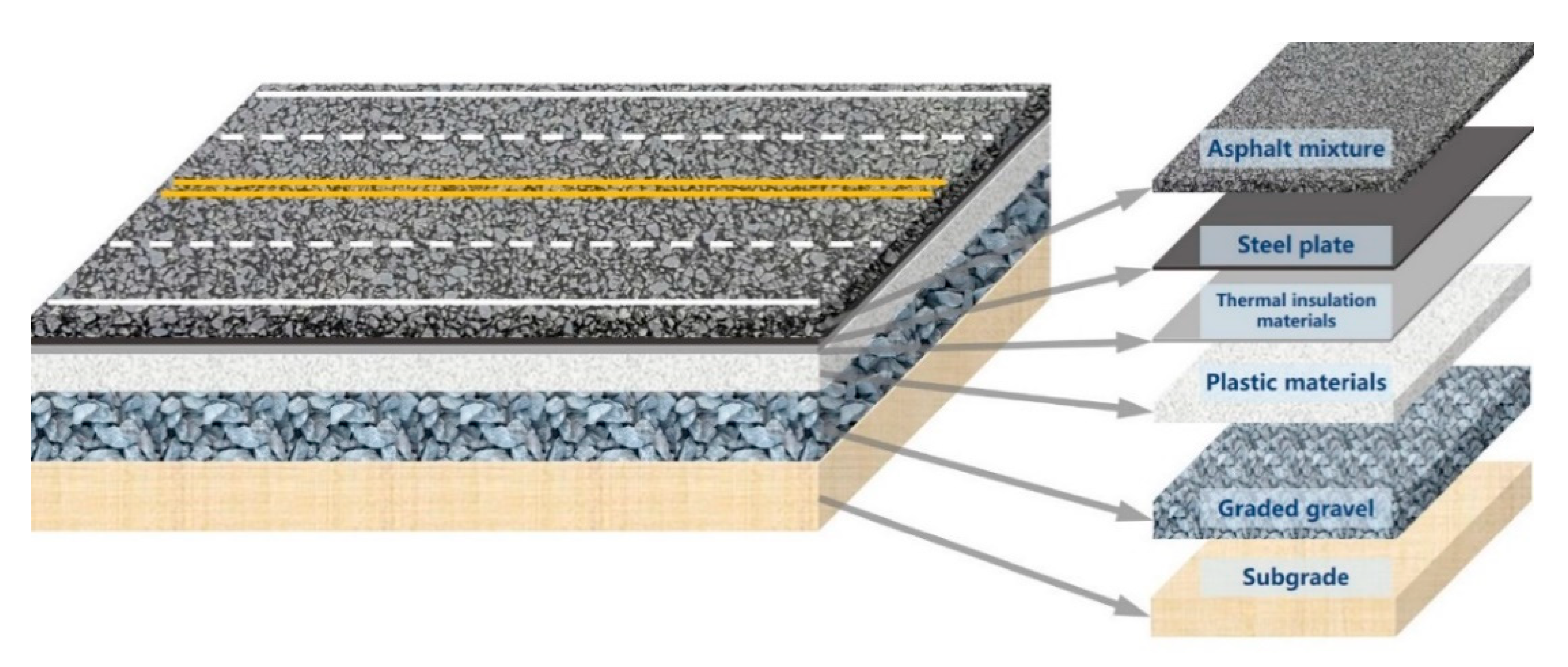
A pavement structure is a typically multi-layered, engineered system constructed on a natural or improved soil foundation (sub grade) to support vehicular or foot traffic. It comprises layers—including surface, base, and sub base courses—designed to distribute heavy loads, providing a durable, stable, and smooth driving surface
Example: The pavement structure was designed for heavy truck traffic.
en: Structure de chaussée
Paver
Noun
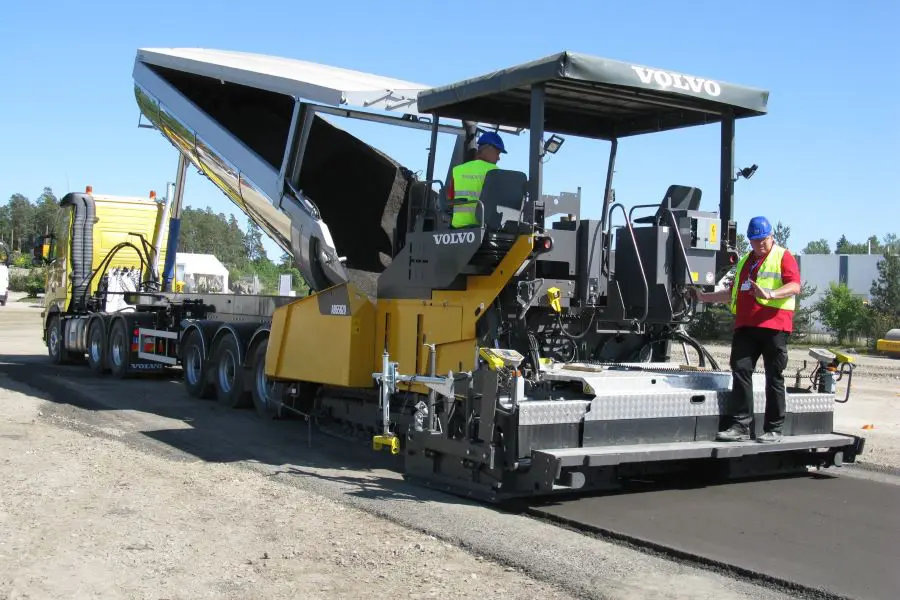
In civil engineering, a paver refers to either a machine (asphalt finisher) or a material unit (concrete/stone block) used to create durable surfaces. Paver machines lay, spread, and compact asphalt or concrete, while material pavers create aesthetic, interlocking, or flexible paved surfaces for roads, driveways, and walkways
Example: The asphalt paver operated continuously, spreading a uniform, 50mm-thick layer of hot mix asphalt across the new highway lane
en: Paveuse ou finisseur
Quality Control
Noun
Quality control (QC) in civil engineering is a product-oriented, reactive process of inspecting and testing materials, workmanship, and completed structures to ensure they meet specified design standards, safety codes, and client requirements. It focuses on identifying and correcting defects during construction to prevent failures and minimize costly rework
Example: Option 3: Improve quality Rework, scrap and all kinds of defects have negative effect in productivity, so quality improvement is a significant method for increasing production capacity. we can employ some advanced QUALITY CONTROL methods such as six sigma.
en: Contrôle qualité
Roller compactor
Noun
A road roller (or roller compactor) is a heavy, self-propelled construction vehicle with massive, wide steel drums or rubber tires, designed to compress, flatten, and compact materials like soil, gravel, concrete, or asphalt. These machines are crucial for strengthening, smoothing, and stabilizing roadbeds, foundations, and landfill sites.
Example: The contractor used a vibratory road roller to compact the soil
en: Rouleau compacteur
Tack Coat
Noun
A tack coat is a light, adhesive application of asphalt emulsion or cutback asphalt sprayed between pavement layers—such as old asphalt and a new overlay—to act as a bond. It ensures the layers function as a single, monolithic unit, preventing slippage, reducing cracking, and extending pavement life
Example: The contractor applied a uniform tack coat of emulsified asphalt at a rate of 0.05 gallons per square yard to the milled surface, ensuring proper bonding between the old pavement and the new surface course.