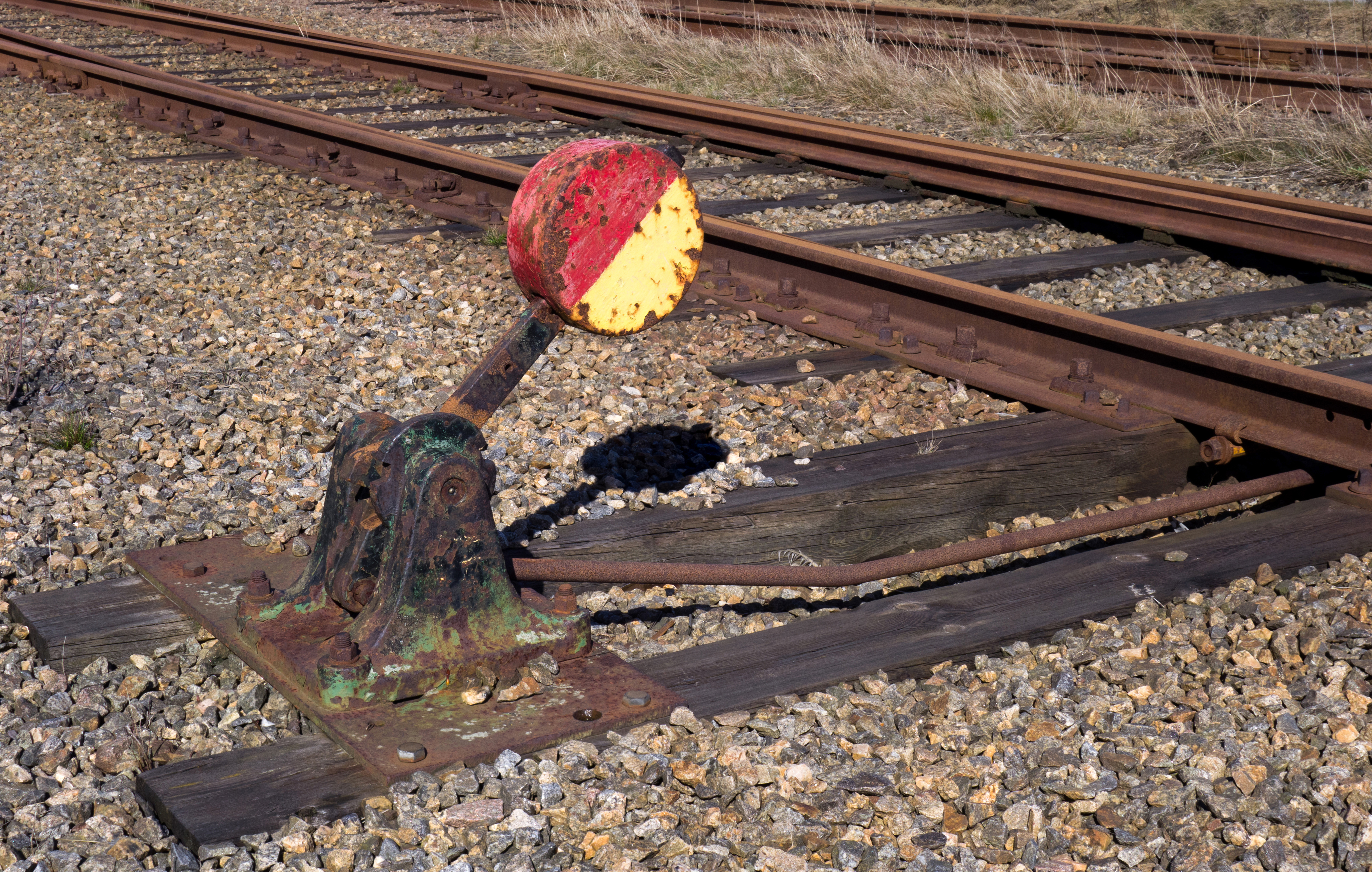
This is a glossary defining 15 terms related to the vast field of mechanical engineering. The terms are mostly about concepts such as branches of science, tools or objects used in mechanical engineering. Translations and images are included to make the understanding of the terms easier.
alloy
noun
A metal made by combining two or more metallic elements, especially to give greater strength or resistance to corrosion.
Example: During cooling, the molten ALLOY transforms at approximately 600C, a Liquid + phase begins to form.
en: alliage
axle
noun
A rod or spindle (either fixed or rotating) passing through the center of a wheel or group of wheels.
Example: The cylinders were moving to and fro simultaneously to create motion to the rear AXLE by transmitting through connecting rods.
en: essieu
ball bearing
noun
A bearing between a wheel and a fixed axle, in which the rotating part and the stationary part are separated by a ring of small solid metal balls that reduce friction.
Example: The BALL BEARING assembly was lubricated to reduce friction and extend the lifespan of the rotating shaft.
en: roulement à billes
conveyor belt
noun
A continuous moving band of fabric, rubber, or metal used for moving objects from one place to another.
Example: You put your luggage on the CONVEYOR BELT and are asked if your luggage has anything dangerous or if someone has asked you to carry something.
en: tapis roulant
cylinder
noun
A solid geometric figure with straight parallel sides and a circular or oval cross section.
Example: Advantage of compressing the air was more air could be squeezed into a CYLINDER, hence more fuel could be added and more power could be obtained from each explosion in each CYLINDER.
en: cylindre
diameter
noun
A straight line passing from side to side through the center of a body or figure, especially a circle or sphere.
Example: To the east, a small stone feature, measuring only 45 cm in DIAMETER, had been constructed in the area between the grave and the dwellings.
en: diamètre
kinetic energy
noun
Kinetic energy is the form of energy an object possesses due to its motion, representing the work needed to accelerate it from rest to a specific speed.
Example: Cars move by converting the chemical energy stored in petrol to KINETIC ENERGY.
en: énergie cinétique
lever
noun
A rigid bar resting on a pivot, used to help move a heavy or firmly fixed load with one end when pressure is applied to the other.
Example: The use of two levers The use of an extra LEVER positioned on the opposite side of the wheel system can be incorporated to allow double the amount of manual work produced.
en: levier
metallurgy
noun
The branch of science and technology concerned with the properties of metals and their production and purification.
Example: Native copper was collected and hammered like stone which implies that early METALLURGY was not technologically revolutionary.
en: métallurgie
physics
noun
The branch of science concerned with the nature and properties of matter and energy. The subject matter of physics, distinguished from that of chemistry and biology, includes mechanics, heat, light and other radiation, sound, electricity, magnetism, and the structure of atoms.
Example: In his first speech he illustrates his extensive reading and knowledge in logic, PHYSICS, law and theology.
en: physique
piston
noun
A disk or short cylinder fitting closely within a tube in which it moves up and down against a liquid or gas, used in an internal combustion engine to derive motion, or in a pump to impart motion.
Example: Horsepower can be increase by increasing the PISTON's bore and decreasing the size of cylinders as these will improve the volumetric efficiency of the engine.
en: piston
prototype
noun
A first, typical or preliminary model of something, especially a machine, from which other forms are developed or copied.
Example: The first stage of the development was to make a PROTOTYPE in Microsoft Visual Basic.
en: prototype
thermodynamics
noun
The branch of physical science that deals with the relations between heat and other forms of energy (such as mechanical, electrical, or chemical energy), and, by extension, of the relationships between all forms of energy.
Example: The second law of THERMODYNAMICS states that the heat will flow from hotter regions to colder regions, thus dispersing he heat through the product.
en: thermodynamique
torque
noun
A twisting force that tends to cause rotation.
Example: Rally engine should have an extremely high TORQUE, extremely high horsepower, high acceleration, long life span and high operational temperature in order to maintain the car under safety condition as well as effectively operated.
en: couple
velocity
noun
The speed of something in a given direction.
Example: As the fluid looses energy, its VELOCITY decreases, and exits at the central openings of the disks.