Good evening, my name is Aisha Mohammad. I live in Laval and frequent Montmorency College where I study chemistry. I have made a glossary, hoping that it would be useful for students in the same field of study as me. It also will be great help for future upcoming students. I have specifically chosen words that I have used so far this semester during my classes. They are basic words we have been using since the beginning of semester. They are the most common and useful words used in chemistry. This glossary provides information about the various aspects studied in chemistry, which can be very helpful for the general knowledge of new students. By learning the meaning behind these concepts, students can learn with more ease. It is also very important to remember the meaning behind the words for future use. They are the most commonly used terms.
acid
Noun
A substance that donates hydrogen ions (H^+) in solution, typically having a pH less than 7.
Example: The mixture is an acid
fr: Acide
analysis
noun
The process of breaking a complex topic or substance into smaller parts to gain a better understanding of it.
fr: analyse
Atome
noun
The fundamental unit of matter and the smallest unit of an element that retains its chemical properties.
Example: An atome is very small
fr: atome
base
Noun
: A substance that accepts hydrogen ions or donates hydroxide ions (OH^-) typically having a pH greater than 7.
Example: When the mixture is a base the red litmus turns blue
fr: Base
density
Noun
The ratio of an object's mass to its volume.
Example: The density of a substance is the relationship between the mass of the substance and how much space it takes up (volume).
fr: Densité
electron
noun
A stable subatomic particle with a negative electric charge, found in the space surrounding the nucleus.
Example: An electron is a subatomic particle with a negative electric charge that orbits the nucleus of an atom.
fr: électron
energy
Noun
The quantitative property that must be transferred to an object in order to perform work on, or to heat, the object.
Example: Household energy usage is dominated by heating and cooling systems
fr: Énergie
erlenmeyer flask
Noun
A cone-shaped laboratory flask with a flat bottom and narrow neck used for mixing and heating liquids.
Example: The Erlenmeyer is used to mix substances
fr: Erlenmeyer
gas
Noun
A state of matter with no fixed shape or volume, expanding to fill any available space.
Example: The mixture is a gas
fr: Gaz
isotopes
Noun
Atoms of the same element that have the same number of protons but different numbers of neutrons.
Example: Isotope when the same atom can have two different atomic numbers
fr: isotope
laboratory
noun
A controlled facility that provides suitable conditions in which scientific or technological research, experiments, and measurement may be performed.
Example: The laboratory is where we do experiences
fr: laboratoire
liquid
Noun
A state of matter with a definite volume but no fixed shape, adapting to the shape of its container.
Example: The mixture is a liquid
fr: Liquide
mixture
Noun
A material made up of two or more different substances which are physically combined but not chemically bonded.
Example: The mixture is composed of NaOH and water
fr: Mélange
molecule
Noun
: A group of two or more atoms chemically bonded together, representing the smallest fundamental unit of a chemical compound.
Example: The molecule of water is consisted of two molecules of hydrogen, and one molecule of oxygen
fr: Molécule
nucleus
Noun
The small, dense, positively charged center of an atom containing protons and neutrons.
Example: scopy to be a NUCLEUS
fr: Nucléon
Proton
noun
A stable subatomic particle occurring in all atomic nuclei, with a positive electric charge equal in magnitude to that of an electron, but of opposite sign.
Example: Protons are always the same number
fr: Proton
reaction
Noun
A chemical process in which substances (reactants) are transformed into different substances (products) by breaking and forming chemical bonds.
Example: The reaction is not what we expected.
fr: Réaction
research
The systematic investigation into and study of materials and sources in order to establish facts and reach new conclusions.
The systematic investigation into and study of materials and sources in order to establish facts and reach new conclusions.
Example: Before working on something I do it’s research
fr: Recherche
solid
Noun
A state of matter characterized by structural rigidity and resistance to changes in shape or volume.
Example: The mixture is a solid
fr: Solide
solution
Noun
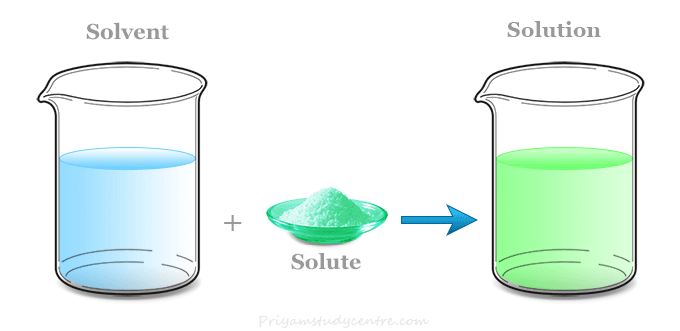
A homogeneous mixture where one substance (the solute) is dissolved uniformly into another (the solvent).