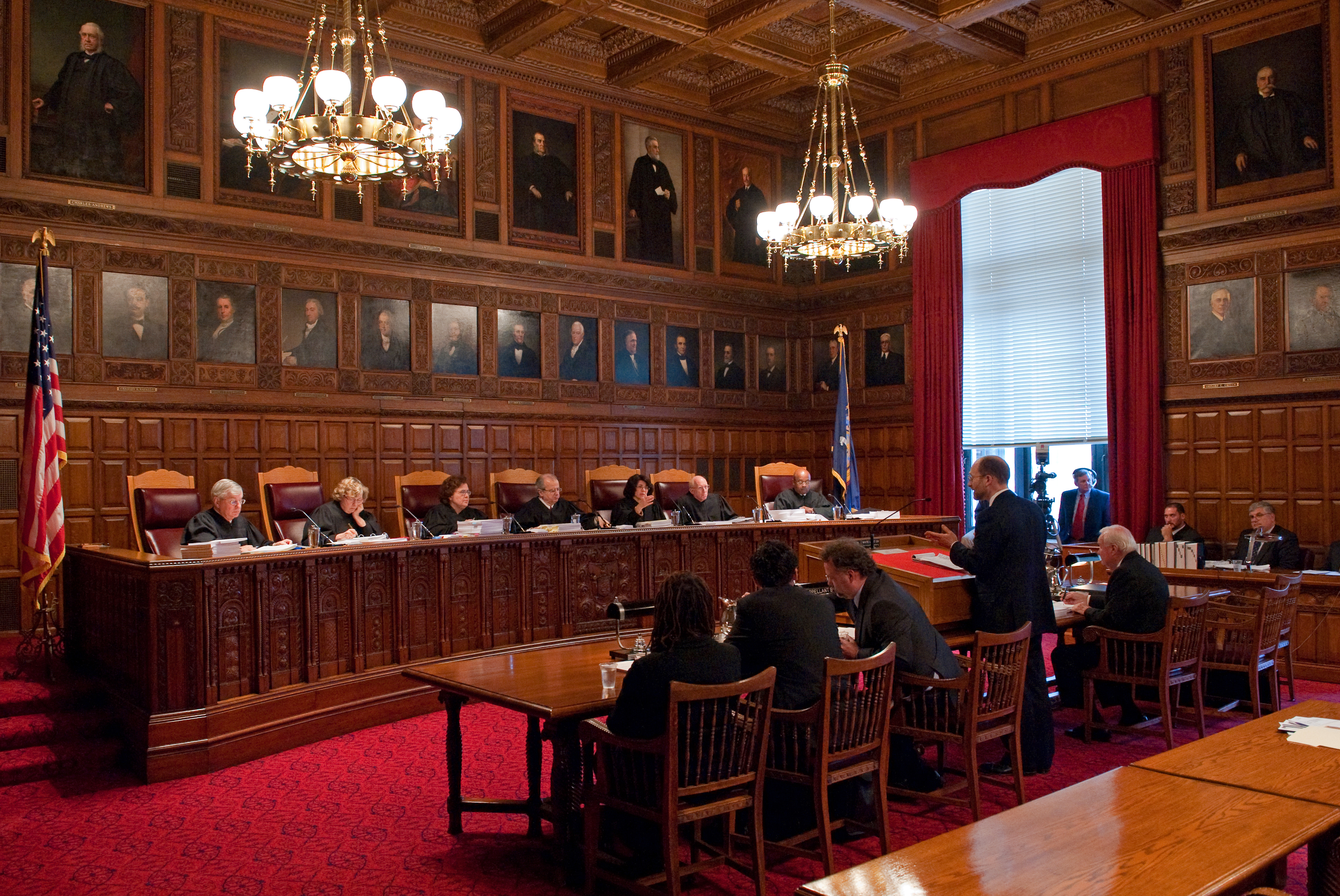
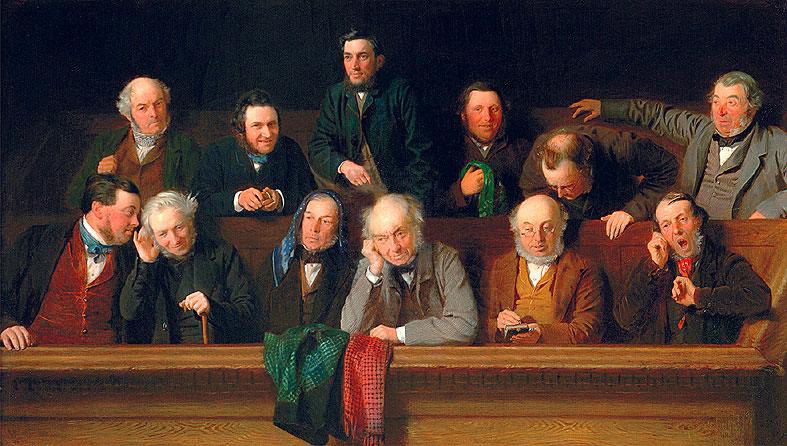
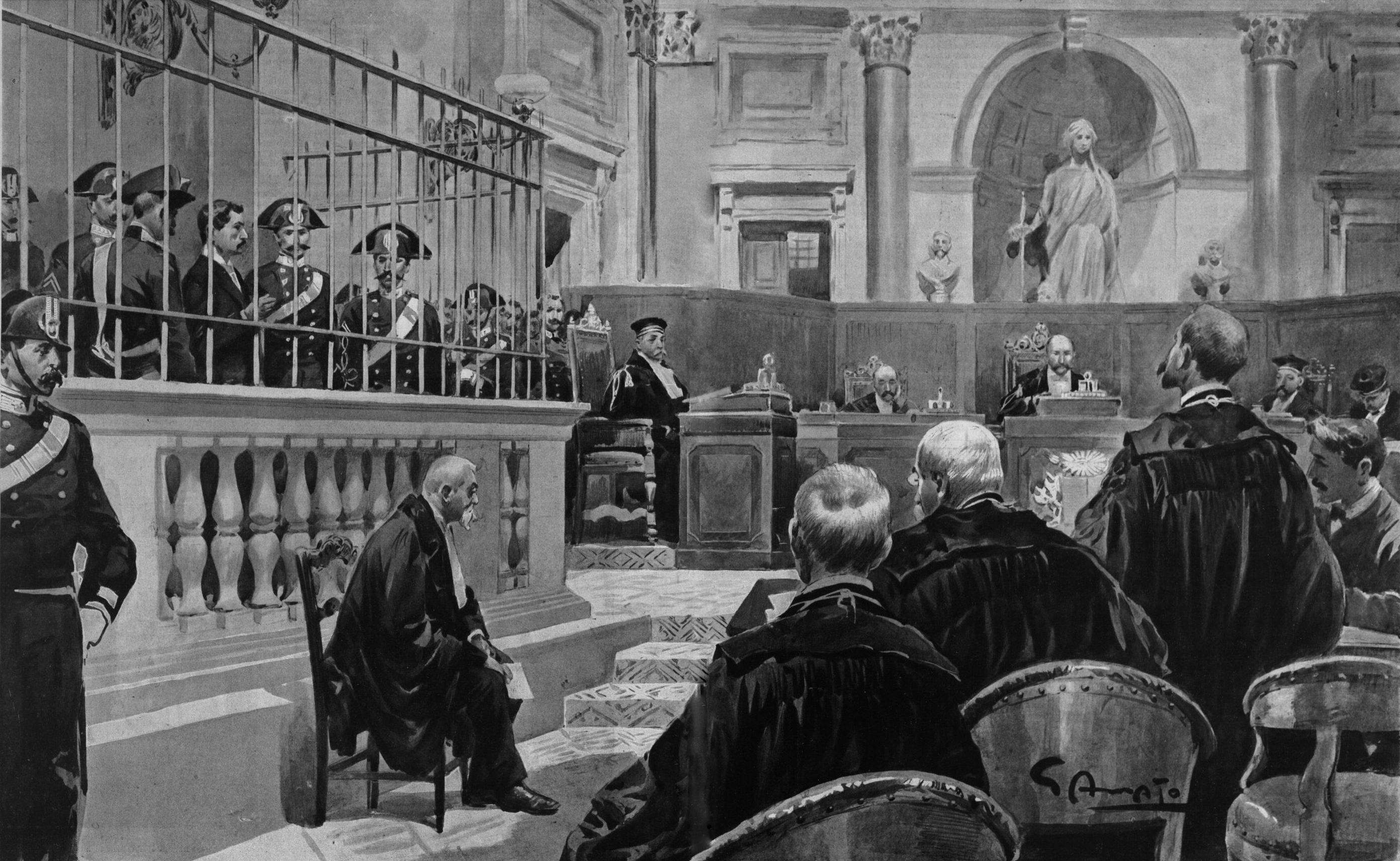
This glossary's purpose is to help people wherever they are in the world to understand essential terms used in the field of law by presenting their definitions. These terms are commonly employed during court procedures and in the daily practice of lawyers.
acquit
verb
Free (someone) from a criminal charge by a verdict of not guilty.
Example: Bodkin Adams , the judiciary directed the jury to ACQUIT a doctor for increasing dosage of medication which resulted in the death of an elderly stroke patient.
en: acquitter
adjournment
noun
The temporary suspension or postponement of a court proceeding, trial, or hearing to a future date, time, or location.
Example: Ibid per Collins J at p 282 Sufficient protection was guaranteed by the possibility of an ADJOURNMENT to give the defendant an opportunity to meet the case.
en: ajournement
brief
noun
A written document submitted to a court that argues a party's legal position, outlining facts, issues, and precedents to persuade a judge to rule in their favor.
Example: The petitioner’s counsel submitted an appellate brief outlining three key errors made by the trial court regarding the admissibility of evidence.
en: dossier
codification
noun
The action or process of arranging laws or rules according to a system or plan.
Example: Since the predominant CODIFICATION of IHL following the Second World War, the landscape of armed conflict has altered significantly in response to technological, political and societal change.
en: codification
conflict of Interest
noun
Situations where an individual’s personal interests—financial, social, or familial—conflict with their professional duties or loyalty to a client, employer, or the public.
Example: This case does certainly not apply to Fionas' case, but it is useful to show up an extreme example of CONFLICT OF INTEREST.
court
noun
A tribunal presided over by a judge, judges, or a magistrate in civil and criminal cases.
Example: Nonetheless, 'the most detailed information we have about ordinary marriages comes from the histories of marriages that went seriously wrong and ended up in COURT'.
en: tribunal
decree
noun
An official order issued by a legal authority.
Example: In any event, most problems would only arise when our imaginary "island in the rain" tried to enforce its overtly far-reached tax statute abroad - for, until that moment, the content of such an extraordinary DECREE may be ignored by most of its targets.
en: décret
injunction
noun
A judicial order that restrains a person from beginning or continuing an action threatening or invading the legal right of another, or that compels a person to carry out a certain act, e.g., to make restitution to an injured party.
Example: In Gilford Motor Co v Horne , the Court of Appeal lifted the corporate veil by allowing an INJUNCTION against both the defendant and his newly established company, because the only purpose of the company was to enable the defendant to defeat the terms of his restrictive covenant from his former employers.
en: injonction
judicial review
noun
Review by the US Supreme Court of the constitutional validity of a legislative act.
Example: Since the school panel had the authority to make the decision, it would have been immune from JUDICIAL REVIEW.
en: contrôle judiciaire
jurisdiction
noun
The official power to make legal decisions and judgments.
Example: However it is to be reminded that international criminal law is not solely concerned with the ICC JURISDICTION; it includes the domestic courts where prosecutions are established through the principle of complementarity and various principles of JURISDICTION such as universal JURISDICTION.
en: juridiction
jurisprudence
noun
The philosophy, theory, and science of law, focusing on the fundamental principles, reasoning, and, in some contexts, the body of case law precedents.
Example: Liberalism neglects the stare decisis requirement of "a separation of the social role from the functional impact of the decision-making process" This criticism is applicable to Dworkin's theory which does not extricate the social role from JURISPRUDENCE.
en: jurisprudence
jury
noun
A body of people (typically twelve in number) sworn to give a verdict in a legal case on the basis of evidence submitted to them in court.
Example: The JURY's understanding of the law is the most important consideration when deciding whether law has achieved its desired effect and if the defendant is actually disadvantaged. It is notoriously difficult to gauge the weight given to evidence by the JURY.
en: jury
legislature
noun
The legislative body of a country or state.
Example: It must be renewed every five years unless it is enacted permanently by a provincial LEGISLATURE.
en: corps législatif
litigation
noun
The formal process of resolving disputes between parties through the public court system, rather than through alternative methods like mediation or negotiation.
Example: Similarly in Appleson v Littlewoods it was stated that a competition was not to be "legally enforceable or be subject of LITIGATION.".
en: litige
mediation
noun
Is a voluntary, confidential, and non-binding alternative dispute resolution (ADR) process where an impartial third party (the mediator) helps disputing parties negotiate a mutually acceptable settlement.
Example: The very essence of EU decision-making is MEDIATION "between diverging nations' positions...looking for a consensus.".
pleading
verb
A formal statement of the cause of an action or defense.
Example: This Paper attempts to critically examine the concept of BWS in PLEADING provocation as a partial defence to murder and whether it applies to all women or based on a euro-centric notion of passive, weak, fearful, white middle class victim of domestic violence while locating it in the larger context of sexual divisions in law.
en: plaidoirie
precedent
noun
Principle or rule established in a previous legal case that binds or guides courts in subsequent, similar cases, forming the basis of common law systems.
Example: Nothing but a mine below it on a busy day in term time, with all its records, rules and precedents collected in it..." and also at Chapter 39, "Chancery, which knows no wisdom but in PRECEDENT, is very rich in such Precedents; and why should one be different from ten thousand?".
en: précédent
presumption of innocence
A fundamental legal principle in criminal law, holding that every person accused of a crime is assumed innocent until proven guilty beyond a reasonable doubt in a fair trial.
Example: However in principle the right to silence remained intact until the creation of the Criminal Justice and Public Order Act 1994, forming the basis of the current law, arguably destroying the right to silence and eroding the principle of the PRESUMPTION OF INNOCENCE.
en: présomption d'innocence
repeal
noun
The action of revoking or annulling a law or congressional act.
Example: Ritain could choose to REPEAL the European Communities Act (1972).
en: abrogation
statute
noun
A written law passed by a legislative body.
Example: Opening a new area for tribunals of this nature, Article 4 of the ICTR STATUTE enables the prosecution of persons who commit or order to be committed serious violations of Article 3 common to the Geneva Conventions and of Additional Protocol II during to armed conflict not of an international character, meaning, therefore, that purely internal conflicts are no longer beyond the ambit of international criminal law.
en: loi
trial
noun
A formal examination of evidence before a judge, and typically before a jury, in order to decide guilt in a case of criminal or civil proceedings.
Example: In other words, while the two murders committed in the first two plays rather appears as wild animals killing each other, the dominant image in the third play is the court and TRIAL, which is exclusively human activity and has no room for animals to be involved.