This glossary was created to explain important vocabulary related to the career of an orthopedic surgeon. As a "Natural Sciences" student, I am interested in pursuing a career in medicine, more specifically in orthopedic surgery. This field focuses on the system, including bones, joints, ligaments, and muscles.
I decided to create this glossary because I want to better understand the terminology used in this profession. After going through meetings with my orthopedic surgeon and experiencing knee surgery, I became more interested in this career path. Learning these key terms helps me connect my personal experience with my academic goals and future studies in medicine.
anesthesia
noun
Anesthesia is the use of medications called anesthetics to temporarily block sensations, including pain, during medical procedures or surgery.
Example: Local ANESTHESIA has the advantage of allowing direct evaluation of the patient's neurologic status without sophisticated monitoring.
fr: anesthésie
anterior cruciate ligament
phrase
The anterior cruciate ligament (ACL) is a key stabilizer inside the knee joint, connecting the femur (thighbone) to the tibia (shinbone). It acts as a strong band that prevents the tibia from sliding too far forward and provides rotational stability. ACL injuries are common in sports involving pivoting, jumping, or sudden stops.
fr: ligament croisé antérieur
arthroscopy
noun
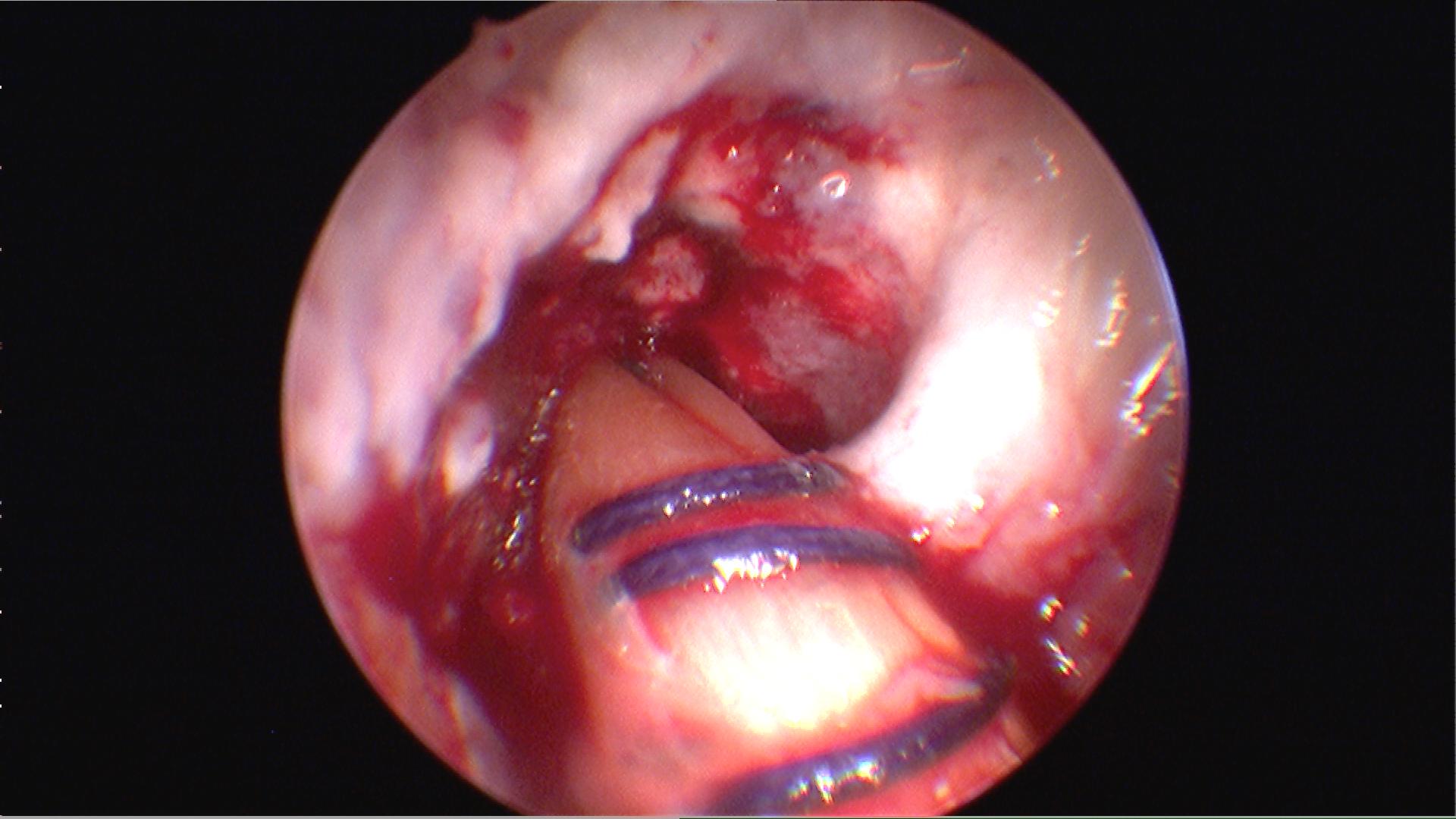
Arthroscopy is a minimally invasive surgical procedure, often called keyhole surgery, used by orthopedic surgeons to visualize, diagnose, and treat joint problems.
Example: He thinks a similar thing happened on his right foot after he had an ARTHROSCOPY 12 months ago.
fr: arthroscopie
bio mechanics
noun
Biomechanics is the study of the structure, function, and motion of biological systems—from cells to whole organisms—by applying the principles of physics and engineering.
Example: The running coach analyzed the athlete’s bio mechanics to prevent knee injuries and improve speed.
fr: biomécanique
cartilage
noun
Irm, whitish, flexible connective tissue found in various forms in the larynx and respiratory tract, in structures such as the external ear, and in the articulating surfaces of joints. It is more widespread in the infant skeleton, being replaced by bone during growth.
Example: The crystals are initially deposited in the CARTILAGE - chondrocalcinosis - where they are associated with degenerative changes.
fr: cartilage
diagnosis
noun
The identification of the nature of an illness or other problem by examination of the symptoms.
Example: As mentioned before the presents of raised electrolyte concentrations is an important part of DIAGNOSIS.
fr: diagnostic
dislocation
noun
Injury or disability caused when the normal position of a joint or other part of the body is disturbed.
Example: The leg would not appear like this if the injury was an anterior or posterior DISLOCATION, although this type of injury is impossible from a fall and needing a significant force such as a car crash for this to occur.
fr: dislocation
fracture
noun
The cracking or breaking of a hard object or material.
Example: The x-ray AP and Lateral views show a comminuted transverse type FRACTURE through the mid to distal third of the right tibia and fibula.
fr: fracture
graft
noun
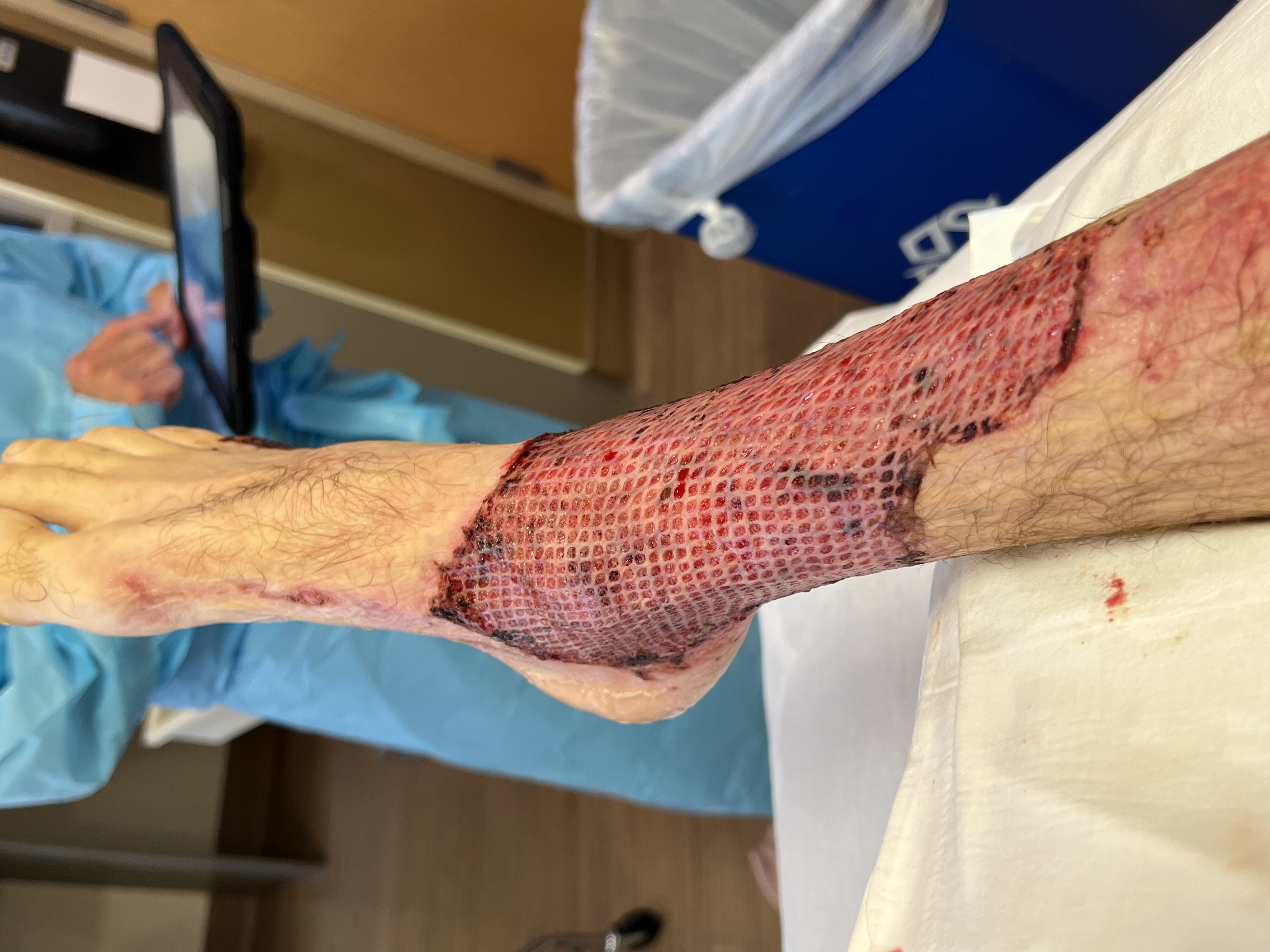
A piece of living tissue that is transplanted surgically.
Example: This will be followed by a skin GRAFT. He hopes that it will not take long for the GRAFT to heal and then he will be able to start working again.
fr: greffer
inflammation
noun
Inflammation is the body’s natural immune system response to infection, injury, or toxins, aimed at protecting and healing tissues.
Example: Asthma is a common inflammatory condition of the airways, characterised by 3 pathological processes: airflow limitation - usually reversible spontaneously or with treatment airway hyperresponsiveness - to a wide range of stimuli e.g. cold air, exercise, emotions. bronchial INFLAMMATION - involves mast cells, eosinophils, macrophages and lymphocytes. INFLAMMATION results in remodelling of both bronchiolar structure and function.
fr: inflammation
ligament
noun
A short band of tough, flexible fibrous connective tissue which connects two bones or cartilages or holds together a joint.
Example: There may be some joint instability with LIGAMENT capsular injuries. Moderate muscle spasm may result as a reflex response to both ligamentous capsular injuries and muscle injuries. Due to the tearing of some fibres, there is a decrease in the tensile strength of LIGAMENT capsule or a decrease in the contractile strength of muscle, both of which cause interference with function.
fr: ligament
magnetic resonance imaging
phrase
Magnetic Resonance Imaging (MRI) is a non-invasive, radiation-free diagnostic technology that uses powerful magnets and radio waves to create detailed, cross-sectional images of organs, soft tissues, and bones.
Example: Efficacy of MAGNETIC RESONANCE IMAGING and mammography for breast cancer screening in women with a familial or genetic predisposition.
fr: imagerie par résonance magnétique
meniscus
noun
A thin fibrous cartilage between the surfaces of some joints, e.g. the knee.
Example: Measurements were taken from the bottom of the MENISCUS to the middle of the band seen upon centrifugation.
fr: ménisque
post-operative care
noun
Post-operative care is the specialized, multidisciplinary medical care provided to a patient immediately after a surgical procedure, starting in the recovery room and continuing through hospital discharge and home recovery
Example: Observation Following surgery, needs to undergo the relevant POST-OPERATIVE CARE.
fr: soins postopératoires
range of motion
phrase
Range of motion (ROM) is the full, measurable distance and direction a joint can move—encompassing flexion, extension, abduction, adduction, and rotation—typically measured in degrees.
Example: However RANGE OF MOTION and strength returns quickly in young patients, and referral to a physiotherapist may not be necessary.
fr: amplitude de mouvement
rehabilitation
noun
The action of restoring someone to health or normal life through training and therapy after imprisonment, addiction, or illness.
Example: In stroke REHABILITATION significant gains can be achieved in the days and weeks following stroke with therapeutic nursing intervention in combination with more formalised REHABILITATION regimes (Gibbon, 2002) thus nurses have a significant role (Mitchell & Moore, 2004).
fr: réhabilitation
scar tissue
noun
Scar tissue is a dense, fibrous connective tissue consisting primarily of collagen that forms as the body's natural, rapid response to repair damage from injuries, surgeries, or inflammation.
Example: Controlling the amount of inflammatory exudate reduces the amount of fibrin (and ultimately the production of SCAR TISSUE) and helps to control the osmotic pressure of the tissue fluid in the injured area.
fr: tissu cicatriciel
sports medicine
noun
Sports medicine is a specialized branch of healthcare focused on preventing, diagnosing, treating, and rehabilitating injuries resulting from sports, exercise, or physical activity.
Example: International Journal of SPORTS MEDICINE.
fr: médecine du sport
tendon
noun
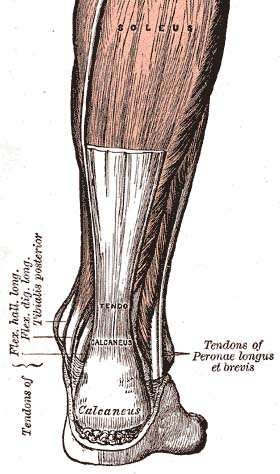
A flexible but inelastic cord of strong fibrous collagen tissue attaching a muscle to a bone.
Example: The acromion, the origin of the deltoid muscle, the tuberosity of the radius, the insertion of the bicep by way of a strong TENDON, and the supinator crest of the ulna (McMinn & Hutchings 1985), are well developed indicating strong muscles of both the upper and lower arm.
fr: tendon
x-ray
noun
An X-ray is a fast, painless imaging test that uses high-energy electromagnetic radiation to produce black-and-white, two-dimensional images of the body's internal structures, particularly bones.
Example: Fractures of the femoral neck are not always visible on initial x-rays.