20 Common Nursing Terms used in Patient Care terms
This glossary is to explain common nursing used in patient care. It improves your medical vocabulary and supports learning. This glossary can be useful for studying and for better communication in healthcare.
blood pressure
noun
Blood pressure is the force of blood pushing against the walls of the arteries as the heart pumps it throughout the body.
Example: General Observations Pulse - 65 bpm BLOOD PRESSURE - 110 75 Respiratory Rate - 14 pm Temperature 35.0 C GI: Inspection - The abdomen moved with respiration.
en: pression artérielle
blood test
noun
A blood test, or blood work, is a common medical analysis of a blood sample to check cells, chemicals, proteins, and other substance.
Example: The majority of all new cases of CLL (70-80%) are chance findings on a BLOOD TEST and about 40-60% of patients are symptom-free at the time they are diagnosed.
en: prise de sang
drainage tube
noun
A tube, usually of clear flexible plastic with lateral perforations, for draining a wound, abscess, etc.
Example: The doctor inserted a drain tube into the abdomen to remove excess fluid and lower the risk of infection.
en: drain
dressing
noun
A dressing in health is a sterile, protective material applied directly to a wound to promote healing, protect against infection, and manage drainage.
Example: On his arrival my mentor Becky and I triaged Joseph, cleaned his wound and applied a temporary DRESSING.
en: pansement
edema
noun
Edema is the medical term for swelling caused by excess fluid trapped in the body's tissues.
Example: The patient presented with edema in the ankles and lower limbs, suggesting congestive heart failure.
en: oedème
emesis
The action or process of vomiting.
Example: The patient experienced an episode of emesis after consuming the medication.
en: vomissements
hygiene care
noun
Hygiene care means practices and habits that keep individuals and their environment clean to maintain health and prevent the spread of disease.
Example: The nursing staff provided daily personal hygiene care to ensure the patient remained comfortable and clean.
en: soins d'hygiène
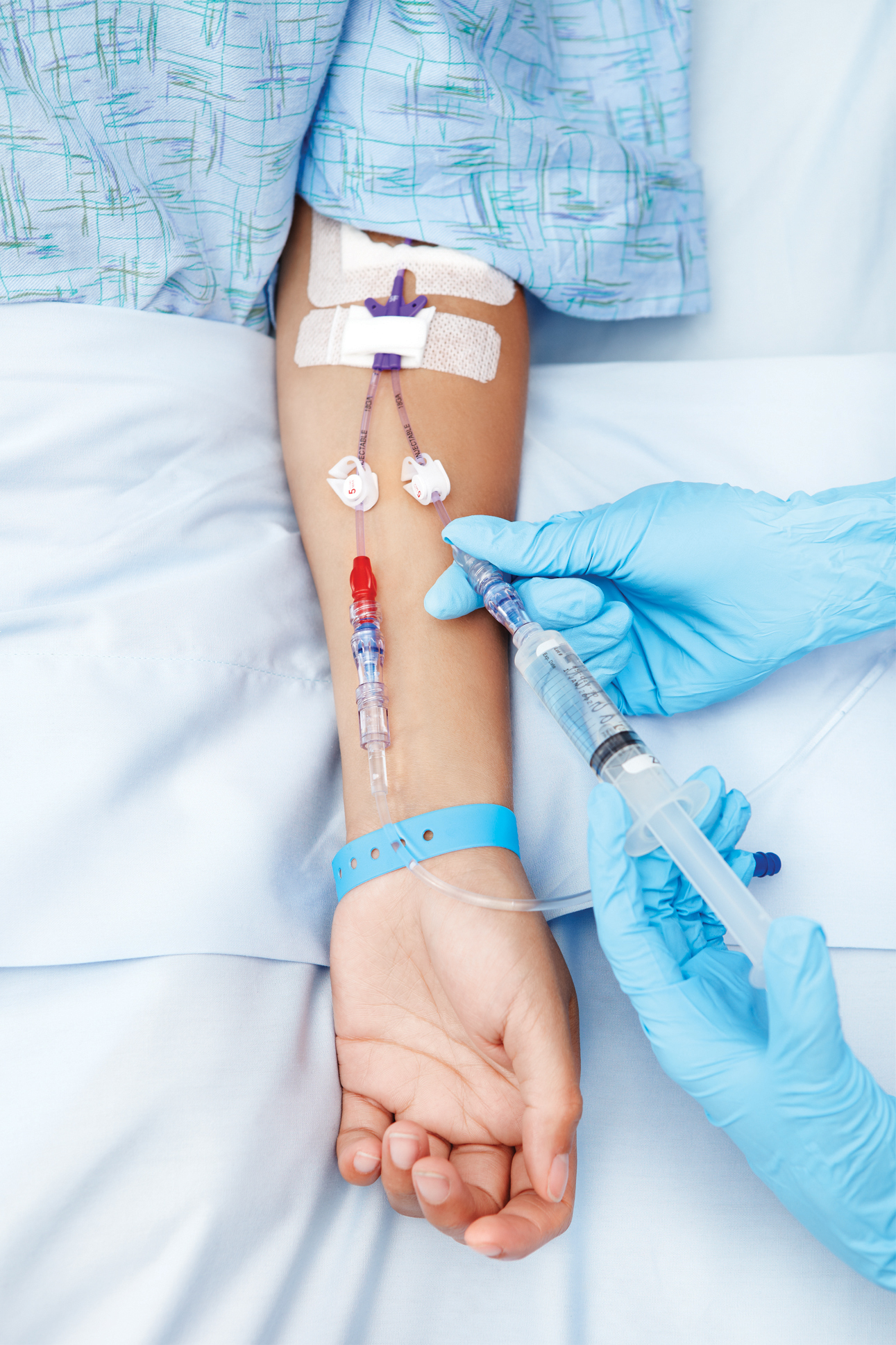
intravenous therapy
noun
IV therapy (Intravenous therapy) delivers fluids, vitamins, minerals, medications, or blood products directly into the bloodstream via a needle and catheter in a vein, offering rapid and near 100% absorption for rehydration, nutrient replenishment, or treatment of acute/chronic conditions when oral intake is insufficient.
Example: The patient required intravenous therapy to receive antibiotics for their infection.
en: thérapie intraveineuse
iv fluid
noun
IV fluids are liquids injected into a person's veins through an IV (intravenous) tube.
Example: IV FLUID replacement - normal saline to replace fluid lost during vomiting Refeeding syndrome - This is a syndrome of hypophosphataemia, hypomagnesaemia, hypocalcaemia and fluid retention which is seen in severely malnourished patients when they are started on enteral or parenteral nuitrition.
en: soluté
nasogastric tube
noun
An NG (Nasogastric) tube is a thin, flexible tube inserted through the nose, down the throat, and into the stomach, used for short-term medical purposes like delivering food (formula), medicine, or fluids, or to remove stomach contents for decompression.
Example: On admission and transfer to the stroke unit he remained nil by mouth and was fed via a NASOGASTRIC TUBE.
en: tube nasogastrique
nausea
noun
A feeling of sickness with an inclination to vomit.
Example: Also, it has been reported that most patients tolerate continuous feeding better as they are less likely to experience; bloating, NAUSEA, abdominal distension and diarrhoea.
en: nausée
oxygen
noun
A colorless, odorless reactive gas, the chemical element of atomic number 8 and the life-supporting component of the air.
Example: The patient was prescribed 2 liters per minute (LPM) of supplemental oxygen to be used via nasal cannula during sleep".
en: oxygène
pulse
noun
A rhythmical throbbing of the arteries as blood is propelled through them, typically as felt in the wrists or neck.
Example: The nurse take his pulse.
en: pouls
Respiration rate
noun
The respiration rate is the number of breaths a person takes per minute.
Example: The nurse checked the patient's respiration rate and noted it was slightly elevated at 24 breaths per minute.
en: fréquence respiratoire
sterile technique
noun
Sterile means free from germs.
Example: The nurse followed sterile technique while changing the wound dressing.
en: technique stérile
stoma
noun
A stoma is a surgically created opening on the surface of the abdomen that connects an internal organ (typically the small or large intestine) to the outside of the body to allow for the elimination of waste.
Example: This is called a colostomy and the opening of the bowel is known as a STOMA. Your bowel motions would pass through the STOMA into a colostomy bag which is worn over the STOMA.
en: stomie
temperature
noun
Body temperature is a measure of how well your body can make and get rid of heat.
Example: The patient’s temperature is currently 37.5.
en: température
urinary catheter
noun
A urinary catheter is a tube placed in the body to drain and collect urine from the bladder.
Example: A URINARY CATHETER was fitted.
en: sonde urinaire
vital signs
noun
Vital signs are measurements of the body's most basic functions.
Example: Her VITAL SIGNS should be assessed, particularly her oxygen saturation and blood gases.
en: signes vitaux
wound
noun
An injury to living tissue caused by a cut, blow, or other impact, typically one in which the skin is cut or broken.
Example: High levels of glucose in the blood can cause bacterial infection, and impairment to the normal WOUND-healing processes of leucocyte infiltration, chemotaxis and phagocytosis can cause debris to be left in the WOUND site which will further increase the risk (King 2001).