Hello, my name is Rafael Quiroga-Cantin. I live in Montréal, and I am currently studying in the DEC Pathway program at Montmorency College while preparing to enter firefighting school. I have been in this program for a short time, with the goal of continuing my education in firefighting in the future. This glossary is for new firefighting students, trainees, or anyone interested in understanding the basic terminology used in the firefighting field. This profession relies heavily on communication, technical vocabulary, and precise procedures. A lack of understanding of key terms can lead to confusion, mistakes, or safety risks in both training and real-world emergency situations. This glossary helps solve that problem by providing clear, accessible definitions of essential terms used in firefighting.
backdraft
noun
A phenomenon in which a fire that has consumed all available oxygen suddenly explodes when more oxygen is made available, typically because a door or window has been opened.
Example: Before entering, firefighters ventilated the building after observing thick smoke and intense heat behind the closed door, which were obvious indicators of a potential backdraft.
fr: reflux
bunker
noun
Protective clothing worn by firefighters, also known as turnout gear and/or PPE.
Example: The firefighter quickly suited up in their bunker gear before responding to the structure fire.
fr: bunker
class A fire
phrase
A fire involving combustibles such as wood, paper, and other natural materials.
Example: A Class A fire involves ordinary combustible materials such as wood, paper, or fabric and is commonly found in residential structures.
fr: incendie de classe A
class B fire
phrase
A fire involving hydrocarbons. (gases, liquids, or solids made only of carbon (C) and hydrogen (H) molecules.)
Example: A Class B fire is fueled by flammable liquids or gases, requiring foam or dry chemical agents for effective suppression.
fr: incendie de classe B
class C fire
phrase
An electrical fire.
Example: A Class C fire occurs in energized electrical equipment, making it critical to use non-conductive extinguishing agents.
fr: incendie de classe C
class D fire
phrase
A fire involving metals, such as sodium, titanium, magnesium, potassium, uranium, lithium, plutonium, and calcium.
Example: A Class D fire involves combustible metals like magnesium or titanium and requires specialized dry powder extinguishers.
fr: incendie de classe D
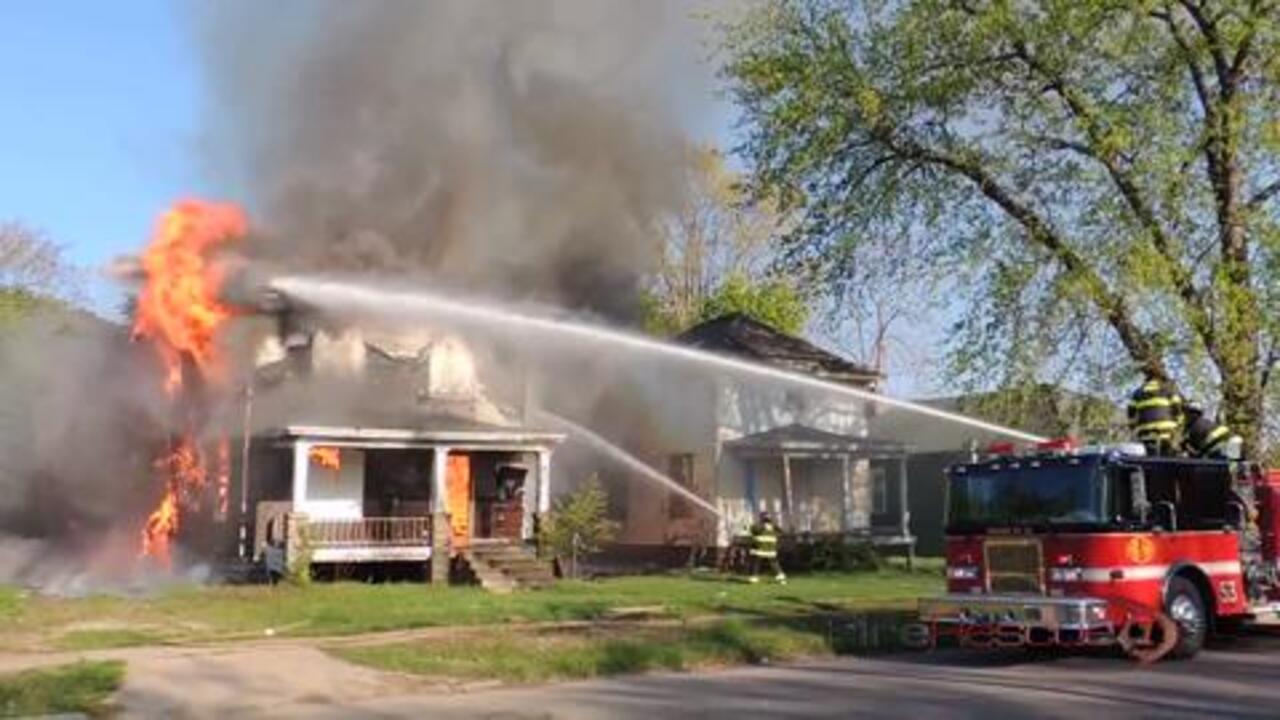
defensive attack
phrase
A primarily exterior form of attack often used when fighting the fire directly or from within a structure is not feasible due to dangers from direct flame, heat, structural collapse, or the presence of hazardous materials. Often structures that are fully involved are attacked defensively, with the main goal being the protection of nearby exposures. This form of attack is far less effective than an offensive or direct attack.
Example: A defensive attack was ordered when conditions became unsafe, and crews focused on protecting exposures and controlling the fire from outside the structure.
fr: attaque défensive
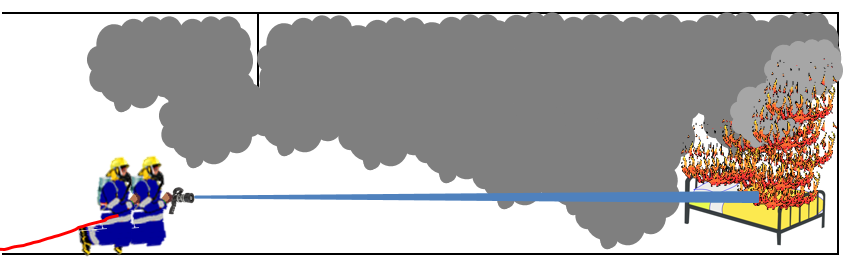
direct attack
phrase
“Putting the wet stuff on the red stuff.” A form of fire attack in which hoses are advanced to the fire inside a structure and hose streams are directed at the burning materials.
Example: A direct attack was used to apply water straight onto the base of the fire to quickly reduce heat and stop fire spread.
fr: attaque directe
dispatch
noun
Refers to a person or place designated for handling a call for help by alerting the specific resources necessary.
Example: The dispatch alerted the fire crew to a residential structure fire, providing the address, reported smoke conditions, and information about possible occupants inside.
fr: expédition
EMS
noun (acronyme)
Emergency Medical Services (EMS) is a comprehensive, community-based system that provides urgent pre-hospital treatment, stabilization, and transport for individuals experiencing acute illness or injury.
Example: EMS was requested on scene to treat the injured victim for smoke inhalation after the fire was brought under control.
fr: services médicaux d'urgence
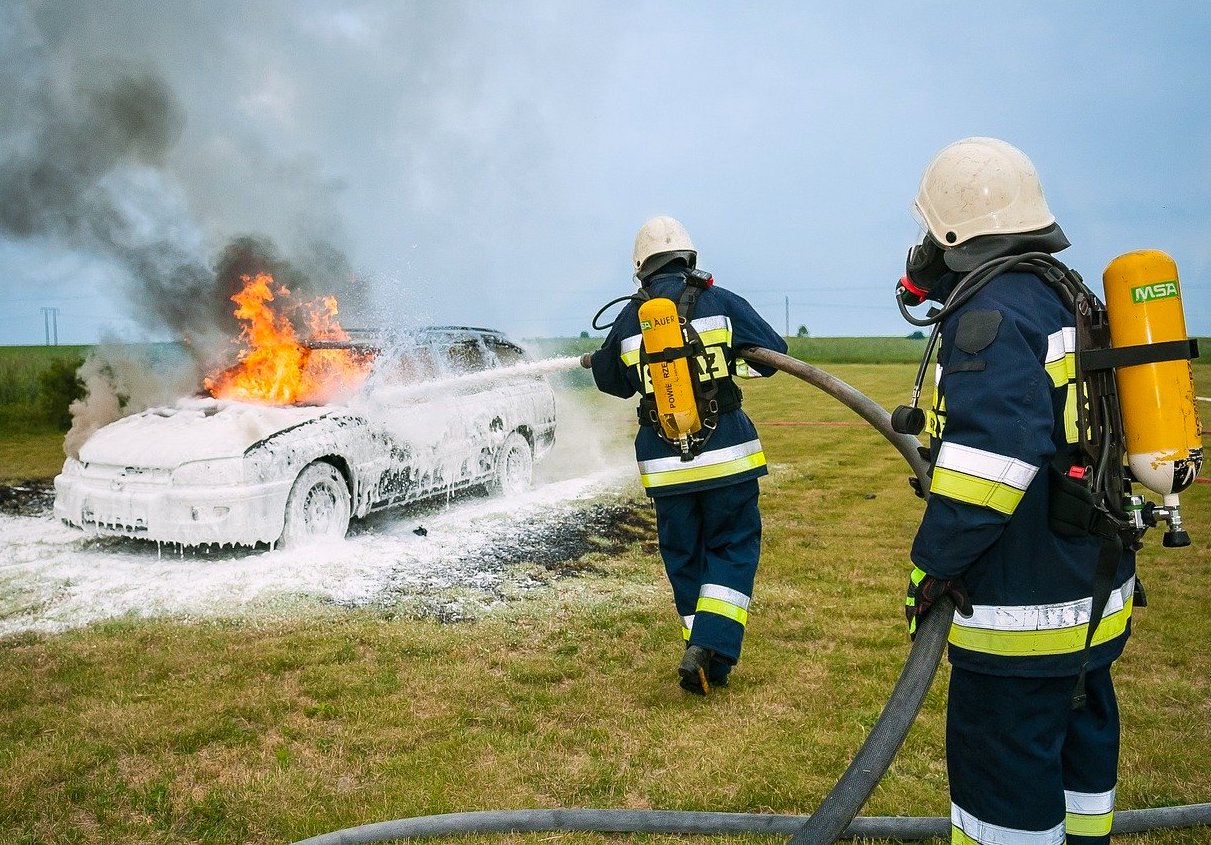
foam
noun
A specialized firefighting agent that smothers flames, creates a vapor barrier, and cools surfaces.
Example: Firefighters applied foam to smother the flammable liquid fire and prevent re-ignition.
fr: mousse
GPM
noun (acronym)
Gallons per minute, or how many gallons are being pumped out of a piece of equipment every minute.
Example: The incident commander confirmed that the hose line was flowing the required GPM to effectively suppress the fire and protect the exposure.
fr: gallons par minute
HAZMAT
noun (acronym)
Hazardous materials, including solids, liquids, or gases that may cause injury, death, or damage if released or triggered.
Example: Upon discovering leaking chemical containers inside the warehouse, the crew secured the area and requested a HAZMAT team to handle the dangerous materials safely.
fr: matières dangereuses
hot zone
noun
Contaminated area of HAZMAT incident that must be isolated; requires suitable protective equipment to enter and decontamination upon exit; minimum hot zone distance from unknown material with unknown release is 330 feet.
Example: Only properly equipped firefighters were allowed to enter the hot zone, where active fire conditions and immediate hazards were present.
fr: zone chaude
IDLH
adjective (acronym)
Any situation deemed Immediately Dangerous to Life and Health (IDLH).
Example: Air monitoring showed the atmosphere was IDLH (immediately dangerous to life or health), so firefighters were required to wear full personal protective equipment and self-contained breathing apparatus before entering the structure.
fr: danger immédiat pour la vie et la santé
irons
noun
The flathead axe mated with the halligan bar. Firefighters often refer to these as the Crossed Irons, or Married Irons, because the Halligan Bar can fit to the axe head.
Example: The firefighter grabbed the irons to force entry, using the halligan bar and flathead axe to breach the locked door quickly and safely.
fr: fers
jaws of life
noun
Hydraulic spreader used in extrication procedures. Most commonly used, but not limited to, during motor vehicle accidents.
Example: The crew deployed the jaws of life to extricate the trapped driver by cutting and spreading the vehicle’s metal frame after the collision.
fr: mâchoires de la vie
MVA
noun (acronym)
Motor Vehicle Accident.
Example: Crews responded to a motor vehicle accident, securing the scene and assisting with patient care and vehicle stabilization.
fr: accident de véhicule à moteur.
plug
noun
Slang term for a fire hydrant. This survives from the days when water mains actually had holes in the tops that were plugged. Many firefighters would like to keep this word, while many others think it should be replaced with the accurate term, “hydrant”.
Example: The engine crew connected their hose line to the plug to establish a reliable water supply for fire suppression operations.
fr: prise
rookie
noun
New firefighter on employment probation (a period of time during which his or her skills are improved, honed, tested, and evaluated).
Example: The rookie stayed close to their officer, following instructions carefully while gaining hands-on experience during the call
fr: débutante
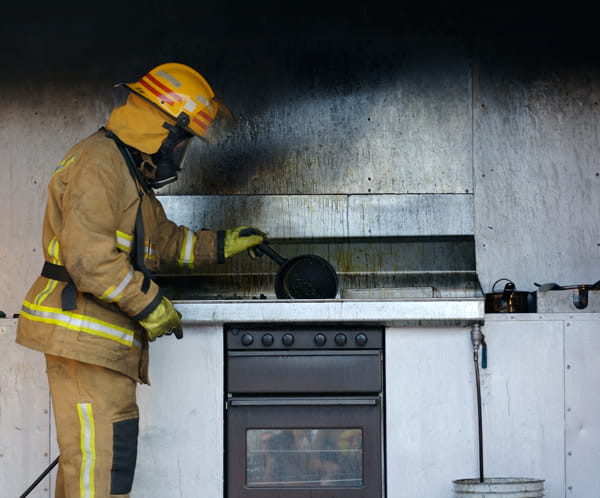
soot
noun
Residue left behind by the incomplete burning of organic materials.
Example: Thick soot covered the walls and ceiling, indicating heavy smoke conditions throughout the structure.