This glossary includes key terms and concepts related to my Social Sciences program. These terms are important for understanding society, culture, politics, and human behavior. It serves as a helpful reference to support my studies and academic work.
citizenship
noun
The rights and responsibilities of being a member of a country.
Example: Voting is part of citizenship.
en: citoyenneté
conflict
noun
A serious disagreement between people or groups.
Example: Conflict can happen over land or power.
en: conflit
cooperation
noun
Working together to reach a goal.
Example: Students show cooperation in group projects.
en: coopération
culture
noun
The beliefs, values, traditions, and way of life shared by a group of people.
Example: Food, music, and clothing are part of a culture.
en: culture
democracy
noun
A system where people choose their leaders by voting.
Example: In a democracy, citizens vote in elections.
en: démocratie
diversity
noun
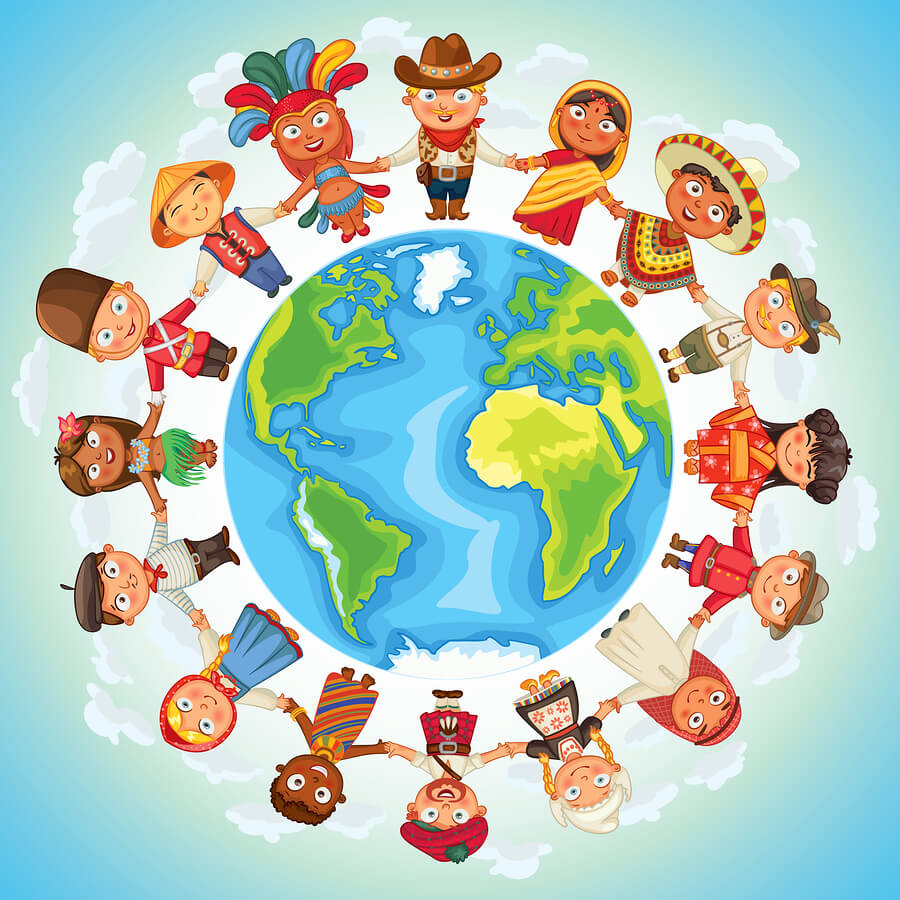
Having many different kinds of people in a group or society.
Example: Schools are more interesting because of diversity.
en: diversité
economy
noun
The way a society produces, buys, and sells goods and services.
Example: The economy affects jobs and prices.
en: économie
globalization
noun
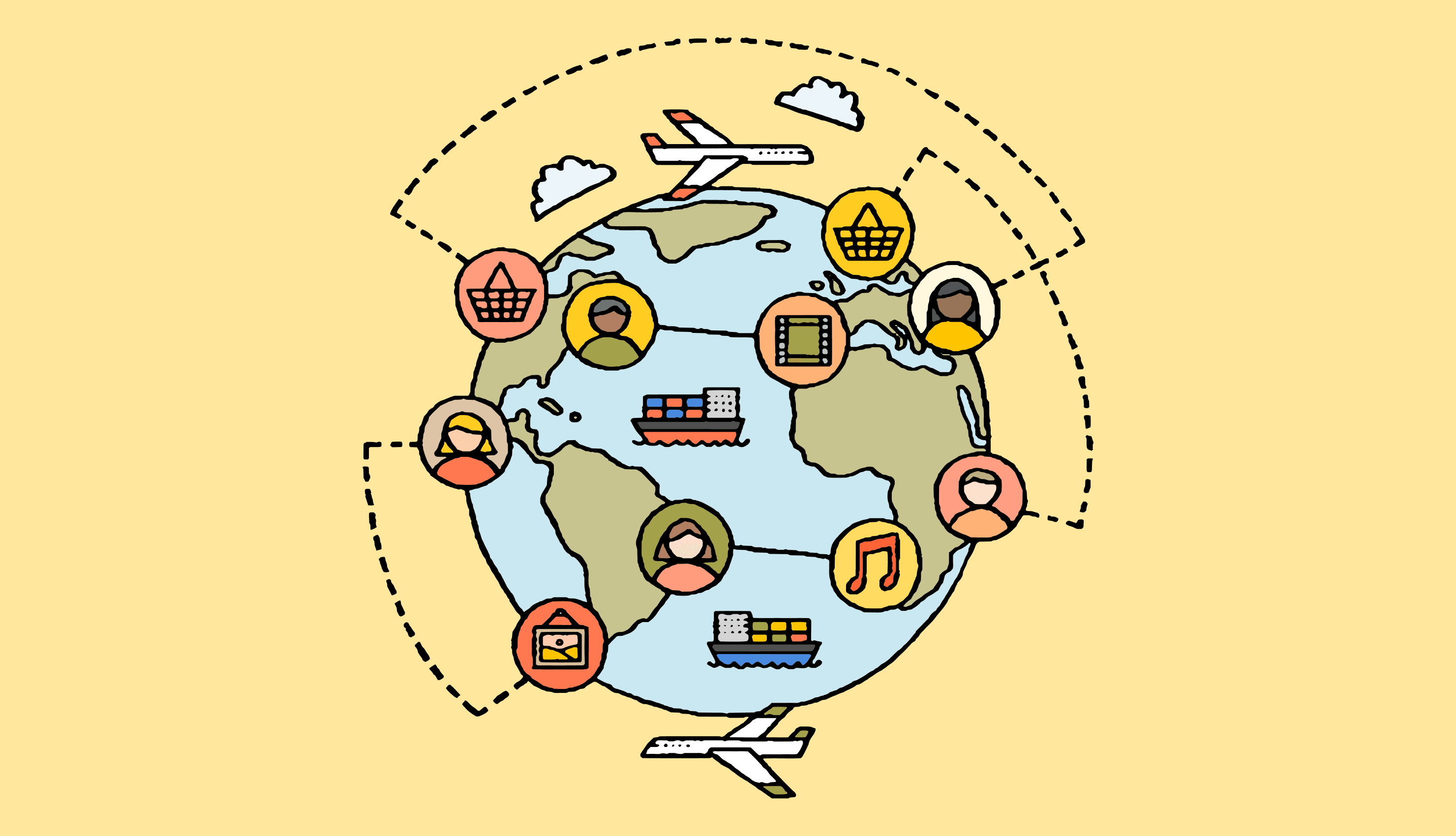
The process of countries becoming more connected.
Example: Globalization allows people to buy products from other countries.
en: mondialisation
government
noun
The system that makes laws and decisions for a country or group.
Example: The government creates rules to keep people safe.
en: gouvernement
human rights
noun
Basic rights that all people should have.
Example: Freedom of speech is a human right.
en: droits humain
Identity
noun
How a person sees themselves and how others see them.
Example: Language and family shape a person’s identity.
en: Identité
inequality
noun
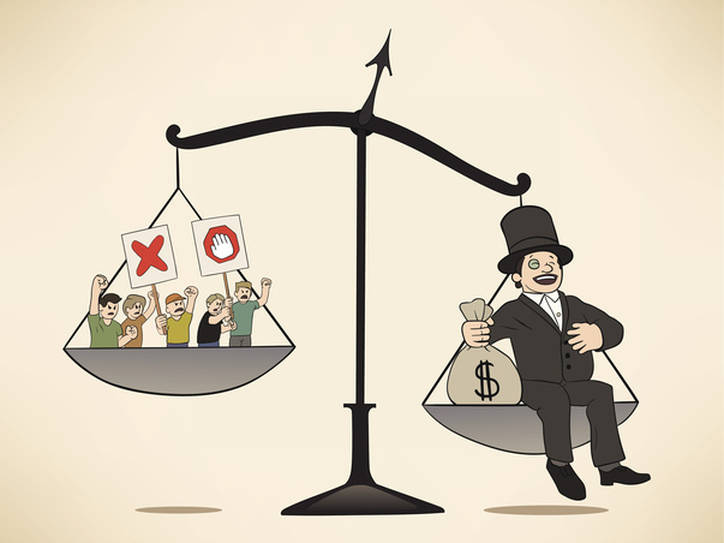
When people do not have the same rights or opportunities.
Example: Income inequality affects education access.
en: inégalité
justice
noun
Fair treatment under the law.
Example: Courts aim to give justice to everyone.
en: justice
media
noun
Ways information is shared with the public.
Example: News and social media shape opinions.
en: médias
migration
noun
The movement of people from one place to another.
Example: Many families migrate for work or safety.
en: migration
power
noun
The ability to influence people or decisions.
Example: Leaders have power in governments.
en: pouvoir
religion
noun
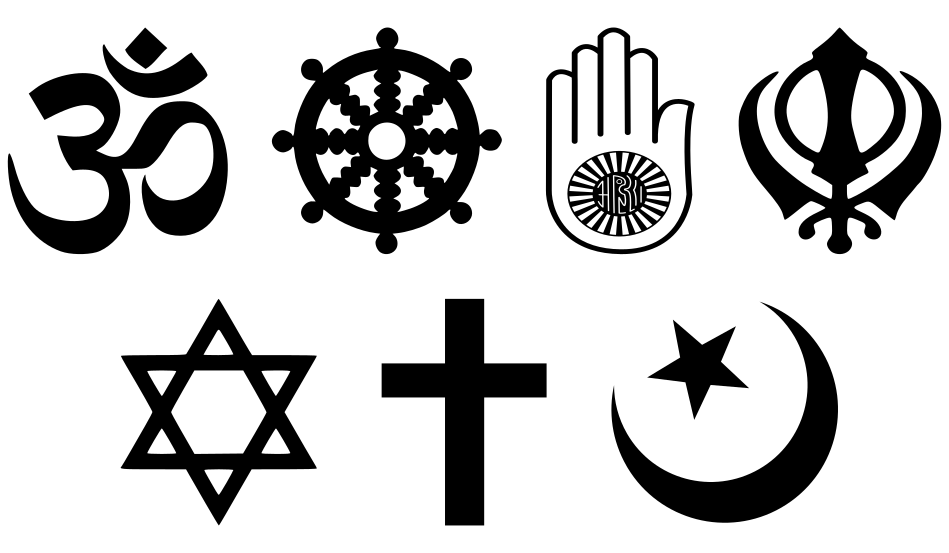
A system of beliefs about life and spirituality.
Example: Religion can influence culture and values.
en: religion
responsibility
noun
A duty or obligation to act in a certain way.
Example: Citizens have the responsibility to follow laws.
en: responsabilité
society
noun
the aggregate of people living together in a more or less ordered community.
Example: Canadian society includes people from many backgrounds.