This glossary is about the Early Childhood Education, to learn new words of this program and to learn the definition
Associative game
Noun
Associative play is a, early stage of social interaction, typically appearing in children aged 3 to 4, where they play side-by-side with shared materials or themes but without a common goal or formal organization.
Example: A 3-year-old child plays an associative game with a friend by interacting with him.
en: Jeu associatif
Causal reasoning
Noun
Causal reasoning is the logical process of identifying cause-and-effect relationships, determining how one event, action, or variable directly produces another.
Example: Causal reasoning can also have a significant impact on behavior.
en: Raisonnement causal
Chirping
Noun
Chirping, in the context of a baby, refers to high-pitched, cheerful squeals or vocal sounds, often indicating excitement, delight, or active engagement, such as during playtime.
Example: The chirping in babies is a way of communicating.
en: Gazouillis
Cognitive development
Noun
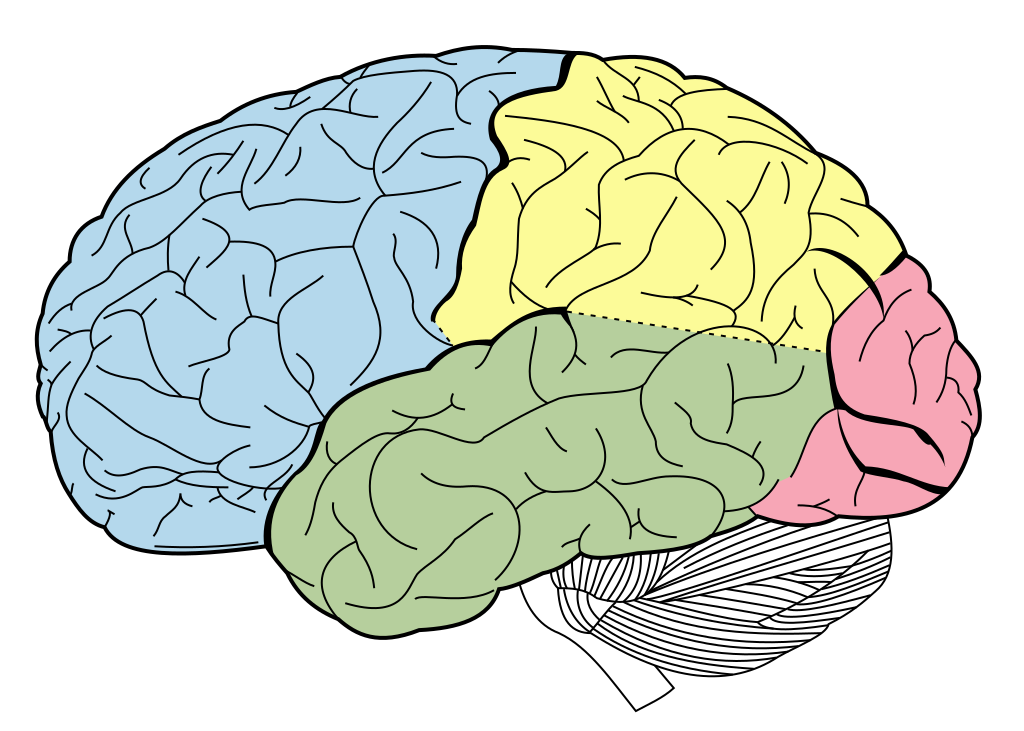
Cognitive development is the lifelong process of growth in mental capacities, including thinking, reasoning, memory, language, and problem-solving.
Example: Cognitive development is about how the child acquires knowledge and understands the world around him.
en: Développement cognitif
Cooperative game
Noun
In gaming, co-op (short for cooperative) means players team up to work together towards a shared goal, rather than competing against each other, usually against AI opponents or overcoming game challenges as a unit, leading to a common win or loss for the team.
Example: A group of 5-year-old children are in a cooperative game by sharing a common goal.
en: Jeu coopératif
Executive functions
Noun
Executive functions in kids are a set of essential mental skills—often likened to an "air traffic control system" in the brain—that enable them to manage emotions, focus attention, plan ahead, and regulate behavior to achieve goals.
Example: Executive functions can be associated more precisely with cognitive development.
en: Fonctions exécutives
Fine motor skills
Noun
Fine motor skills are the coordination of small muscles in the hands, fingers, wrists, and sometimes toes, working with the eyes (hand-eye coordination) to perform precise, voluntary movements
Example: The child uses his fine motor skills when he manipulates an object or by playing with blocks, for example.
en: Motricité fine
Inhibition
Noun
Inhibition in kids is an essential executive function and cognitive skill enabling them to manage impulses, filter distractions, and regulate behavior before acting.
Example: Inhibition is used to filter and control your thoughts and impulses.
en: Inhibition
Language development
Noun
Language development is the lifelong process of learning to understand and use communication, encompassing listening, speaking, reading, and writing, from early babbling to complex conversations, involving sounds (phonology), words (semantics), grammar (syntax), and social rules (pragmatics), essential for thinking, learning, and building relationships. It starts at birth, progresses through stages, and relies on genetics, environment, and social interaction.
Example: Language development is important for children since it is the main component of communication.
en: Développement langagier
Laterality (Handedness)
Noun
Laterality, including handedness, refers to the natural, preferential use of one side of the body (hands, feet, eyes, or ears) over the other for tasks, reflecting underlying brain hemisphere dominance
Example: The acquisition of laterality around 4 to 5 years develops through motor skills.
en: Latéralité
Nature-based education
Noun
Nature-based education is a pedagogical approach that uses the natural environment as the primary setting, resource, and teacher, focusing on holistic child development through play-based, inquiry-based, and experiential learning. It promotes curiosity, risk-taking, and environmental stewardship, typically incorporating regular, long-term, and all-weather immersion in outdoor spaces.
Example: Nature-based education pedagogy is increasingly widespread in kindergarden.
en: Éducation par la nature (EPN)
Overall motor skills
Noun
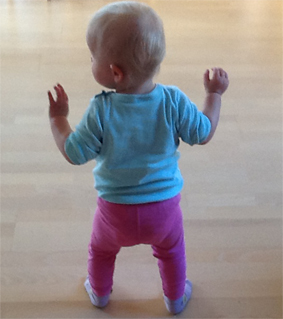
Overall motor skills represent the learned, coordinated movement patterns of muscles, the nervous system, and the brain working together to execute daily tasks.
Example: Overall motor skills refer to the major movements that engage the whole body in the action.
en: Motricité globale
Parallel game
Noun
Parallel play is a form of play in which children engage in recreational activities adjacent to each other, without trying to influence one another's behavior.
Example: A 2-year-old child plays a parallel game with another child.
en: Jeu parallèle
Physical and motor development
Noun
Physical development refers to the overall growth of a child's body, including brain, muscles, and senses, typically advancing from birth through adolescence. Motor development, a subset of this, specifically covers the refinement of muscle control and movement.
Example: Motor development relates to the appearance and evolution of motor functions.
en: Développement physique et moteur
Prosocial behaviors
Noun
Prosocial behavior refers to voluntary actions that benefit other people or society as a whole, such as helping, sharing, comforting, cooperating, and donating, driven by empathy and concern for others' well-being.
Sensory development is the process by which infants and children refine their ability to take in, interpret, and respond to information from their environment through their senses.
Example: Sensory development is also caused by voice, physical contact and constant interactions between children, and adults and children.
en: Développement sensoriel
Social and emotional development
Noun
Social-emotional development is the process where individuals learn to understand and manage their own emotions, build relationships, and interact positively with others, starting from infancy and continuing through life, encompassing skills like self-awareness, self-regulation, empathy, and social understanding that form the foundation for overall well-being and learning.
Example: The social and emotional development of the young child is based on attachment.
en: Développement social et affectif
Soliloquy
Noun
A soliloquy is when you speak your thoughts out loud. This can be when you are by yourself, which is when we say you are talking to yourself. A soliloquy can happen when someone says their thoughts out loud but ignores everyone around them. This person could also just pretend that the people around do not exist. When you use a soliloquy, you are always voicing or speaking your own thoughts.
Example: The soliloque child speaks to himself audibly without addressing his words to another child.
en: Soliloque
Symbolic function
Noun
Symbolic function refers to the cognitive ability of young children to use symbols, such as words or images, to represent objects, events, or ideas that are not present.
Example: Because of the acquisition of the symbolic function, the child goes from imitator to actor.
en: Fonction symbolique
Working memory
Noun
Working memory is a cognitive system that acts as a temporary mental workspace, allowing for the simultaneous storage and active manipulation of a limited amount of information.
Example: It is the working memory that helps young children to carry out their planning in their symbolic games.