20 The scientific study of Earth's solid materials, structures, processes and history, focusing on understanding the planet's evolution, composition, and surface-shaping forces. terms
Hello, my name is Charles-Emile Guay. I have been studying in mineral technology for the past 3 years at the Thetford College. My field of study is geology. The glossary that I made can be useful for students studying in geology and also for anyone who is interested in this field of study. It contains the pronunciation, the definition, the translation to French and an example of the word in a sentence. Each word in this glossary is related to the basic notions of geology and is part of the commonly used vocabulary of geologists. These words were specifically chosen to familiarize non-experts with the different terms that are used in this field.
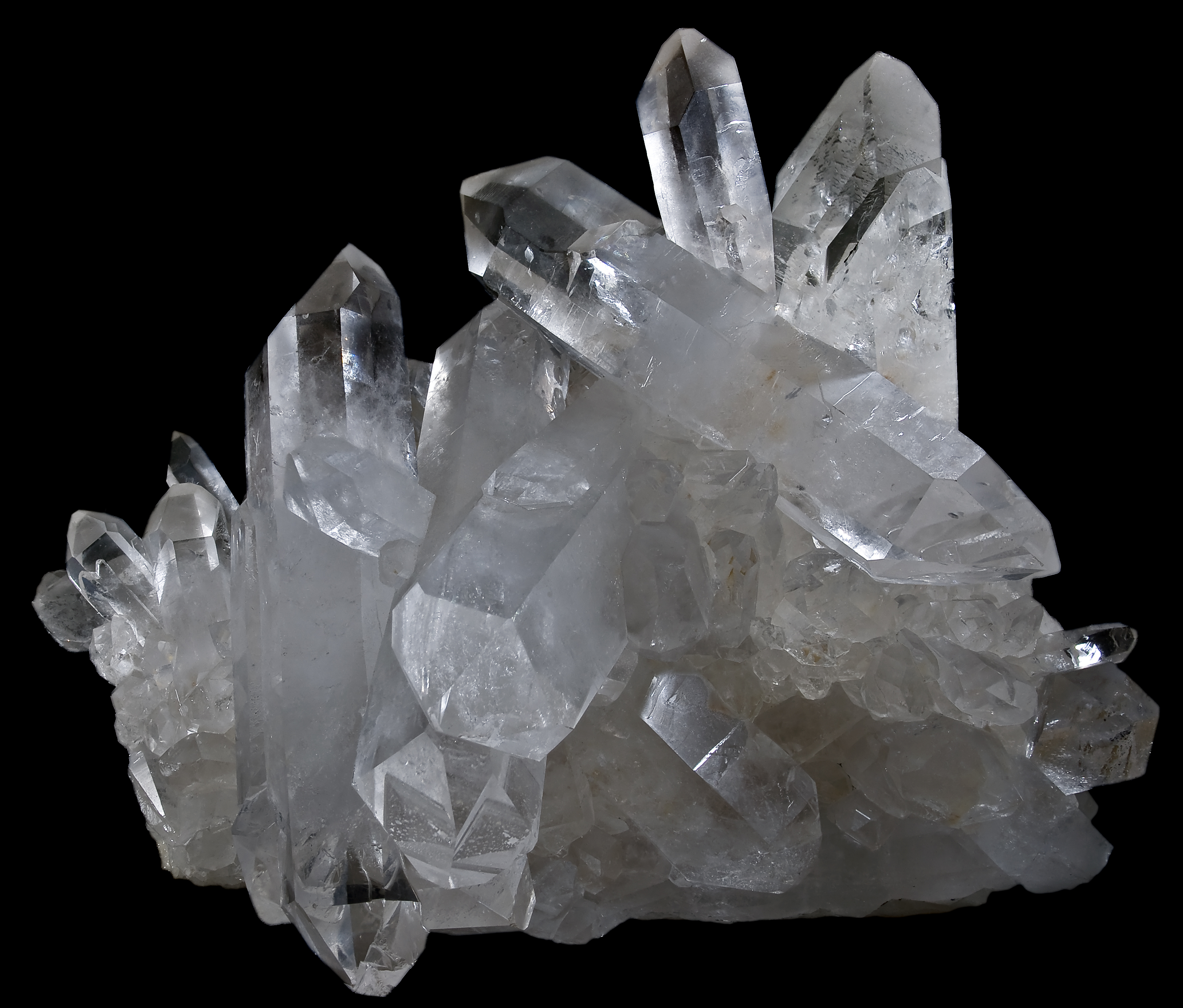
crystal
noun
A solid material with a highly ordered, repeating internal structure of atoms, ions, or molecules, forming a crystal lattice, which often results in distinct geometric shapes with flat faces, like salt, sugar, or quartz.
Example: This electrode contains an internal fluoride standard and a LaF 3 ion exchange "CRYSTAL".
fr: cristal
drill
noun
A high-precision rotary drilling machine that utilizes a hollow, diamond-impregnated bit to cut through hard materials like rock, concrete, metal, or glass.
Example: However, it may prove suitable, upon selection of a driving motor, to place said motor in the handle of the "DRILL", and hence create a reduction, by bevel or worm gear, from the motor to the gearbox.
fr: foreuse
dyke
noun
A tabular or sheet-like body of intrusive igneous rock that cuts discordantly across older, pre-existing rock layers or structures.
Example: By 1800 the Grand Canal and Yellow River "DYKE" systems were all in a state of decay, and there was little that farmers could do to improve the situation; the state considered irrigation a necessity in terms of subsistence, not a vehicle for entrepreneurship and commercialisation.
fr: dyke
earthquake
noun
The sudden, violent shaking of the ground caused by the release of energy in the Earth’s crust.
Example: The first stage being the first eruption resulting in an "EARTHQUAKE", an ash cloud and much ash falling.
fr: tremblement de terre
erosion
noun
The process of eroding or being eroded by wind, water, or other natural agents.
Example: Vegetation is key to the prevention of soil "EROSION" by the plant roots acting as meshes within the soils, and the above ground vegetation cover reducing the exposure of the soil to wind.
fr: érosion
fault
noun
Deep cracks caused by movement of rock during earthquakes.
Example: The geologist mapped a normal "FAULT", where the hanging wall had dropped relative to the footwall, indicating tectonic extension.
fr: faille
geochemical
adjective
Relating to the chemical composition of the earth and its rocks and minerals.
Example: The main processes of soil modification have been leaching, gleying and podzolisation, nictitated by interruption of the "GEOCHEMICAL" dynamics of the soil causing leaching and soil erosion.
fr: géochimique
geophysical
adjective
Relating to the physics of the earth.
Example: As the sketch depicted the double stone circle from a slightly elevated position, it was possible to estimate the location from which Stukeley viewed the monument; a position correlating with the positive results obtained from "GEOPHYSICAL" analysis.
fr: géophysique
igneous
adjective
Having solidified from lava or magma.
Example: Geologically, Alsace is within the Rhine Valley which is "IGNEOUS" rock based.
fr: igné(e)
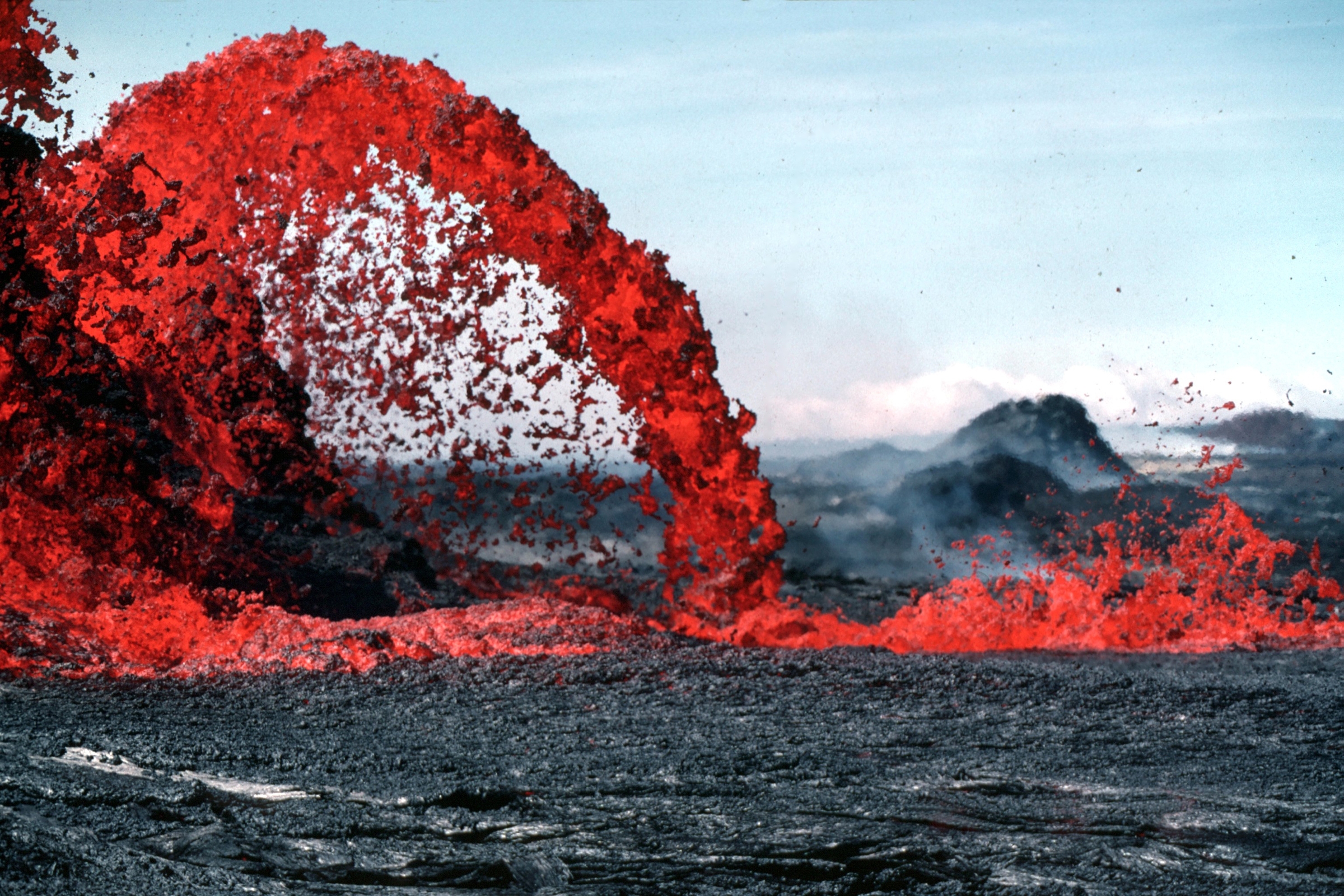
lava
noun
Hot molten or semifluid rock erupted from a volcano or fissure, or solid rock resulting from cooling of this.
Example: Rivers of "LAVA" flowed down the flanks of the volcano.
fr: lave
magma
noun
An extremely hot, molten, or semi-molten rock material located beneath the Earth's surface, acting as the source for all igneous rocks.
Example: This movement is caused by currents in the molten "MAGMA" in the mantle of the earth.
fr: magma
metamorphic
adjective
Denoting or relating to rock that has undergone transformation by heat, pressure, or other natural agencies.
Example: It is also a widespread constituent of a variety of igneous and "METAMORPHIC" rocks and is occasionally found in pegmatites and in related veins marginal to igneous rock units ranging from granite to diabase.
fr: métamorphique
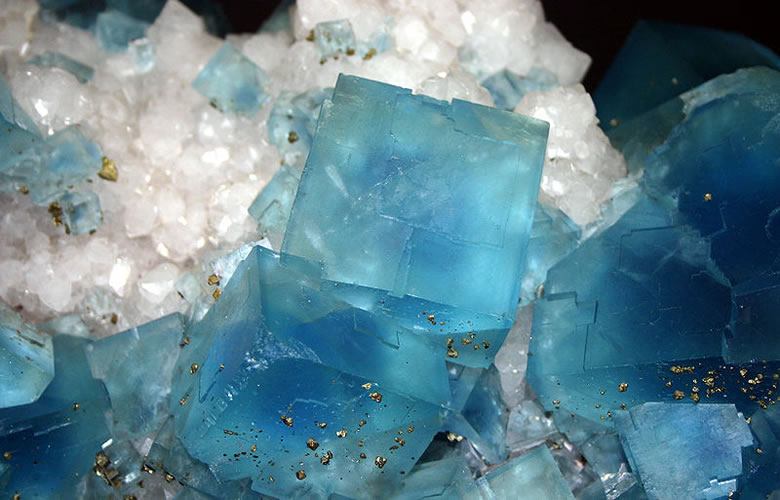
mineral
noun
A solid inorganic substance of natural occurrence.
Example: It occurs naturally as the "MINERAL" Fluorite, this adopts the calcium fluorite structure, the fluoride ions lie in a cubic arrangement with the fluoride and calcium ions being of comparable size, the insertion of the calcium ions into the structure causes an expansion of the cubic arrangement and the fluoride ions are no longer in contact with one another.
fr: minéral
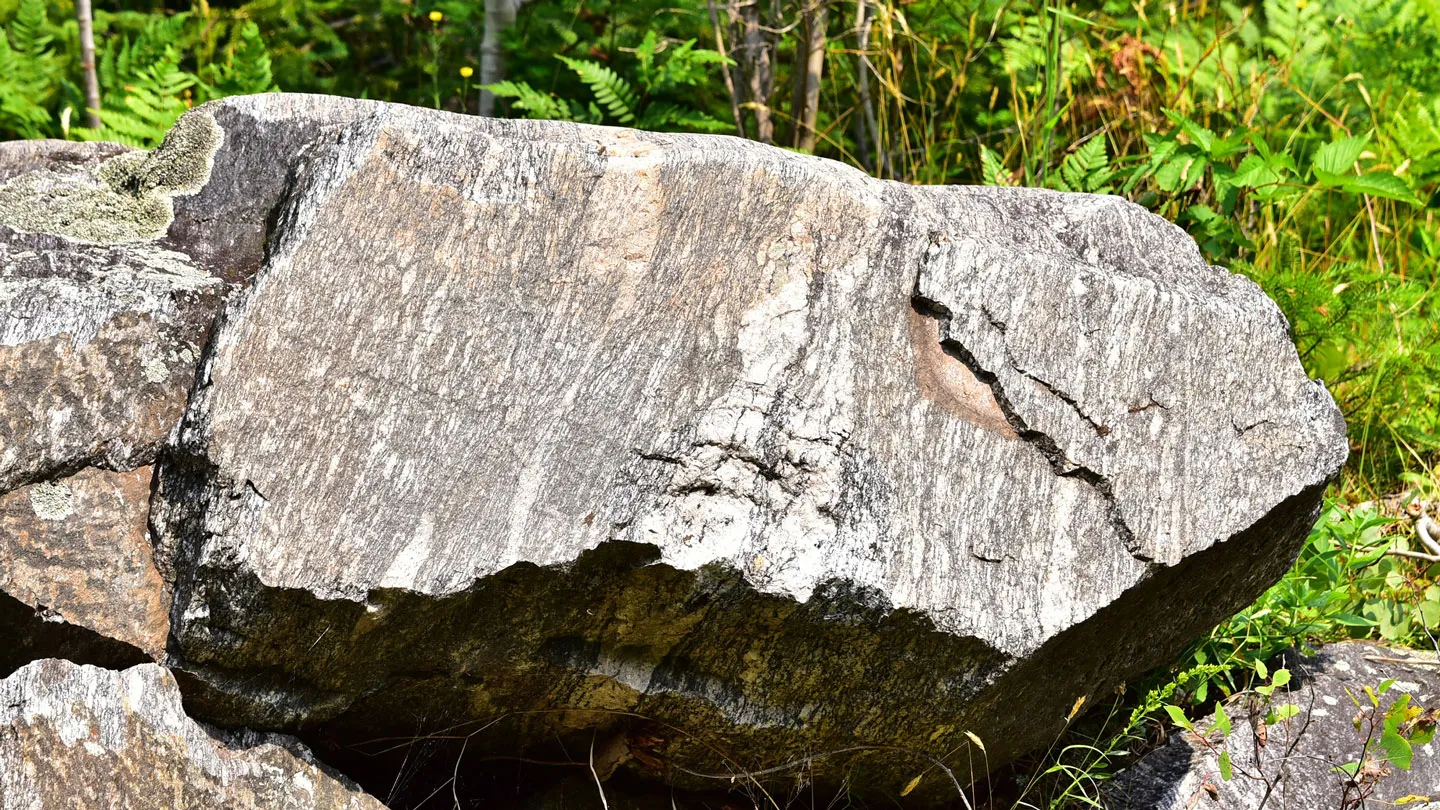
rock
noun
A naturally occurring, solid, and coherent aggregate of one or more minerals, mineraloids (like glass), or organic matter.
Example: Schist soils consist of metamorphic mixtures of "ROCK".
fr: roche
sampling
verb
The systematic process of collecting representative portions of rock, soil, sediment, water, or vegetation to analyze their physical, chemical, and mineralogical characteristics.
Example: Following soil "SAMPLING", in this case by core, the sample is air dried then immersed in water, possibly with the addition of a dispersive agent, usually hydrogen peroxide, to assist in the removal of organic matter.
fr: échantillonnage
sediment
noun
Loose deposit of mineral, organic or chemical particles, resulting from the erosion of pre-existing rocks or remains of organisms, transported by water, wind or ice, then accumulated at the bottom of aquatic environments (seas, lakes, rivers) or on continents.
Example: This soil formation is seen from the presence of organic matter and clay movement through the "SEDIMENT", and may have exhibited more pore structure before compression by overlying sediments.
fr: sédiment
stratigraphy
noun
The branch of geology concerned with the order and relative position of strata and their relationship to the geological time scale.
Example: "STRATIGRAPHY" shows how a site has built up and how the layers relate to each other.
fr: stratigraphie
tectonics
noun
Large-scale processes affecting the structure of the earth's crust.
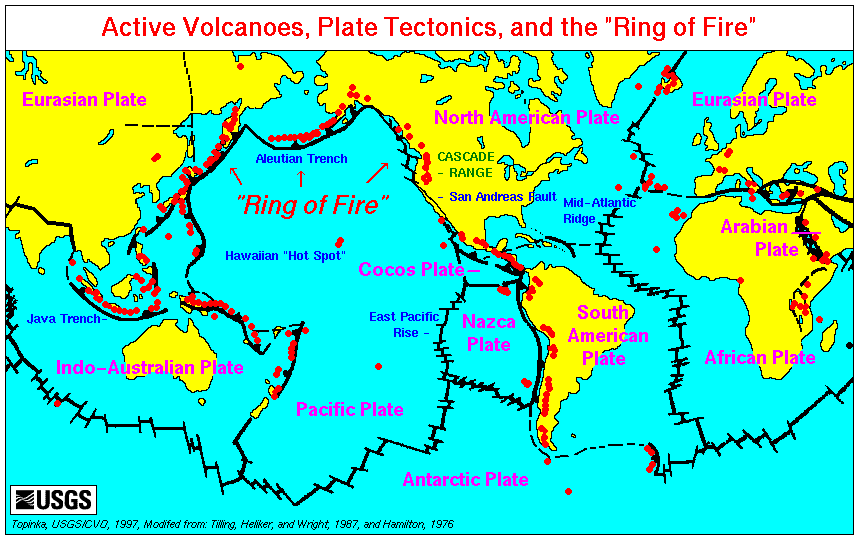
Example: Due to the mechanics of plate "TECTONICS" most ocean trenches are caused by 'trench flipping' at subduction zones, these are mostly found along the edges of continents as they tend to create land masses on one side and therefore shallow areas that are often perfect for corals to settle.
fr: tectonique
volcanic
adjective
Relating to or produced by a volcano or volcanoes.
Example: Along with "VOLCANIC" activity, mud slides and rock or snow avalanches can preserve a site incredibly well due to the fact that they cover everything in a protective "blanket" almost.
fr: volcanique
weathering
verb
The in-place, natural breakdown of rocks, soils, and minerals at or near the Earth's surface through physical, chemical, and biological processes.
Example: The bones are all in a relatively good condition, although nearly all have been subject to at least some "WEATHERING". 18 of the fragments are identified to be adult, 10 are at least a sub-adult with 2 definite sub-adults, 4 juveniles and 16 unknowns.