This glossary has been made to help remembers one of the most important terms inter-link to some course during the physical rehabilitation technique. This glossary is composed of 20 words, but could I could have put more terms. I chose the words I have the most difficulty to remembering during my study, and I have chosen the definition on google and what I remember of them in my head. For every word, there is definition, an image, an example, and a voice to help you pronounce it correctly. So, I what you to use this glossary to help you remember to most important terms. Your having a memory blank you can use it to go see to word you need. To finish you can also use this glossary to study those terms for your exams.
Analgesia
noun
the inability to feel pain.
Example: I put ice too much time and now my leg is analgesia
fr: Analgésie
Concentric contraction
noun
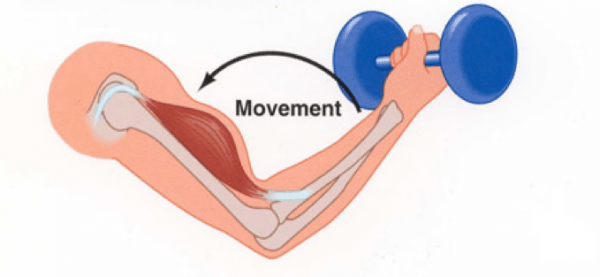
A concentric contraction is a type of muscle activation that causes tension on your muscle as it shortens.
Example: Doing a bicep curl is shortening your bicep so your making a concentric contraction
fr: Contraction Concentrique
Eccentric contraction
noun
An eccentric contraction is a type of muscle action where the muscle-tendon system lengthens while actively producing force.
Example: When you lower the weight in a bicep curl your doing an eccentric contraction because your muscle go longer
fr: Contraction excentrique
Edema
noun
Edema is the medical term for swelling caused by an abnormal buildup of excess fluid in the body's tissues,
Example: You tore your ankle there is edema to bring the nutriment to heel the ligament
fr: oedème
Electrotherapy
noun
Electrotherapy is a non-invasive, therapeutic modality in physical medicine that uses electrical energy and currents (e.g., TENS, EMS) to stimulate nerves and muscles.
Example: In physical rehabilitation student learn how t use electrotherapy to stimulate muscle
fr: Électrothérapie
Function
noun
A person's ability to perform activities of daily living
Example: I need to ask about your function, how is it going
fr: Fonction
Functionnal rehabilitation
noun
Functional rehabilitation is a goal-oriented, comprehensive therapy designed to restore an individual's ability to perform daily, work-related, or athletic tasks by focusing on movement patterns rather than just isolated muscle strength.
Example: To help somebody regain all of their functional capacity, we need to make people do exercise, in particular functional rehabilitation
fr: Rééducation musculaire
Isometric contraction
noun
An isometric contraction is a type of muscle activation where the muscle generates tension without changing length or causing joint movement.
Example: Doing the chair on the wall is an isometric contraction, because your muscles are stables
fr: Contraction isométrique
Joint mobilization
noun
Joint mobilization is a hands-on physical therapy technique where a therapist applies skilled, passive movements to a stiff or painful joint to reduce pain, improve range of motion, and restore normal function
Example: We use joint mobilisation to improve joint mobility
fr: Mobilisation de l'articulation
Joint stiffness
noun
Joint stiffness means a feeling of tightness or resistance when moving a joint, often after rest, making movement difficult or requiring extra effort,
Example: Examining of the range of motion we can observe joint stiffness
fr: Raideur articulaire
Muscle Atrophy
noun
Muscle atrophy is the wasting or thinning of muscle mass.
Example: One month after rupturing my ACL my I suffer from muscle atrophy
fr: Atrophie musculaire
Muscle endurance
noun
Muscular endurance is the ability of your muscles to perform repeated contractions or hold a position against resistance for an extended period without fatiguing,
Example: Training upgrades your muscle endurance
fr: Endurance musculaire
Muscle Strength
noun
Muscle strength is defined as the maximum amount of force a muscle or muscle group can generate in a single, short-duration contraction against resistance.
Example: The muscle strength can be calculated by doing appropriate time
fr: Force musculaire
Neuropathic pain
noun
Neuropathic pain is a chronic condition caused by damage, dysfunction, or injury to the peripheral or central nervous system, rather than injury to body tissue.
Example: My nervous system is suffering from dysfunction since my injury what cause neuropathic pain
fr: Douleur neuropathique
Neuroplasticity
noun
Neuroplasticity is the brain's lifelong ability to reorganize its structure, functions, and neural connections in response to learning, experience, or injury.
Example: Neuroplasticity is used to reorganize itself
fr: Neuroplasticité
Nociceptive Pain
noun
Nociceptive pain is the most common type of pain, resulting from actual or potential tissue damage (like cuts, burns, bruises, or arthritis) that activates specialized nerve endings called nociceptors, sending "danger" signals to the brain, typically described as aching, throbbing, or sharp sensations.
Example: You feel nociceptive pain if you hurt yourself
fr: Douleur nociceptive
Nociplastic pain
noun
Nociplastic pain is pain from altered central nervous system (CNS) pain processing, where pain signals are amplified despite no clear evidence of ongoing tissue damage or nerve injury, involving hypersensitivity and abnormal pain modulation.
Example: I put a clothes pin on my earring globe for too long who cause neuroplastic pain
fr: Douleur nociplastique
Proprioception
noun
Proprioception is the unconscious ability to sense body position, movement, and acceleration in space without relying on sight.
Example: Sensing your joint and movement are because of the proprioception
fr: Proprioception
Range of Motion (ROM)
noun
Range of Motion (ROM) is the full, functional, and anatomical measurement of distance and direction a joint or body part can move.
Example: We use the Range of Motion (ROM) to evaluate how the joint of a patient is moving.
fr: Amplitude de mouvement
Spasticity
noun
Spasticity is a motor disorder characterized by involuntary, velocity-dependent increased muscle tone (stiffness) and overactive reflexes, commonly resulting from damage to the brain or spinal cord.
Example: Having an augmentation of muscle tone for no reason is explained by spasticity