This glossary is about my program, nursing. It is my second year in this program. This glossary is for other nursing students. It includes 15 words related to my field of study, with images, definition, translation, pronunciation, and an example of how to use it in a sentence. The images are from Wikimedia Commons, the definition is from Google and the example is from the Lextutor Concordancer.
Blood test
noun
A common medical analysis of a blood sample to check cells, chemicals, proteins, and other substances.
Example: This blood test will help us diagnostic her disease.
en: Prise de sang
Catheter
noun
A thin, flexible, or rigid hollow tube made of medical-grade materials inserted into body cavities, ducts, or vessels to drain fluids (like urine), administer medication/fluids (IV), or allow access for surgical instruments.
Example: We have to check the catheter the catheter regularly.
en: Cathéter
Critical thinking
noun
The intellectually disciplined process of actively analyzing, synthesizing, and evaluating information—gathered from observation, experience, or communication—to guide belief and action. It involves questioning assumptions, evaluating evidence, and recognizing biases to form objective, reasoned judgments.
Example: You have to use your critical thinking before doing your interventions.
en: Pensée critique
Diabete
noun
A chronic, long-lasting health condition occurring when blood sugar (glucose) levels are too high because the body cannot properly produce or use insulin.
Example: He has diabete and hypertension.
en: Diabète
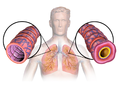
Dyspnea
noun
The subjective, uncomfortable, and often frightening sensation of being unable to breathe normally, get enough air ("air hunger"), or take a deep enough breath.
Example: She has respiratory symptoms, such as dyspnea.
en: Dyspnée
Hand hygiene
noun
The process of cleaning your hands with soap and water or an alcohol-based sanitizer to remove or kill germs, preventing the spread of infectious diseases and infections.
Example: Make sure you have a good hand hygiene before touching the newborn.
en: Hygiène des mains
Hospitalization
noun
Admission to hospital for treatment.
Example: The patient required hospitalization after the accident.
en: Hospitalisation
Hypertension
noun
Abnormally high blood pressure.
Example: She is in hypertension, her blood pressure is at 180/100.
en: Hypertension
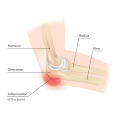
Inflammation
noun
A localized physical condition in which part of the body becomes reddened, swollen, hot, and often painful, especially as a reaction to injury or infection.
Example: She has inflammation on her legs.
en: Inflammation
Interprofessional collaboration
noun
The process where health workers from different professional backgrounds (e.g., nurses, doctors, pharmacists) work together with patients, families, and communities to provide high-quality, patient-centered care.
Example: To help interprofessional collaboration, we must ask the doctor what is this medication for.
en: Collaboration interprofessionnelle
Isolation
noun
Denoting a hospital or ward for patients with infectious diseases.
Example: The room 14 is in isolation
en: Isolement
Medication
noun
A substance used for medical treatment, especially a medicine or drug.
Example: This medication will help him with his blood sugar.
en: Médication
Nasogastric tube
noun
A thin, flexible tube inserted through the nose, down the throat, and into the stomach to provide nutrition (formula), fluids, and medications, or to remove stomach contents for decompression, often for short-term use when a person can't eat or swallow safely.
Example: He will keep the nasogastric tube until the doctor says otherwise.
en: Tube nasogastrique
Pain scale
noun
A subjective tool used by healthcare professionals to measure, quantify, and track a patient's pain intensity (typically 0-10) to guide treatment.
Example: Evaluate her pain, with the pain scale method.
en: Échelle de la douleur
Side effect
noun
A secondary, typically undesirable effect of a drug or medical treatment.
Example: This medication has a side effect of increasing heart rate.
en: Effet secondaire
Simulation lab
noun
A controlled, realistic environment where students (especially in healthcare, but also other fields) practice complex skills, critical thinking, and decision-making using high-tech mannequins, actors, or virtual tools to mimic real-life scenarios, all without risking patient safety or real-world consequences.
Example: We have a simulation lab this afternoon.
en: Laboratoire de simulation
Sterile technique
noun
A set of strict practices used in healthcare to eliminate all microorganisms from equipment, surfaces, and environments to prevent infections during invasive procedures, ensuring that anything entering a sterile body site is completely free from germs like bacteria, viruses, and spores.
Example: For this surgery, we need everyone to have a sterile technique.
en: Technique stérile
Stethoscope
noun
A medical instrument for listening to the action of someone's heart or breathing, typically having a small disk-shaped resonator that is placed against the chest, and two tubes connected to earpieces.
Example: Bring me my stethoscope, please.
en: Stéthoscope
tachycardia
noun
An arrhythmia (abnormal heart rhythm) defined as a resting heart rate that exceeds 100 beats per minute (bpm) in adults.
Example: This patient has tachycardia, his heart rate is 125 bpm.
en: Tachycardie
Vital signs
noun
Clinical measurements, specifically pulse rate, temperature, respiration rate, and blood pressure, that indicate the state of a patient's essential body functions.
Example: Make sure to do your patient's vital signs in the first hour.