My name is Ally Peter Saint-Louis, I live in Longueuil. I am currently studying pure sciences. I have been studying Sciences for 2 years at Ahuntsic College and my field of study is physics. I want to use my passion with physics to become a mechanical engineer. I decide to create a glossary because I know that engineering terms can sound so confusing or technical, but I want to prove that it is not that complicated with clear and simple explanations. I will make sure that people who feel excluded from this field, don't feel exclude anymore. I hope this glossary will also help people already in the field.
acceleration
noun
The rate of change of velocity per unit of time.
Example: The power of formula engine was the highest as the formula car needed to achieve the highest possible acceleration.
fr: accélération
elasticity
noun
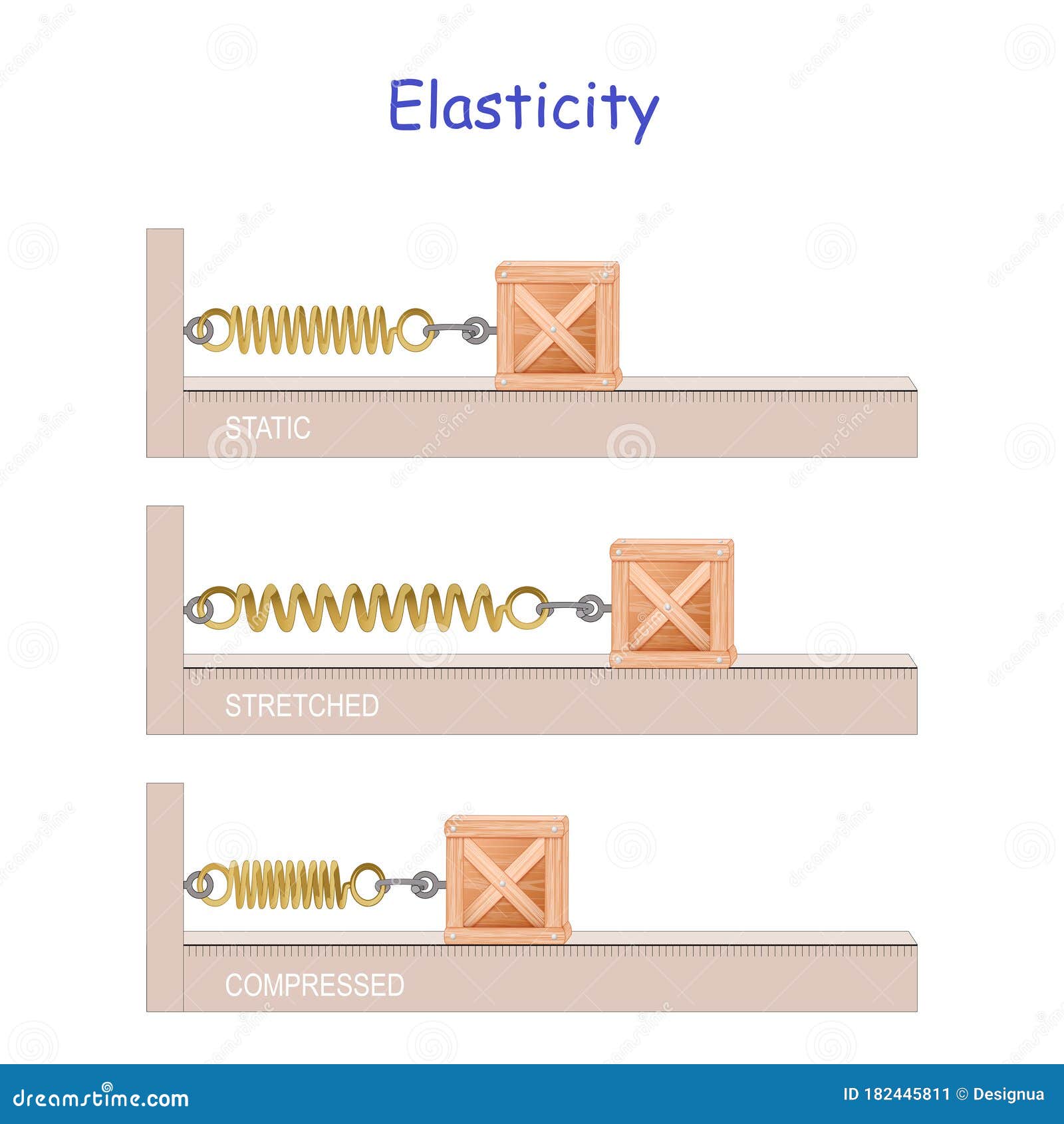
The ability of an object or material to resume its normal shape after being stretched or compressed; stretchiness.
Example: A spring demonstrates elasticity because it returns to its original length after being stretched or compressed.
fr: élasticité
force
noun
Strength or energy as an attribute of physical action or movement.
Example: The design of this machine reduces the force of friction between moving parts.
fr: force
friction
noun
The resistance that one surface or object encounters when moving over another.
Example: The layer of fluid in contact with the surface of the disks is carried by it due to friction, and thrown outwards by centrifugal forces.
fr: friction
gravity
noun
The force that attracts a body towards the centre of the earth, or towards any other physical body having mass.
Example: Therefore, despite increasing the V-angles would lower the center of gravity, it also increased the vibration.
fr: gravité
inertia
noun
A property of matter by which it continues in its existing state of rest or uniform motion in a straight line, unless that state is changed by an external force.
Example: The power required to overcome friction and the inertia of the moving parts.
fr: inertie
load
noun
A heavy or bulky thing that is being carried or is about to be carried.
Example: Using the given system parameters, the fraction of the required heating load, FM that can be provided by the system, is calculated.
fr: charge
power
noun
The time-rate of doing work, measured in watts or less frequently horsepower.
Example: The motor produces 200 watts of power, allowing the machine to lift heavy objects.
fr: puissance
pulley
noun
A wheel with a grooved rim around which a cord passes. It acts to change the direction of a force applied to the cord and is chiefly used (typically in combination) to raise heavy weights.
Example: Toothed pulleys and belt need to be source which will be used to drive the pump, and final decisions on testing procedures needs to be worked out.
fr: poulie
spring
noun
An elastic object that stores mechanical energy when it is compressed, stretched, or twisted, and releases it when returning to its original shape.
Example: The spring in a car suspension absorbs bumps on the road.
fr: ressort
strain
noun
The magnitude of a deformation, equal to the change in the dimension of a deformed object divided by its original dimension.
Example: Stretching a metal wire produces strain.
fr: déformation
tension
noun
A force that stretches a material or a structural element, acting along its length.
Example: The rope is under tension when lifting the load.
fr: tension
torque
noun
A twisting force that tends to cause rotation.
Example: However, the principal strain is also related to the torque by the following: Therefore, if Young's Modulus was reduced in order to increase the sensitivity, it would have a negative effect on the range of the torque cell, as the strain produced would be greater for a given torque, and the maximum torque would be limited.
fr: couple ou (moment de force)
velocity
noun
The speed of something in a given direction.
Example: The software was used in conjunction with basic velocity and acceleration theory to produce velocity and acceleration vector diagrams with scalar lengths that represented the velocity or acceleration of the relevant link.
fr: vitesse
work
noun
The transfer of energy that occurs when a force is applied to an object, causing it to move in the direction of the force.
Example: The worker does 100 joules of work lifting the box.