15 Key Concepts and Terms in Electrical Engineering terms
My name is Hamza, I am actually studying to become a future electrical engineer. I have been in my program, Natural Science, for two years, and I realized how it was mandatory to understand the vocabulary of this discipline. The purpose of this glossary is to help students and anyone interested in learning the technical terms used in electrical engineering.
The topic of this glossary is electrical engineering, which is a subject that contains many difficult terminologies. Many students struggle with these vocabulary when reading textbooks, attending lectures, etc. This glossary will solve that problem by providing clear definitions and examples to make these words easier to understand and apply.
Capacitor
Noun
A device that stores an electric charge, used in electronic equipment.
Example: The capacitor discharged after the circuit was switched off.
en: Condensateur
Circuit
Noun
A complete path that an electric current flows around.
Example: The light will not turn on if the circuit is broken.
en: Circuit
Conductor
Noun
A material that permits the easy flow of electric charge, or electric current, through it.
Example: Copper is an excellent conductor of electricity.
en: Conducteur
Diode
Noun
A device that allows current to flow in one direction only.
Example: The diode prevents current from flowing backwards.
en: Diode
Electric Current
Noun
The flow of electric charge, usually electrons, through a conductor in a closed circuit.
Example: Too much electric current can damage the circuit.
en: Courant électrique
Electric motor
Noun
a machine that transforms electrical energy into mechanical energy, typically rotational or linear, by using the interaction between magnetic fields and electric currents.
Example: The electric motor drives the pump.
en: Moteur électrique
Frequency
Noun
The number of complete waves that are produced in one second, measured in hertz.
Example: The frequency of the alternating current is 50 hertz.
en: Fréquence
Generator
Noun
a dynamo or similar machine for converting mechanical energy into electricity.
Example: The generator provided power during the blackout.
en: Générateur
Grounding
Noun
A common return path for electric current, often connected to the earth.
Example: Grounding is required to protect people from electric shock.
en: Mise à la terre
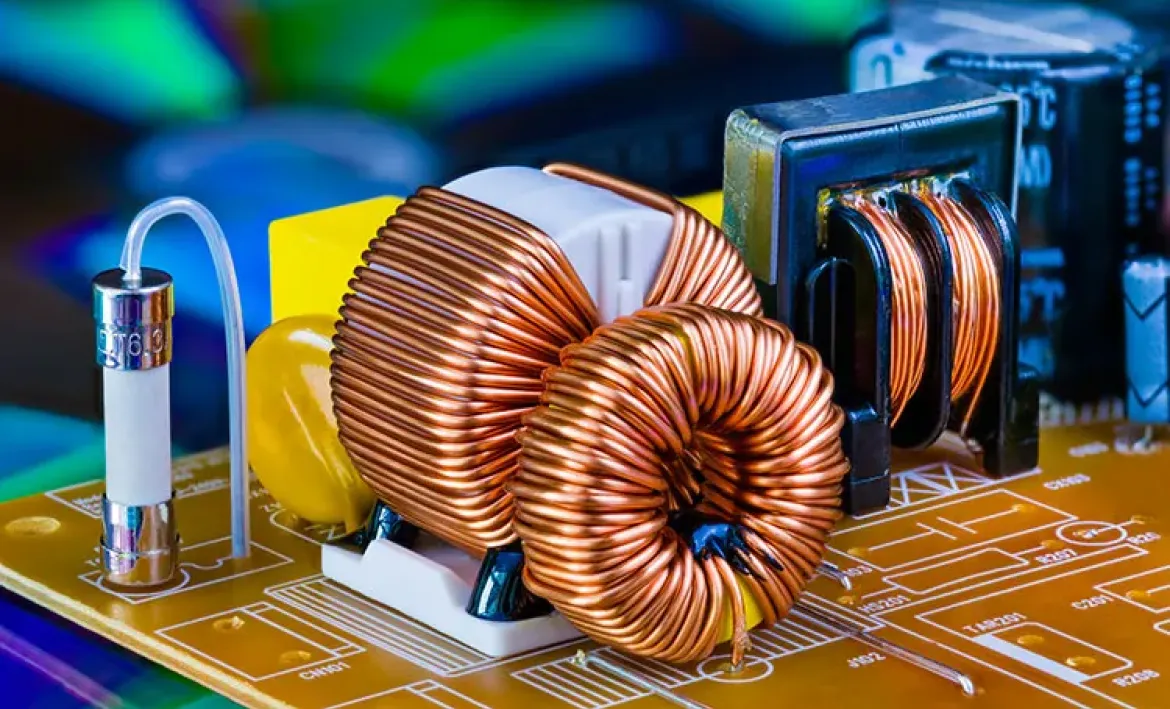
Inductor
Noun
An electrical component that produces inductance when current flows through it.
Example: The inductor resists sudden changes in current.
en: Inducteur
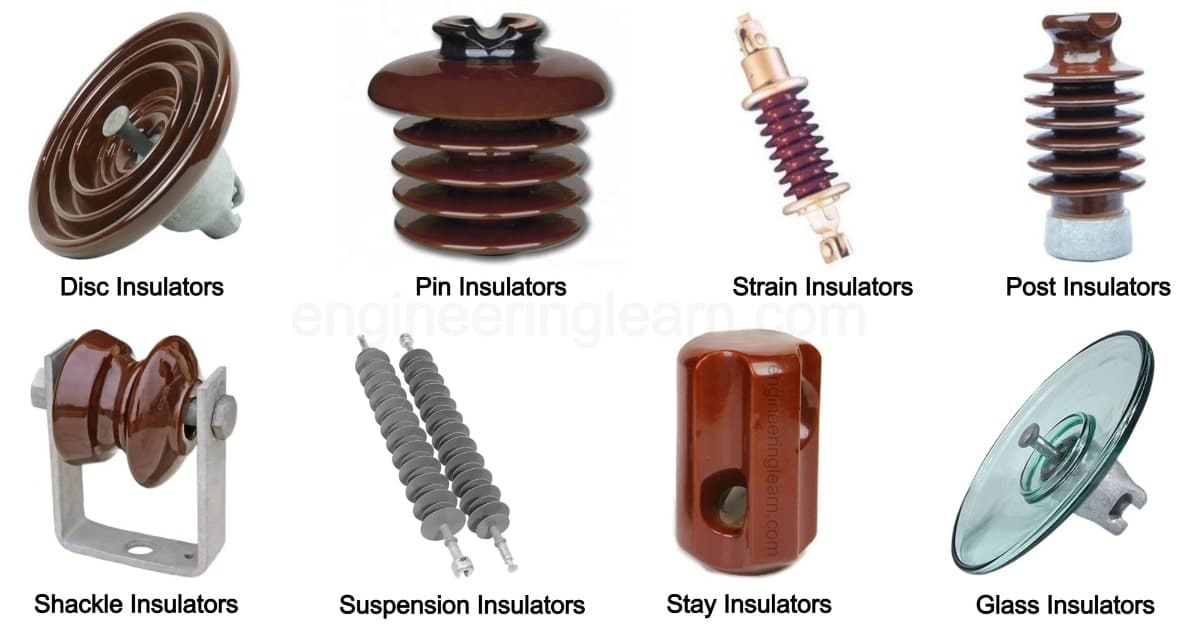
Insulator
Noun
An electrical insulator is a material in which electric current does not flow freely.
Example: Glass is used as an insulator in high-voltage power lines.
en: Isolant
Resistance
Noun
The opposition to the flow of an electric current through a conductor.
Example: Rubber has a very high electrical resistance.
en: Résistance
Switch
Noun
a device for making and breaking the connection in an electric circuit.
Example: She turned off the light by flipping the switch.
en: Interrupteur
Voltage
Noun
An electromotive force or potential difference expressed in volts..
Example: The voltage of the power supply is too high.
en: Tension électrique
Watt
Noun
the SI unit of power, equivalent to one joule per second, corresponding to the power in an electric circuit in which the potential difference is one volt and the current one ampere.