Hi, my name is Walid and welcome to my glossary. I’m a 19-year-old college student currently studying Natural Sciences at Montmorency. This glossary contains about 23 terms that I found with the help of Google. It is designed to help readers better understand my program and the key concepts we study. Hopefully, it will also inspire others who are interested in pursuing this program.
Acceleration
Noun
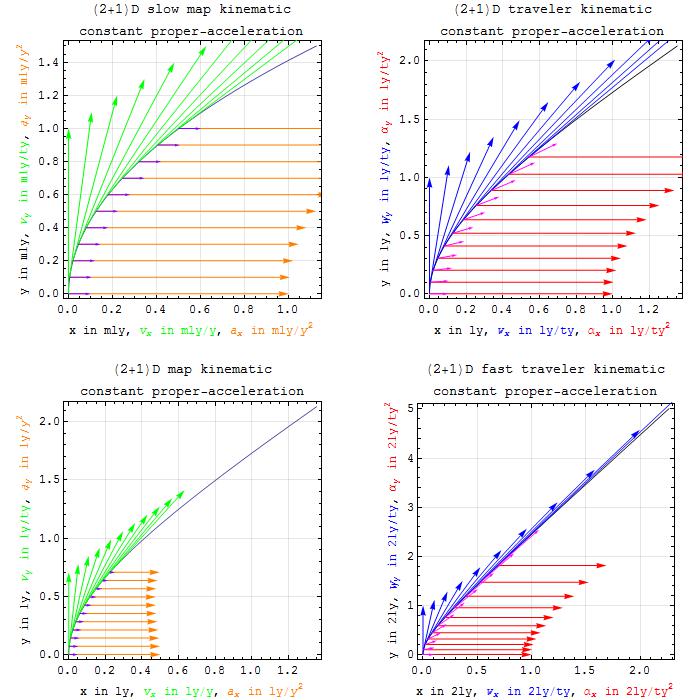
Acceleration is the rate at which velocity changes over time, meaning it measures how quickly an object's speed or direction of motion alters. It's a vector quantity, possessing both magnitude (how much the velocity changes) and direction, and is calculated using the formula a = Δv/Δt (change in velocity divided by change in time). Even at a constant speed, an object is accelerating if its direction changes, like a car turning a corner.
Example: It is appropriate, then, to teach five- and six- year-olds the basic principles of speed, ACCELERATION, force and energy.
en: Accélération
Algebra
Noun
Algebra is a branch of mathematics that generalizes arithmetic by using variables (letters or symbols) to represent unknown or varying quantities.
Example: Multiplication of two quaternions of this form takes a form expressible in terms of the dot and cross products of 3-dimensional vector ALGEBRA.
en: Algèbre
Atom
Noun
The Structure of the Atom – Introductory ChemistryAn atom is the fundamental building block of matter, representing the smallest unit of a chemical element. It consists of a dense nucleus at its center, composed of positively charged protons and neutral neutrons, surrounded by negatively charged electrons that orbit the nucleus.
Example: These hydrogen bonds are able to form due to a variation in the electronegativity of atoms, which is an ATOM's ability to attract electrons.
en: Atome
Biology
Noun
The word biology is derived from the greek words /bios/ meaning /life/ and /logos/ meaning /study/ and is defined as the science of life and living organisms.
Example: Some aspect of the BIOLOGY of cells and their possible evolutionary significance.
en: Biologie
Cell
Noun
In biology, the smallest unit that can live on its own and that makes up all living organisms and the tissues of the body. A cell has three main parts: the cell membrane, the nucleus, and the cytoplasm. The cell membrane surrounds the cell and controls the substances that go into and out of the cell.
Example: Due to this size increase simple diffusion is not sufficient to transport chemicals round the CELL so a complex system of structures are in place to aid this process.
en: Cellule
Chemistry
Noun
Chemistry is the scientific study of matter, encompassing its composition, properties, structure, and reactions. It explores how substances are transformed when interacting with other matter or energy, providing a foundational understanding for many other scientific disciplines.
Example: Living radical polymerisation is a popular topic in macromolecular CHEMISTRY, as well as CHEMISTRY in general due to its applications in the materials industry.
en: Chimie
Dentist
Noun
A person qualified to treat the diseases and conditions that affect the teeth and gums, especially the repair and extraction of teeth and the insertion of artificial ones.
Example: He regularly sees his DENTIST to maintain his dental health. has no other significant illnesses.
en: Dentiste
Deriative
Noun
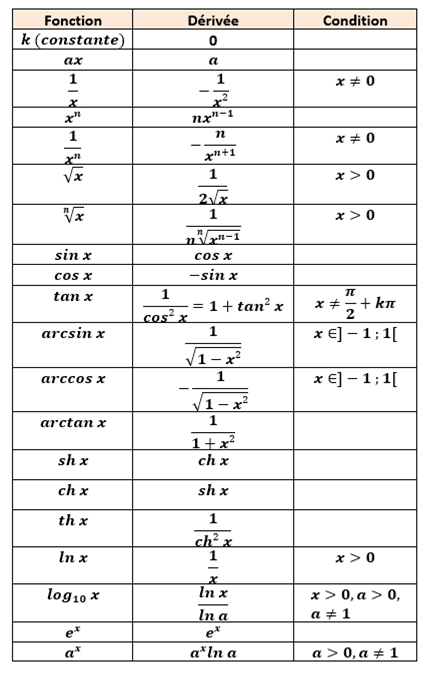
The derivative of a function tells you how quickly its output changes in response to a change in its input. This is the "instantaneous" rate of change, meaning it's measured at a single point rather than over an interval.
Example: In calculus, we use the derivative to find the rate at which a car’s speed changes over time.
DNA
Noun
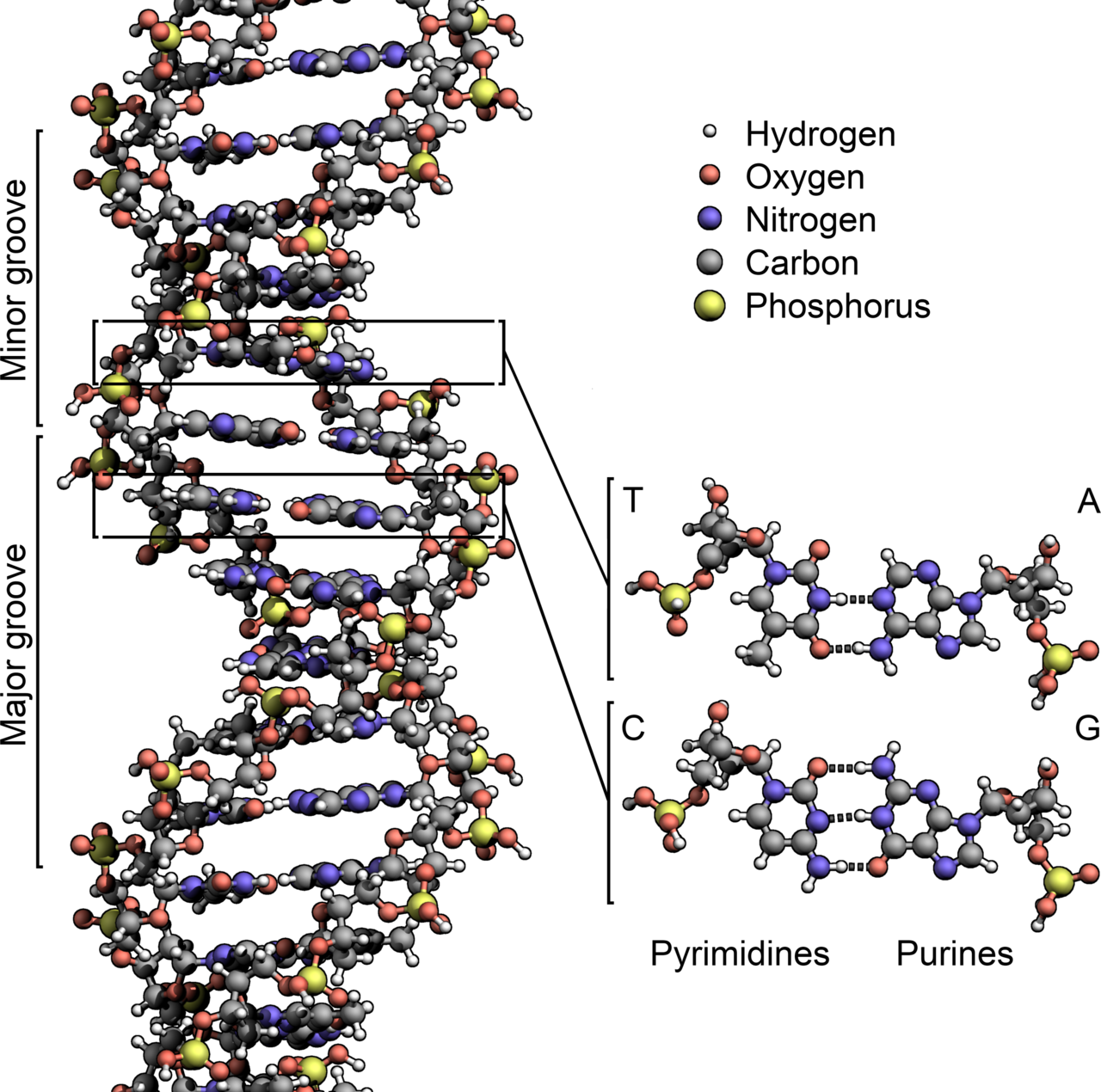
DNA (deoxyribonucleic acid) is the molecule that carries the genetic instructions for the development, functioning, growth, and reproduction of all known living organisms and many viruses.
Example: Mitochondria also contain this enzyme which is, again, highly homologous to the bacterial equivalent, however, in mitochondria, it is encoded by nuclear DNA and then must be moved to.
en: ADN
Energy
Noun
In science, energy is the fundamental property of a physical system that is transferred between objects or systems when work is done, resulting in a change.
Example: Chloroplasts produce carbohydrates to be used in respiration by harnessing light ENERGY.
en: Énergie
Force
Noun
physics, force is an influence that acts as a push or a pull on an object, causing it to change its motion or shape. It's a vector quantity, meaning it has both a magnitude (size) and a direction
Example: structures. The molecular mechanism with which sensory neurons detect mechanical change or FORCE, are still very poorly understood 13 .
en: Force
Hypothesis
Noun
A supposition or proposed explanation made on the basis of limited evidence as a starting point for further investigation.
Example: For example, it has come under question due to the falsification of the hominin evolutionary theory of 'the single-species HYPOTHESIS' of Dobzhansky and Mayr, which stated that only one species of hominin could exist at one time.
en: Hypothèse
Integral
Noun
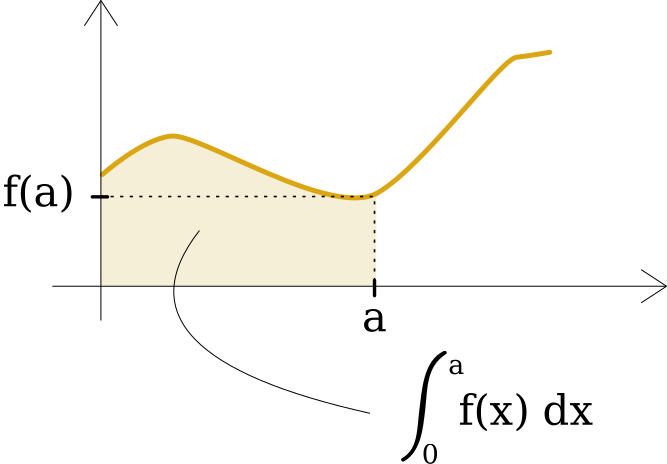
A function of which a given function is the derivative, i.e. which yields that function when differentiated, and which may express the area under the curve of a graph of the function.
Example: The integral is used to calculate the area under a curve in a physics experiment to determine the total distance traveled by an object.
en: Inégrale
Mathematics
Noun
Mathematics is the abstract science and study of quantity, structure, space, and change, utilizing logic and rigorous deduction to discover patterns, formulate theories, and prove properties of numbers, forms, and other abstract objects.
Example: This method has origins in decision (discrete) MATHEMATICS, and is one I have been familiar with since studying at A-Level.
en: Mathématiques
Molecule
Noun
A molecule is the smallest particle of a chemical substance that retains its chemical and physical properties and consists of two or more atoms joined together by chemical bonds
Example: The MOLECULE then travels out of the stroma of the mesophyll chloroplast- and through plasmodesmata into the neighbouring bundle sheath cell's chloroplast.
en: Molécule
Nurse
Noun
A nurse is a healthcare provider who focuses on the needs of each individual person.
Example: A comparative study of the newly qualified NURSE's perception of the transition from student to qualified NURSE.
en: Infermière
Photosynthesis
Noun
Photosynthesis is the fundamental process used by plants, algae, and some bacteria to convert light energy into chemical energy, primarily in the form of sugars, by using water and carbon dioxide as raw materials and releasing oxygen as a byproduct.
Example: The smooth outer membrane is freely permeable to molecules so that ATP and glucose from PHOTOSYNTHESIS can easily diffuse out into the cytoplasm 1 .
en: Photosynthèse
Physics
Noun
Physics is the fundamental scientific discipline that studies matter, energy, space, and time, along with their interactions and behavior throughout the universe. It seeks to understand the underlying laws and mechanisms that govern the universe, explaining how natural phenomena occur and predicting how physical systems will behave.
Example: PHYSICS and Meteorology MPhys 6114 The Bohr Model of the Atom The Bohr Model of the Atom has been a success despite or because of its flaws?
en: Physique
Physiotherapist
Noun
A physiotherapist is a healthcare professional and movement specialist who assesses, diagnoses, and treats physical impairments, pain, and disabilities to improve function, mobility, and overall well-being.
Example: feeding. At this time 's mother was introduced to the CF nurse, PHYSIOTHERAPIST, dietician and social workers that were to be involved in 's subsequent care.
en: Physiothérapeute
Reaction
Noun
A process where one or more substances, called reactants, are transformed into one or more new and different substances, called products.
Example: The transfer of CO 2 into the bundle sheath cell separates the light-dependant REACTION from the light-independent REACTION- therefore no oxygen is produced in the bundle sheath cell- increasing the productivity of carbohydrates.
en: Réaction
Surgeon
Noun
A medical practitioner qualified to practice surgery.
Example: Orthopaedic SURGEON - perform reparative surgery, monitor recovery and restoration of function.
en: Chirurgien
Velocity
Noun
Velocity is a measure of an object's rate of change in position, or displacement, over time, and it includes both magnitude (speed) and direction.
Example: This allows the mechanism to be evaluated for any crank angle, VELOCITY, acceleration or force by changing the initial input values.