Hi, my name is Khadija Baccouche and I live in Laval. I have been studying in the Natural Sciences program for over a year, specifically in science, at Montmorency College. College comes after studying 6 years of primary school and 5 years of secondary school. This glossary is for people who want to learn some words from this program in English, so it may be useful for people who are already in this program, as well as people who want to enroll in it. Each of these words is related to one of the main subjects of this program, and each definition was taken from Google.
algebra
noun
The part of mathematics in which letters and other general symbols are used to represent numbers and quantities in formulae and equations.
Example: There are many other useful representations of this ALGEBRA.
fr: algèbre
anatomy
noun
The scientific study of the structure of living organisms, including their tissues, organs, and systems, and how these parts are organized from microscopic to macroscopic levels.
Example: They are more likely to have an ANATOMY, physiology or behaviour that better prepares them for the demands of their environment.
fr: anatomie
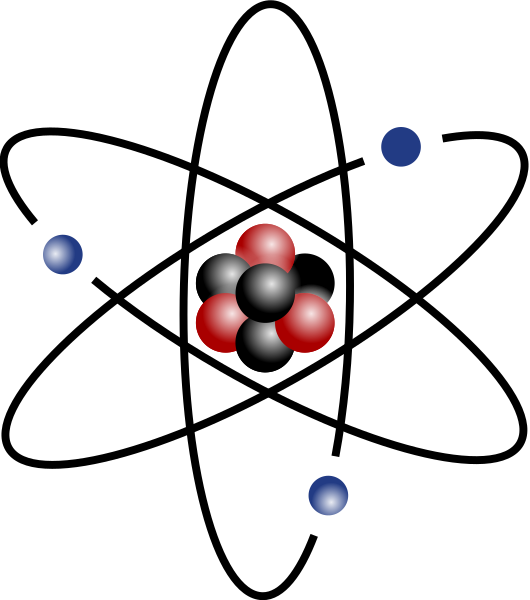
atom
noun
The basic building blocks of matter and the smallest unit of a chemical element.
Example: Boyle was developing a scientific theory of the material world based upon the ATOM.
fr: atome
biology
noun
The scientific study of life, including living organisms, their structures, functions, growth, evolution, origin, and interactions with each other and their environment.
Example: The Grants-in-Aid of Research program was established by the SICB in 1996 to provide small awards to graduate students in support of their research in the fields of integrative and comparative BIOLOGY.
fr: biologie
body system
noun
A collection of organs, tissues, and cells that work together to perform specific functions essential for the organism's growth, survival, and reproduction.
Example: All the body systems create the human.
fr: système corporel
catalyst
noun
A substance that increases the rate of a chemical reaction without itself undergoing any permanent chemical change.
Example: Although true empowerment must come from within, organisations, like a CATALYST, play a crucial role in this process.
fr: catalyseur
cell
noun
The smallest structural and functional unit of an organism, typically microscopic.
Example: Mitochondria are among the larger organelles in the CELL.
fr: cellule
chemical reaction
noun
A process where existing chemical substances, called reactants, are transformed into new substances, called products, by rearranging their atoms and breaking and forming chemical bonds.
Example: One possible way to deal with this problem is to control the motion of molecular in CHEMICAL REACTION.
fr: réaction chimique
chemistry
noun
The branch of science that deals with the identification of the substances of which matter is composed; the investigation of their properties and the ways in which they interact, combine, and change; and the use of these processes to form new substances.
Example: Advances in agricultural CHEMISTRY caused many farmers to simplify their rotations.
fr: chimie
concentration
noun
The relative amount of a given substance contained within a solution or in a particular volume of space; the amount of solute per unit volume of solution.
Example: It allows the cells to be sensitive to small changes in CONCENTRATION.
fr: concentration
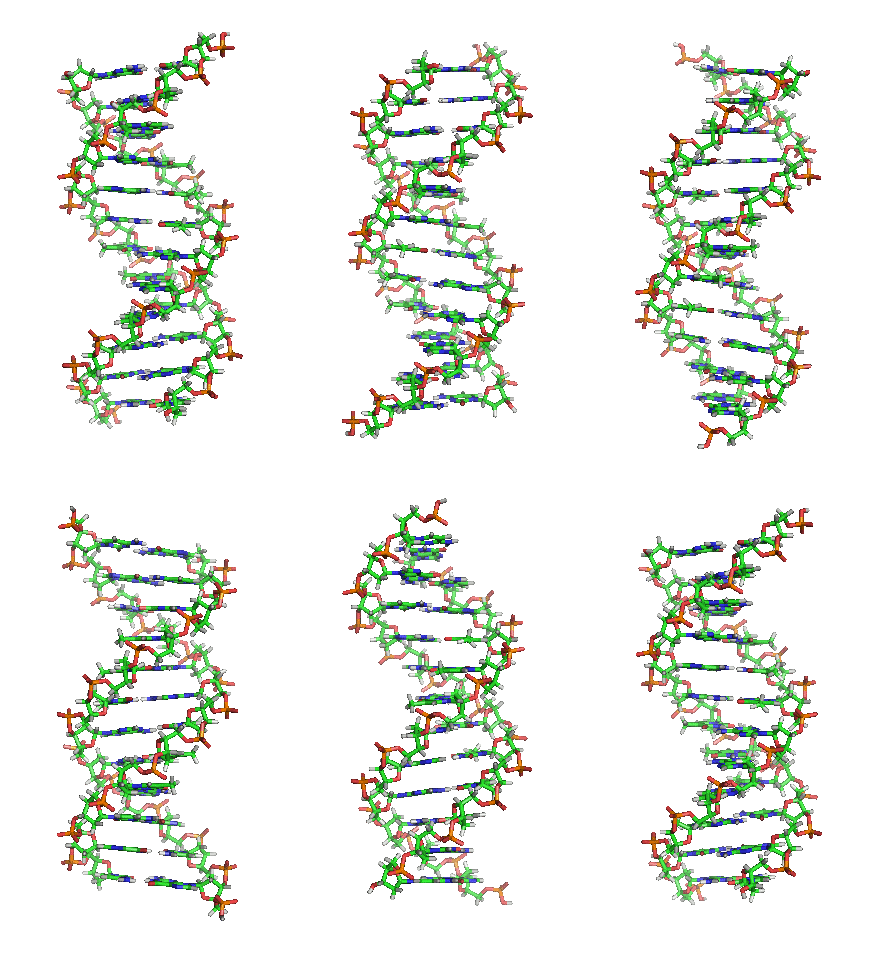
deoxyribonucleic acid (DNA)
noun
The molecule that carries genetic instructions for the development, functioning, and reproduction of all known living organisms.
Example: In the nucleus, DNA is associated with proteins called histones.
fr: acide désoxyribonucléique (ADN)
dilution
noun
The process of decreasing the concentration of a solute in a solution.
Example: A solution of aqueous hydrogen peroxide was prepared through serial DILUTION.
fr: dilution
electron
noun
A stable particle with a charge of negative electricity, found in all atoms.
Example: This ELECTRON transport chain is much simpler compared to that of the ammonia oxidizing bacteria.
fr: électron
energy
noun
Power derived from the utilization of physical or chemical resources, especially to provide light and heat or to work machines.
Example: They take electrons from food molecules extract the ENERGY and combine them to oxygen and protons.
fr: énergie
enzyme
noun
A substance produced by a living organism which acts as a catalyst to bring about a specific biochemical reaction.
Example: This is done by the action of an ENZYME.
fr: enzyme
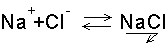
equation
noun
A symbolic representation of the changes which occur in a chemical reaction, expressed in terms of the formulae of the molecules or other species involved.
Example: The restricted model is represented by EQUATION.
fr: équation
evolution
noun
The process by which animals, plants, and other living organisms are transformed into different forms by the accumulation of changes over successive generations.
Example: A hypothesis to explain the role of meat-eating in human EVOLUTION.
fr: évolution
histogram
noun
A diagram consisting of rectangles whose area is proportional to the frequency of a variable and whose width is equal to the class interval.
Example: HISTOGRAM of Log Returns.
fr: histogramme
molecule
noun
A group of atoms bonded together, representing the smallest fundamental unit of a chemical compound that can take part in a chemical reaction.
Example: The protein complex loads onto the end of a DNA MOLECULE, as it travels along it produced two loops.
fr: molécule
organism
noun
An individual animal, plant, or single-celled life form.
Example: The ORGANISM's neuronal activity is suppressed to the maximum to maintain on the appropriate level of ATP needed.
fr: organisme
probability
noun
The extent to which an event is likely to occur, measured by the ratio of the favorable cases to the whole number of cases possible.
Example: CALCULATE THE PROBABILITY THAT AT LEAST 20 ARE UNHEALTHY.
fr: probabilité
protein
noun
Any of a class of nitrogenous organic compounds that have large molecules composed of one or more long chains of amino acids and are an essential part of all living organisms.
Example: Carbohydrates are usually respired during "explosive" exercise since it releases energy in manageable amounts and can be fully respired more quickly than lipids or PROTEINS.
fr: protéine
proton
noun
A stable particle occurring in all atomic nuclei, with a positive electric charge.
Example: Each has one essential amino acid that binds to a PROTON.
fr: proton
reagent
noun
A compound or mixture added to a system to start or test a chemical reaction.
Example: The pressure of the flow forces the REAGENT in the third syringe causes the piston to extent and hit into an immobile barrier causing the flow to stop.
fr: réactif
solute
noun
The substance that dissolves in a solvent to form a solution, which is a homogeneous mixture.
Example: Concentration refers to the composition of a solution and may be expressed as the ratio of SOLUTE solvent or SOLUTE solution.
fr: soluté
solution
noun
A liquid mixture in which the minor component (the solute) is uniformly distributed within the major component (the solvent).
Example: A buffer is a SOLUTION of weak acid or weak base.
fr: solution
solvent
noun
The liquid in which a solute is dissolved to form a solution.
Example: The remainder 1.96g was recrystallized, using ethanol as a SOLVENT.
fr: solvant
substrate
noun
The substance on which an enzyme acts.
Example: In order for enzymatic browning to occur, the enzyme, SUBSTRATE and oxygen must all be present.
fr: substrat
vector
noun
A quantity having direction as well as magnitude, especially as determining the position of one point in space relative to another.
Example: They are described by an angle and a VECTOR.
fr: vecteur
yield
noun
The amount obtained from a process or reaction relative to the theoretical maximum amount obtainable.
Example: Although temperature has been found to have little effect on YIELD, it affects germination and growing season of lettuce.