Hello everyone, my name is Anthony Nguyen. I live in Laval, and I am been studying Natural Sciences for a year and a haft. I choose this field of study because I am interested in science, especially in biology, where you can learn about the physiology of thing that surround you and about yourself. This glossary has a simple purpose: share some unusual words related to my field of study. Some words can be absolutely unknown from you. Others can seems usual, but then, the meaning in science can differ a bit.
anatomy
noun
The scientific study of the structure of living organisms, including humans, animals, and plants, from the microscopic level of cells to the macroscopic level of organs and entire bodies.
Example: In order to gain more insights concerning Neanderthal behaviour it is probably more pertinent to look at some other aspects of their ANATOMY.
fr: anatomie
apoptosis
noun
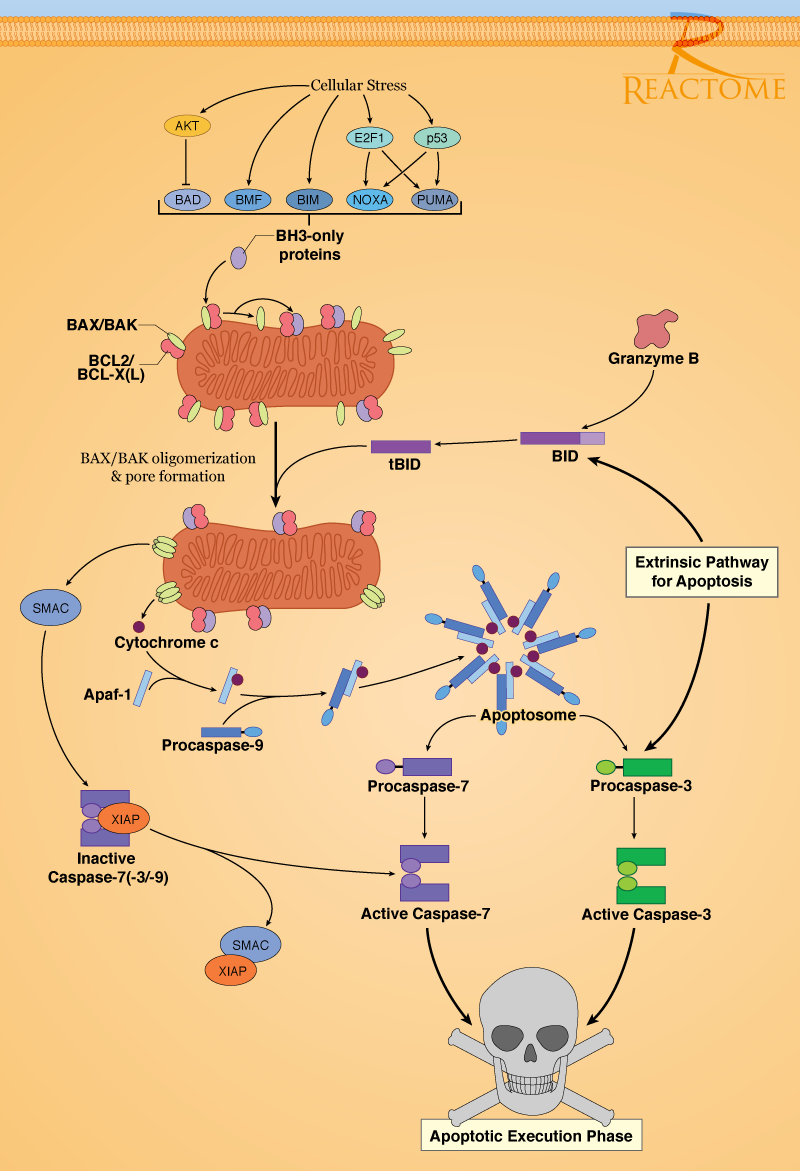
A tightly regulated process of cell suicide that eliminates unneeded, abnormal, or damaged cells from the body.
Example: It is found in all cells in the body and has 3 main roles; controlling the cell cycle, triggering APOPTOSIS and ensuring genetic stability.
fr: apoptose
enzyme
noun
A substance produced by a living organism which acts as a catalyst to bring about a specific biochemical reaction.
Example: This ENZYME was essential for the amoebas' survival.
fr: enzyme
glycolysis
noun
A metabolic pathway occurring in nearly all cells where a glucose molecule is broken down into two molecules of pyruvate, generating ATP (energy) and NADH (a reducing agent).
Example: The carp maintains ATP level by increasing the rate of GLYCOLYSIS.
fr: glycolyse
hemoglobin
noun
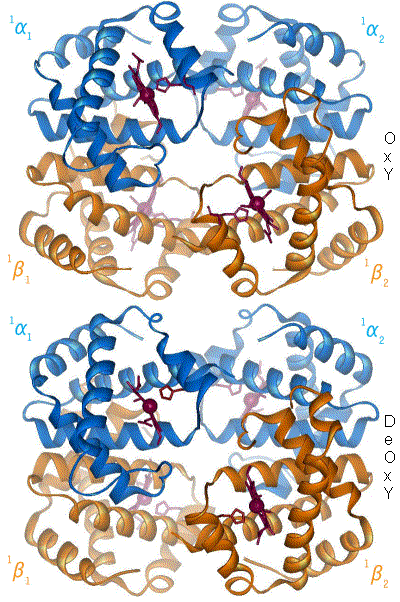
A red protein responsible for transporting oxygen in the blood of vertebrates. Its molecule comprises four sub units, each containing an iron atom bound to a heme group.
Example: In some cases nitrates are converted to nitrites in human body that react to HEMOGLOBIN in the blood to inhibit oxygen transport.
fr: hémoglobine
necrosis
noun
The death of most or all of the cells in an organ or tissue due to disease, injury, or failure of the blood supply.
Example: Hypovolaemia and its associated reduced circulatory function can cause inadequate tissue perfusion resulting in ischaemia, NECROSIS and eventually organ failure (O'Neill, 2003).
fr: nécrose
physiology
noun
The branch of biology that deals with the normal functions of living organisms and their parts.
Example: The knowledge needed is extensive, as the Anatomy and PHYSIOLOGY module demonstrates, and each module covers interesting and relevant topics needed for practical and background information to become a professional.
fr: physiologie
plasmid
noun
A genetic structure in a cell that can replicate independently of the chromosomes, typically a small circular DNA strand in the cytoplasm of a bacterium or protozoan. Plasmids are much used in the laboratory manipulation of genes.
Example: The DNA fragment and PLASMID then combine producing recombinant DNA.
fr: plasmide
polymerase
noun
An enzyme which brings about the formation of a particular polymer, especially DNA or RNA.
Example: The mitochondrion also needs some proteins encoded by the nuclear genome, such as RNA and DNA POLYMERASE, which are imported into the mitochondrial from the cystol.
fr: polymérase
vesicle
noun
A small fluid-filled bladder, sac, cyst, or vacuole within the body.
Example: It is thought that this structure is actually an intermediate state of the fusion process - where the rupture of the joining wall would form a larger single VESICLE.