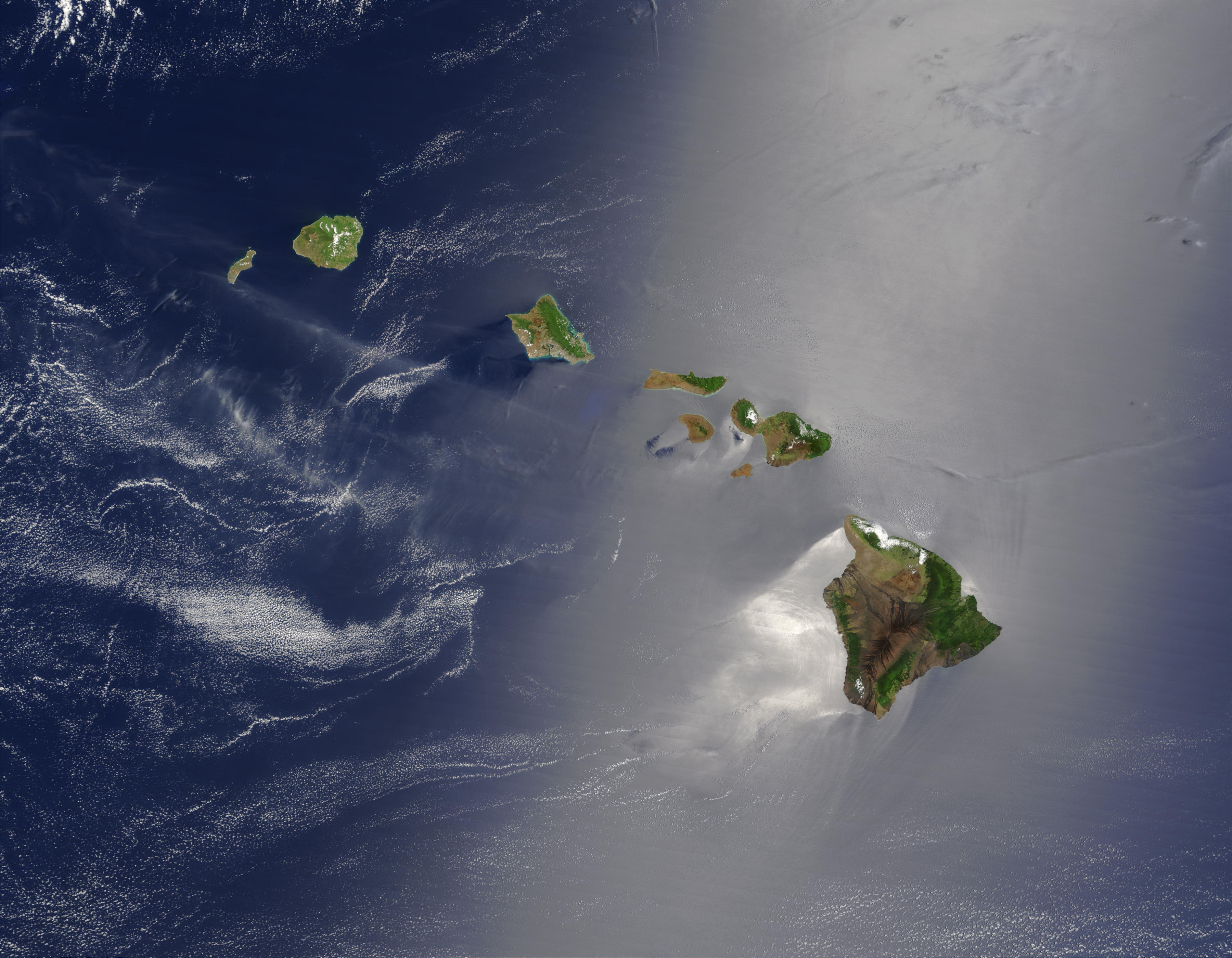
My name is Yarou Elias, and I am a college student who has been studying Natural Sciences for 1 year now. I have created a glossary containing 15 aerospace engineering-related terms, including pictures, definitions, French translations, pronunciation guides, example sentences showing how to use words correctly, etc. Aerospace Engineering is a field of study that involves a lot of mathematics, physics, and robotics. To find the words for this glossary I used websites like the official website of NASA, Translation director which have official glossary about aerospace. By learning and seeing this glossary you will learn new technical words, become more aware of technologies, how Earth functions, and global issues in space.
aeronautics
noun
Aeronautics is the science or art involved with the study, design, and manufacturing of air flight capable machines, and the techniques of operating aircraft and rockets within the atmosphere.
Example: Temporal suspension, anticipation, surprise, suspense, and the un-actualised connoting potentiality materialised as frames, grids, white surfaces, and figures drawn from AERONAUTICS.
fr: aéronautique
avionics
noun
Avionics are the electronic systems used on aircraft, artificial satellites, and spacecraft. Avionic systems include communications, navigation, the display and management of multiple systems, and the hundreds of systems that are fitted to aircraft to perform individual functions.
Example: No singular company builds an entire aircraft—there are many organizations playing a role in everything from designing airframes and engines to landing gear and avionics.
fr: avionique
energy
noun
Energy is the quantitative property that must be transferred to an object in order to perform work on, or to heat, the object. Energy is a conserved quantity; the law of conservation of energy states that energy can be converted in form, but not created or destroyed. The SI unit of energy is the joule, which is the energy transferred to an object by the work of moving it a distance of 1 metre against a force of 1 newton.
Example: The purpose of this research is to develop methods that reduce ENERGY consumption in a residential building in a hot and humid climate region (Thailand) using efficient architectural building components and renewable ENERGY (solar ENERGY) to produce electricity, domestic hot water, and supplemental cooling by night sky radiation.
fr: énergie
gravity
noun
Gravity (from Latin gravitas, meaning 'weight'), or gravitation, is a natural phenomenon by which all things with mass or energy—including planets, stars, galaxies, and even light—are brought toward (or gravitate toward) one another. On Earth, gravity gives weight to physical objects, and the Moon's gravity causes the ocean tides. The gravitational attraction of the original gaseous matter present in the Universe caused it to begin coalescing, forming stars – and for the stars to group together into galaxies – so gravity is responsible for many of the large-scale structures in the Universe. Gravity has an infinite range, although its effects become increasingly weaker on farther objects.
Example: In about 100 million years, they’ll be pulled into Saturn by its gravity, according to NASA.
fr: gravité
motion
noun
Motion is the change in position of an object with respect to its surroundings in a given interval of time . Motion is mathematically described in terms of displacement, distance, velocity, acceleration, time, and speed. Motion of a body is observed by attaching a frame of reference to an observer and measuring the change in position of the body relative to that frame.
Example: By the time of Copernicus, in the fifteenth century, the interaction of 77 mathematical circles, forming cycloids and ellipses as necessary, was required to account for the apparent MOTION of the Sun, Moon and five planets about the Earth.
fr: mouvement
orbit
noun
The path described by a heavenly body in its periodic revolution. Earth satellite orbits with inclinations near 0 degrees are called equatorial orbits because the satellite stays nearly over the equator. Orbits with inclinations near 90 degrees are called polar orbits because the satellite crosses over (or nearly over) the north and south poles.
Example: It was Galileo's contemporary, Kepler, who contributed a major breakthrough in that direction when he discovered that each planetary ORBIT could be represented by a single ellipse, with the sun at one focus.
fr: orbite
physics
noun
Physics — Physics (from Ancient Greek: φυσική (ἐπιστήμη), translit. physikḗ (epistḗmē), lit. 'knowledge of nature', from φύσις phýsis "nature") is the natural science that studies matter, its motion, and behavior through space and time, and that studies the related entities of energy and force. Physics is one of the most fundamental scientific disciplines, and its main goal is to understand how the universe behaves.
Example: Though our more recent notion of a developed science, such as PHYSICS or chemistry, is directly descended from this, our conception of how such sciences come about, and the methods of investigation appropriate to them, differs in certain important respects from that of the Aristotelians.
fr: physique
propulsion
noun
Propulsion means to push forward or drive an object forward . The term is derived from two Latin words: pro, meaning before or forward; and pellere, meaning to drive. A propulsion system consists of a source of mechanical power, and a propulsor (means of converting this power into propulsive force).
Example: This growth in interval size is matched by growth in rhythmic PROPULSION, so that the whole eight-bar phrase seems a complete unity, growing from the small seed of the first two notes.
fr: propulsion
rocket
noun
A rocket (from Italian rocchetto "bobbin") is a missile, spacecraft, aircraft or other vehicle that obtains thrust from a rocket engine. Rocket engine exhaust is formed entirely from propellant carried within the rocket before use. Rocket engines work by action and reaction and push rockets forward simply by expelling their exhaust in the opposite direction at high speed, and can therefore work in the vacuum of space.
Example: "Figuratively speaking", he declared, "in case of need, Soviet artillerymen can support the Cuban people with their ROCKET fire should aggressive forces in the pentagon dare to start intervention against Cuba" (Pravda, 10 July 1960, pp. 1-3).
fr: fusée
satellite
noun
A free-flying object that orbits the Earth, another planet, or the sun.
Example: The Soviet launch of the first SATELLITE (Sputnik) later in the year caused consternation among many Americans.
fr: satellite
temperature
noun
Temperature is a physical quantity expressing hot and cold. It is measured with a thermometer calibrated in one or more temperature scales. The most commonly used scales are the Celsius scale (formerly called centigrade) (denoted °C), Fahrenheit scale (denoted °F), and Kelvin scale (denoted K). The kelvin (the word is spelled with a lower-case k) is the unit of temperature in the International System of Units (SI), in which temperature is one of the seven fundamental base quantities. The Kelvin scale is widely used in science and technology.
Example: The MultiVent program can simultaneously simulate the indoor air TEMPERATURE and airflow rate with known indoor heat sources for buoyancy dominated, buoyancy-wind combined and wind dominated cases.
fr: température
trajectory
noun
A trajectory or flight path is the path that a object with mass in motion follows through space as a function of time. In classical mechanics, a trajectory is defined by Hamiltonian mechanics via canonical coordinates; hence, a complete trajectory is defined by position and momentum, simultaneously. Trajectory in quantum mechanics is not defined due to Heisenberg uncertainty principle that position and momentum can not be measured simultaneously.
Example: It is also what is involved when modern descriptions of the moon's TRAJECTORY are retained and observation statements referring to the fact that the moon is much larger when it is near the horizon than when it is high in the sky are regarded as resulting from an illusion, even though the cause of the illusion is not well understood.
fr: trajectoire
transonic
adjective
In aeronautics, transonic (or transsonic) flight is flying at or near the speed of sound 343 meters per second (1,235 km/h; 1,125 ft/s; 767 mph; 667 kn, at sea level under average conditions), relative to the air through which the vehicle is traveling. A typical convention used is to define transonic flight as speeds in the range of Mach 0.72 to 1.0 (965–1,235 km/h (600–767 mph) at sea level).
Example: The team said its sixth-generation transonic wing modeling capabilities and new aircraft control architecture have made significant contributions to the design.
fr: transsonique
wave
noun
A wave is a propagating dynamic disturbance (change from equilibrium) of one or more quantities.
Example: In particular, it is shown that (depending on the values of the parameters) short waves may appear on either side of the pressure distribution.
fr: onde
weight
noun
In science and engineering, the weight of an object is related to the amount of force acting on the object, either due to gravity or to a reaction force that holds it in place.
Example: And these are just thoughts about the spectacles qua physical objects of a certain size and WEIGHT.