20 My field of study is Science. The topic of this glossary will be about biology. terms
Hello, I'm Marianne. My field of study is Science. It's my second year in this program. This glossary will be about biology, one on my classes.This glossary is for anyone who wants to learn new scientific words, and for those who need to learn them for an exam...just like me! This glossary will help people that needs to understand these scientific words. For the readers I want you to quiz yourself on these words next! Bye!
adaptation
noun
The action or process of adapting or being adapted.
Example: Human adaptation to new environments is a fascinating field of study.
fr: adaptation
archenteron
noun
The rudimentary alimentary cavity of an embryo at the gastrula stage.
Example: The archenteron develops into the digestive tract during embryonic growth.
fr: archentéron
arthropod
noun
An arthropod is an invertebrate animal, meaning it lacks a backbone, that belongs to the phylum Arthropoda. Key characteristics include a segmented body, jointed appendages (like legs and antennae), and a hard, external skeleton called an exoskeleton, often made of chitin, which they must periodically shed to grow (molting). This group is the largest and most diverse phylum in the animal kingdom, encompassing insects, arachnids (spiders, mites), crustaceans (crabs, lobsters), and myriapods (centipedes, millipedes).
Example: The crab is an arthropod with a hard exoskeleton.
fr: arthropode
blastopore
noun
Blastopore means a mouth-like opening of the archenteron on the surface of the embryo during the invagination of the archenteron. In many animals, the Blastopore becomes the anus, but it may close at the end of the archenteron invagination and reappear at or near the same site.
Example: The blastopore is the opening that forms early in embryonic development.
fr: blastopore
cell
noun
The smallest structural and functional unit of an organism, typically microscopic and consisting of cytoplasm and a nucleus enclosed in a membrane.
Example: Mitochondria is the powerhouse of the cell.
fr: cellule
climate
noun
Climate refers to the long-term pattern of weather conditions in a specific region, typically averaged over a period of 30 years or more.
Example: The desert has a hot and dry climate.
fr: climat
endoskeleton
noun
An internal skeleton, such as the bony or cartilaginous skeleton of vertebrates.
Example: Humans have an endoskeleton made of bones.
fr: endosquelette
eumycete
noun
A division of fungi that includes all true fungi (as the ascomycetes and basidiomycetes) as distinguished from the slime molds.
Example: The scientist observed a eumycete under the microscope.
fr: eumycète
evolution
noun
The process by which animals, plants, and other living organisms are transformed into different forms by the accumulation of changes over successive generations.
Example: The evolution of the human species was the subject of the series.
fr: évolution
exoskeleton
noun
A rigid external covering for the body in some invertebrate animals, especially arthropods, providing both support and protection.
Example: The beetle’s exoskeleton protects its body.
fr: exosquelette
extinction
noun
The fact or process of a species, family, or other group of animals or plants becoming extinct.
Example: Dinosaurs disappeared because of extinction.
fr: extinction
fermentation
noun
The chemical breakdown of a substance by bacteria, yeasts, or other microorganisms, typically involving effervescence and the giving off of heat.
Example: Yeast makes bread rise through fermentation.
fr: fermentation
fossil
noun
The remains or impression of a prehistoric organism preserved in petrified form or as a mold or cast in rock.
Example: Fossils are a proof that evolution happened.
fr: fossile
invertebrate
noun
An animal lacking a backbone, such as an arthropod, mollusk, annelid, coelenterate, etc.
Example: A jellyfish is an invertebrate because it has no backbone.
fr: invertébré
mammal
noun
A warm-blooded vertebrate animal of a class that is distinguished by the possession of hair or fur, the secretion of milk by females for the nourishment of the young, and (typically) the birth of live young.
Example: A whale is a mammal that breathes air.
fr: mammifère
mold
noun
A hollow container used to give shape to molten or hot liquid material (such as wax or metal) when it cools and hardens.
Example: Old bread often grows mold.
fr: moisissure
mollusk
noun
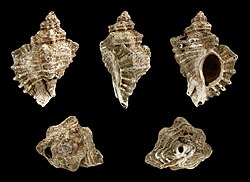
An invertebrate of a large phylum which includes snails, slugs, mussels, and octopuses. They have a soft unsegmented body and live in aquatic or damp habitats, and most kinds have an external calcareous shell.
Example: The quantity of each species of mollusc was entered on a table and together with archeology.
fr: mollusque
mutation
noun
The changing of the structure of a gene, which may result in a variant form able to be transmitted to subsequent generations, caused by the alteration of single base units in DNA, or the deletion, insertion, or rearrangement of larger sections of genes or chromosomes.
Example: Blue eyes comes from a mutation on a chromosome.
fr: mutation
symmetry
noun
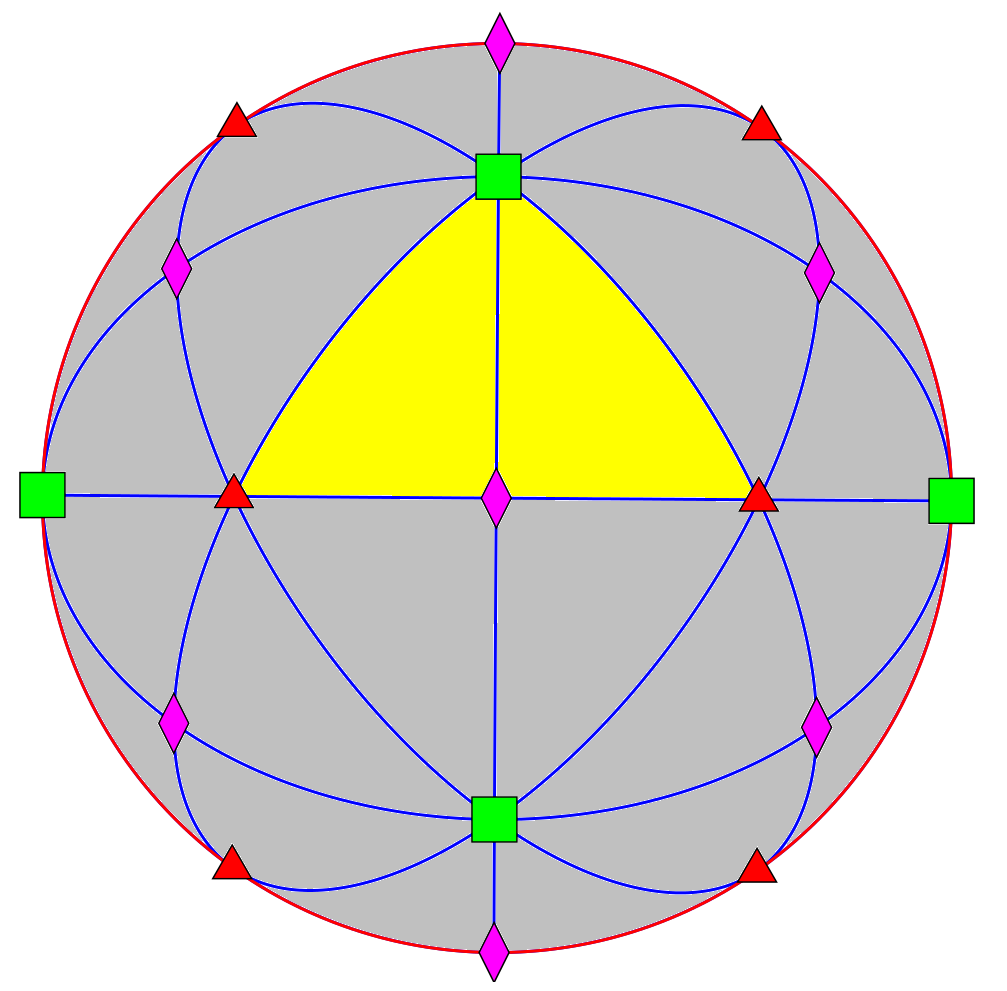
The quality of being made up of exactly similar parts facing each other or around an axis.
Example: The symmetry of this structure is broken down by the biology.
fr: symétrie
vertebrate
noun
An animal of a large group distinguished by the possession of a backbone or spinal column, including mammals, birds, reptiles, amphibians, and fishes.
Example: A frog is a vertebrate because it has a backbone.