Hello everyone, I am Christina, and I am currently in my third year of studying Science at Montmorency College, intending to specialize in medicine. I am a student-athlete balancing both academic responsibilities and athletic pursuits. I dedicate around 35 hours each week to practicing figure skating. My educational path allows me to learn the science behind our world. This glossary introduces various words related to my field of study while also considering my sport. It is most useful for aspiring science students to gain a sense of what to expect from this challenging program, as well as for students already in the program who want to manage both commitments.
analysis
noun
Detailed examination of the elements or structure of something.
Example: The use of a financial analysis only demonstrates to me how my business has performed in the past year and how it is proceeding in terms of targets.
en: analyse
biology
noun
The study of living organisms, divided into many specialized fields that cover their morphology, physiology, anatomy, behavior, origin, and distribution.
Example: This shows how much more work is needed to be done on insect biology and ecology before we can think about conservation.
en: biologie
chemistry
noun
The branch of science that deals with the identification of the substances of which matter is composed; the investigation of their properties and the ways in which they interact, combine, and change; and the use of these processes to form new substances.
Example: Living radical polymerization is a popular topic in macromolecular chemistry as well as chemistry in general due to its applications in the materials industry.
en: chimie
competition
noun
The activity or condition of competing.
Example: Other organizations perform the same function and providing goods or services to the same customers are defined as competitors. Strong competitors and tight competition with other big supermarkets: Asda, Sainsbury's and Morrisons.
en: compétition
discipline
noun
The practice of training people to obey rules or a code of behavior, with punishment or other undesired consequences for those failing to comply.
Example: The success of a hoplite army often depended on the soldier's discipline and a controlled courage, as it was crucial to stay in formation, breaking ranks threatened the cohesion of a phalanx, and due to the gruesome combat losing composure was often a distinct possibility.
en: discipline
experiment
noun
A scientific procedure undertaken to make a discovery, test a hypothesis, or demonstrate a known fact.
Example: The stand against vivisections is not just based in the unreliability of the results from an experiment, but also against the manner in which the experiments are conducted.
en: expérience
health
noun
The state of being free from illness or injury.
Example: E.g. consumer buys a certain brand of yogurts and expects their consumption to be both pleasant and beneficial for his health, but if the positive effects are not perceived by him, disconfirmation occurs and then dissatisfaction.
en: santé
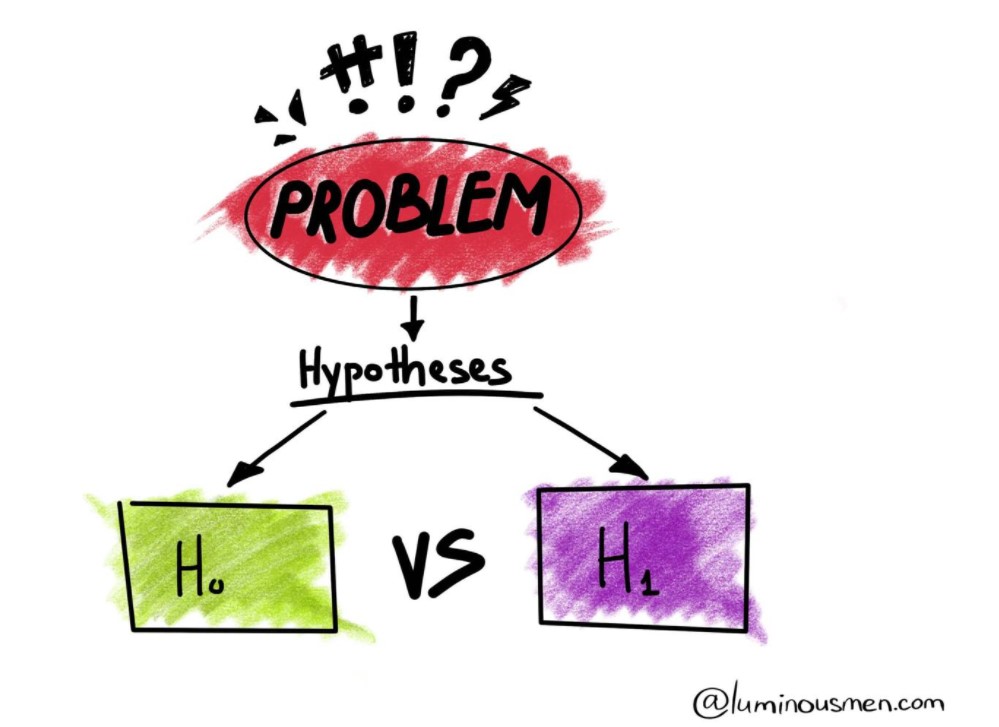
hypothesis
noun
A supposition or proposed explanation made on the basis of limited evidence as a starting point for further investigation.
Example: Another study which gives evidence for the arboreal hypothesis also looks at locomotion.
en: hypothèse
in training
noun
Undergoing physical training for a sporting event.
Example: I think attacking play is going to come in training in the next few weeks.
en: en entraînement
knowledge
noun
Facts, information, and skills acquired by a person through experience or education; the theoretical or practical understanding of a subject.
Example: It argued that improving the welfare, education, technical knowledge, and active participation of all people will increase both productive capacity and actual production more than growth strategies that rely on trickle-down for transmission of benefits.
en: connaissance
laboratory
noun
A room or building equipped for scientific experiments, research, or teaching, or for the manufacture of drugs or chemicals.
Example: A chemical reaction in a labo can illustrate this point, the scientists are aware of the timing and order of events as a reaction proceeds and attribute the cause to the nature and chemical behaviour of the two substances.
en: laboratoire
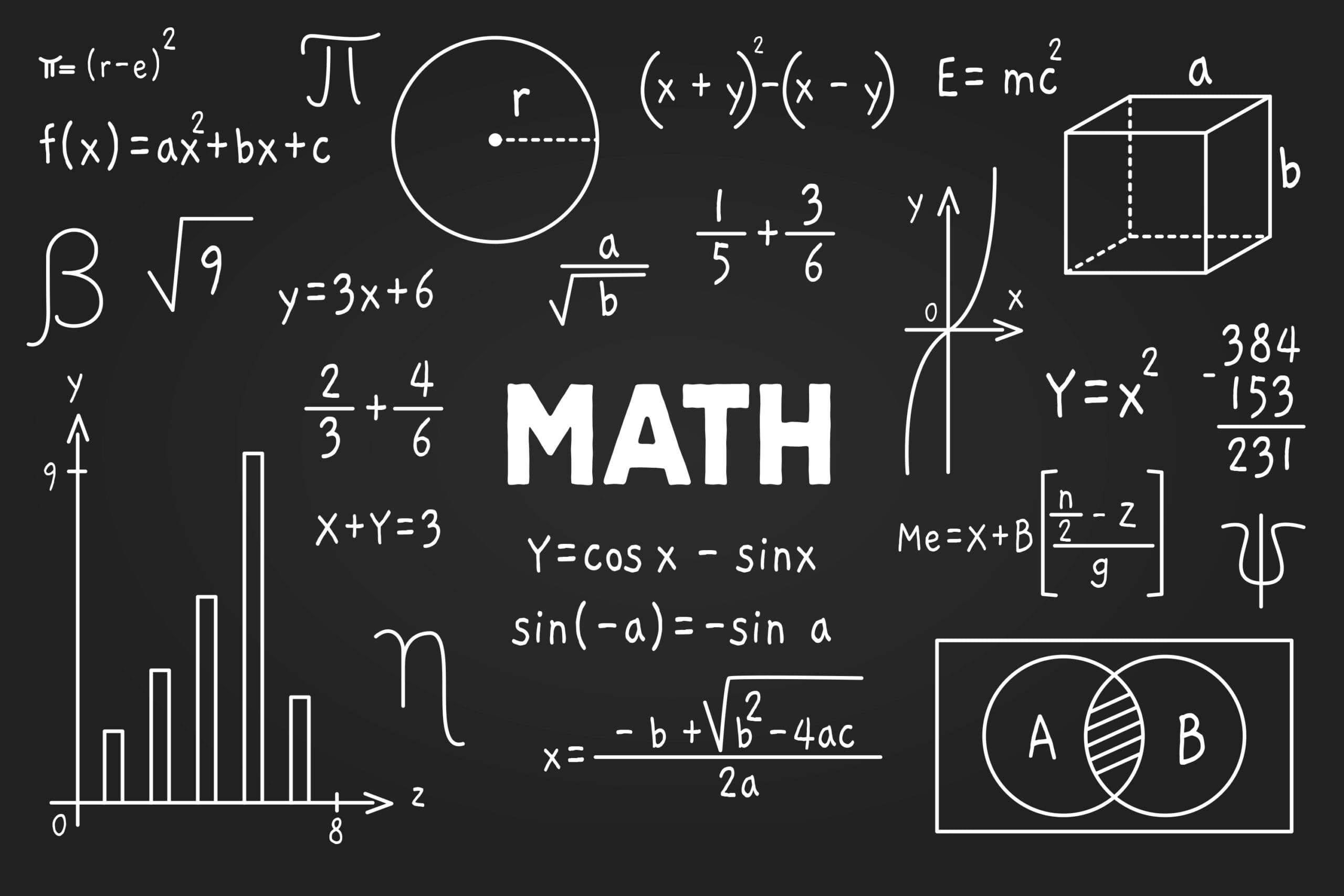
mathematics
noun
The abstract science of number, quantity, and space. Mathematics may be studied in its own right (pure mathematics), or as it is applied to other disciplines such as physics and engineering (applied mathematics).
Example: In India, mathematics existed, but it failed to develop both modern arithmetic and book-keeping.
en: mathématiques
medicine
noun
The science or practice of the diagnosis, treatment, and prevention of disease (in technical use often taken to exclude surgery).
Example: The use of stem cells in medicine is not only relevant for curing diseases such as diabetes and muscular dystrophy, but also in gaining an increased understanding into the development of our own species.
en: médecine
microscope
noun
An optical instrument used for viewing very small objects, such as mineral samples or animal or plant cells, typically magnified several hundred times.
Example: They are large enough to be seen under a light microscope, but a detailed examination can only be carried out using an electron microscope.
en: microscope
observation
noun
The action or process of observing something or someone carefully or in order to gain information.
Example: Based on this observation, a log normal distribution seemed to particularly appropriate.
en: observation
organization
noun
The action of organizing something.
Example: The organization of conferences and seminars.
en: organisation
physics
noun
The branch of science concerned with the nature and properties of matter and energy. The subject matter of physics, distinguished from that of chemistry and biology, includes mechanics, heat, light and other radiation, sound, electricity, magnetism, and the structure of atoms.
Example: Even though the atom was effectively a combination of Bohr's brilliant imagination and classical physics ideas it lacked mathematical reasoning and a final, stable condition that meant it had to be adjusted after every new observation.
en: physique
research
noun
The systematic investigation into and study of materials and sources in order to establish facts and reach new conclusions.
Example: Recent research has shown that even consumers that are likely to switch to lower fat alternatives in at least some products tend to eat higher quantities of food to compensate so that they end up taking on board the same levels of fat anyway 9, so again the impact of the tax on tackling the problem of obesity is questionable.
en: recherche
skating
noun
The action or activity of gliding on ice skates or roller skates as a sport or pastime.
Example: Fletcher compares the skaters to 'black swallows,' and at the end of the poem describes the sound of their skating to 'the brushing together of thin wing-tips of silver'.
en: patinage
student-athlete
noun
A student enrolled in an educational institution who is also an active participant in the school's competitive sports programs.
Example: The student-athlete was able to balance her demanding academic schedule with her commitment to the university's swim team.
en: étudiant-athlète
technology
noun
The application of scientific knowledge for practical purposes, especially in industry.
Example: Birds are becoming more productive as knowledge and technology continues to improve, and will be needed in the future as the world population continues to grow.
en: technologie
theory
noun
A supposition or a system of ideas intended to explain something, especially one based on general principles independent of the thing to be explained.
Example: It seems processes and relative ideas can easily traverse into topics of environmental adaptation, pathology, and further genetic theory.