A business prospect is a potential customer, client, or business partner that a company actively seeks to engage with, typically in hopes of a future profitable relationship. The term can also refer to a company's future business opportunities or potential for success in a specific market or venture.
Closing ratio
noun
A closing ratio is a sales metric that measures the percentage of sales opportunities or prospects that are successfully converted into paying customers. It is calculated by dividing the number of deals closed by the total number of sales opportunities and then multiplying by 100 to get a percentage. A higher closing ratio indicates that a sales team is more effective at turning potential interest into actual revenue, serving as a key performance indicator (KPI) for sales success and process efficiency.
Conversion rate
noun phrase
A conversion rate is the percentage of website visitors or users who complete a specific, desired action, such as making a purchase, signing up for a newsletter, or filling out a form. It is calculated by dividing the total number of conversions (desired actions) by the total number of visitors or interactions during a given period and expressing the result as a percentage.
Dark Social
Noun
content shared privately (messages, emails) that's hard to track.
Export
noun
send (goods or services) to another country for sale.
import
noun
Bring (goods or services) into a country from abroad for sale.
LTV (Lifetime Value
Noun
the total revenue a customer generates over time.
Marketing Mix
noun
The 4 “P”s: price, product, promotion, and place (point of sale). A combination of factors that can be controlled by a company to influence consumers to purchase its products.
Objection
noun
In business, a sales objection is a specific concern, question, or reservation that a potential customer communicates, indicating a reason why they might not purchase a product or service. Instead of a complete rejection, objections are often viewed by sales professionals as opportunities to understand a prospect's true needs, provide clarifying information, build trust, and guide the customer to a solution, ultimately helping to close the sale.
Pain Point
Noun
In sales, a pain point is a significant problem, frustration, or unmet need that a current or prospective customer experiences with a product, service, or their overall situation.
Product Positioning
Noun Phrase
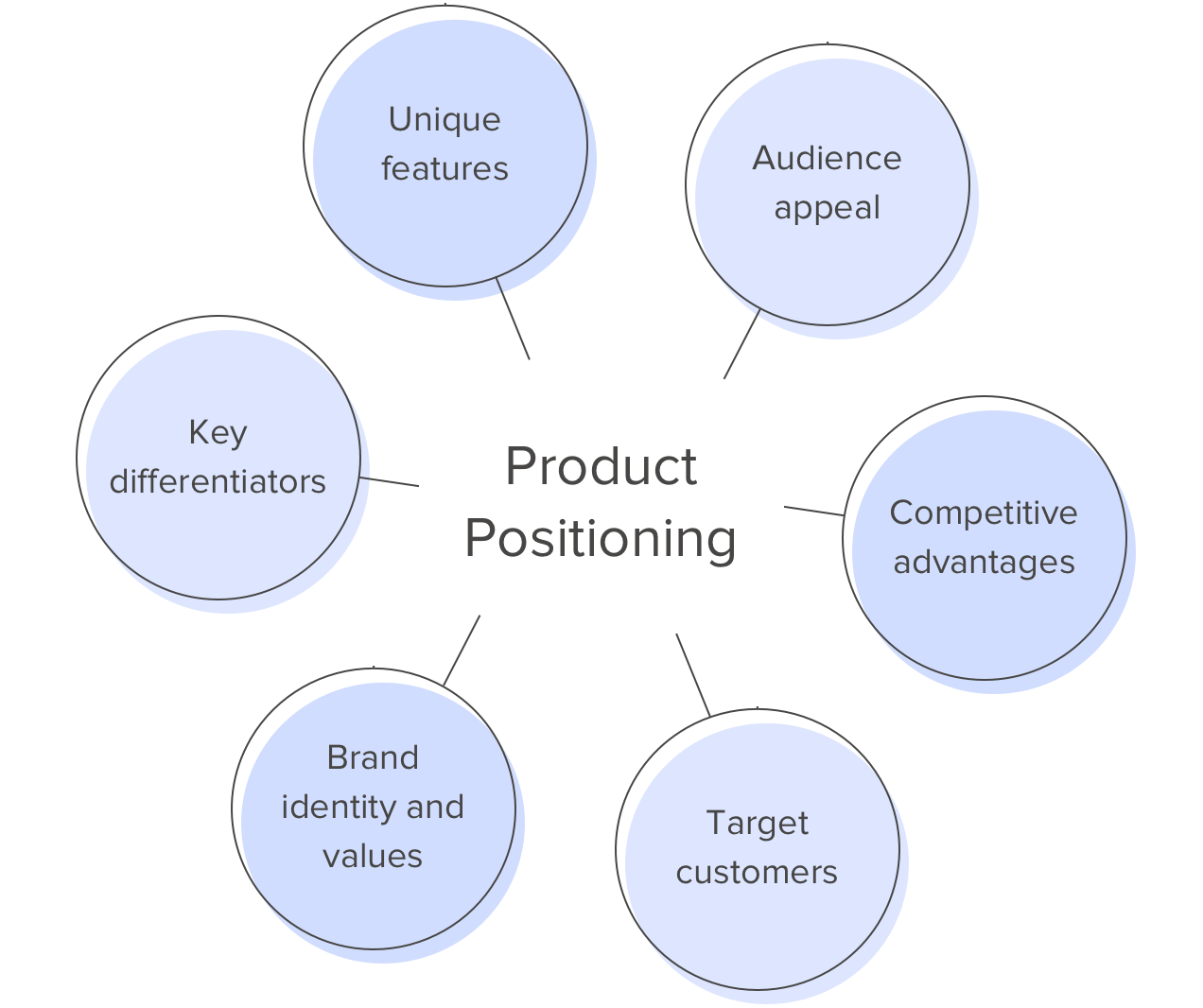
The image of your product or service that you want members of your target audience to have in their minds. Because first impressions of your brand count, it can be helpful to craft a positioning statement that communicates how your product or service fulfills customer needs. For example, Mailchimp helps small businesses become the brands they want to be with smarter technology built for big things.
Questionnaire
noun
a set of printed or written questions with a choice of answers, devised for the purposes of a survey or statistical study.
Quota
noun
a fixed share of something that a person or group is entitled to receive or is bound to contribute. A limited quantity of a particular product which under official controls can be produced, exported, or imported.
Retargeting
Noun
ads shown to people who already interacted with your brand.
Sales script
noun
A sales script is a rewritten, structured guide that salespeople use to conduct conversations with prospective customers, covering key talking points, product information, and responses to common objections to effectively convey value and close deals.
Seller
noun
a person who sells something.
Skim pricing
Noun
Strategy that involves pricing a product higher at first in order to eventually lower it once competitors enter the market.
SPIN Selling
noun
a questioning method: Situation, Problem, Implication, Need-payoff.
Tracking Code
Noun Phrase
A small piece of JavaScript placed on a website that sends data to Google Analytics. The tracking code is what enables Google Analytics to report information about your audience, including how they got to your website, how long they stayed, and what they did while they were there.
Value chain
noun
A value chain is the full range of activities a business undertakes to create a product or service and deliver it to customers, with the goal of achieving a competitive advantage by adding value at each step.