Angelica's Early Childhood Education Program Glossary
30 Early Childhood Education terms
Hi, my name is Angelica, but everyone calls me Angie. I'm currently in my third year at Montmorency College, studying in the Early Childhood Education program. I've always loved learning about a child development and exploring different ways to support young children as they grow and learn. This glossary will be practical for students who are studying in this field, and it can also define the most important terms to know.It contains Early Childhood Education terms, parts of speech, definitions in sentence case from Google Search using "define" + the term, text-to-speech pronunciation models, images from Wikimedia Commons, automatic translations to French, and authentic example sentences from the Lextutor Concordancer. I also want my readers to have a clear vision of the reality of this program.
advocacy
noun
Advocacy involving children and families is the act of speaking up or acting on behalf of children and families to ensure their rights, needs, and interests are protected and promoted in areas like health, education, and well-being.
Example: Advocacy is any action supporting or defending a specific cause or issue. Advocacy aims to cause change and various activities can accomplish this goal. Often those of us in the early childhood education field feel uncomfortable with the idea of advocacy.
en: défense
child development
noun (phrase)
Child development is the ongoing process of changes and skill acquisition that a child experiences from birth to young adulthood, encompassing physical, cognitive, language, social, and emotional growth.
Example: The ability to comprehend the minds of people around you are imperative for CHILD DEVELOPMENT: it not only aids communication and interaction, but it also influences the person the child eventually becomes.
en: développement de l'enfant
collaboration
noun
The action of working with someone to produce or create something.
Example: Collaboration with early childhood educators involves building partnerships between teachers, families, other professionals, and the community to support a child's learning and development. Key aspects include sharing information and expertise, consistent communication, mutual respect, shared decision-making, and working towards common goals to ensure a positive, engaging, and supportive environment for the child.
en: collaboration
confidentiality
noun
The state of keeping or being kept secret or private.
Example: Confidentiality is crucial for childhood educators as it builds trust, upholds ethical and legal responsibilities, maintains professional boundaries, and safeguards the well-being of children and families by protecting their sensitive information from unauthorized disclosure.
en: confidentialité
developmentally appropriate practice
phrase
Developmentally Appropriate Practice (DAP) is an approach to teaching and caring for young children that is grounded in research on child development and learning. DAP involves understanding a child's individual age, abilities, interests, and cultural background, then tailoring teaching methods to support their optimal social, emotional, physical, and cognitive growth through play-based and strengths-based activities.
Example: A preschool educator using children's interest in building to introduce letters by creating signs for their block structure, thus linking prior knowledge to new learning, fostering collaboration, and allowing for creative expression and problem-solving through hands-on exploration rather than passive instruction.
en: pratiques adaptées au développement
emergent curriculum
phrase
An emergent curriculum is a flexible, child-centered educational approach where learning evolves based on children observed interests, questions, and strengths, rather than a predetermined lesson plan.
Example: Creating a classroom gardens after children show interest in plants, building a nature-based play area using natural materials, or setting up a veterinarian clinic after children pretend to care for animals.
en: programme d'études émergent
empathy
noun
The ability to understand and share the feelings of another.
Example: By putting ourselves in the other person's shoes and trying to make ourselves feel what they are feeling can help to establish EMPATHY for the other person, doesn't mean we have to agree with them or their ideas, but it does help to be understanding and patient.
en: empathie
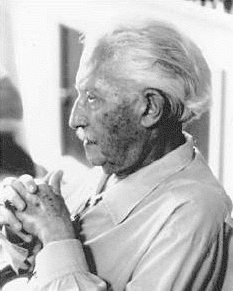
Erik Erikson
noun
Erik Homburger Erikson was a German-American child psychoanalyst and visual artist known for his theory on psychosocial development of human beings. He coined the phrase identity crisis.
Example: In Erik Erikson's theory, the main developmental stage in early childhood is Autonomy vs. Shame and Doubt, which occurs between the ages of 1 and 3. Children at this stage focus on developing a sense of independence and personal control over their actions. Supportive environments that allow for exploration within limits foster a sense of autonomy, while excessive criticism or control can lead to feelings of self-doubt and inadequacy.
en: Erik Erikson
family engagement
phrase
Family engagement is a partnership between families and educational or support professionals, focused on building intentional, respectful, and authentic relationships to support a child's learning and development.
Example: Family engagement in early childhood education is a partnership between families and educators that involves active, collaborative involvement to support a child's learning, development, and well-being through mutual respect and shared goals.
en: engagement familial
fine motor skills
phrase
Fine motor skills are the coordination of the small muscles in the hands and fingers, working with the eyes, to perform precise and controlled movements.
Example: Coordinated movements of small muscles in the hands, fingers, and wrists, enabling precise, dexterous actions like writing, buttoning, and using utensils.
en: motricité fine
first aid
noun
The immediate, emergency assistance given to an injured or a person before professional medical help arrives.
Example: It is a tool that is probably more useful in triage situations to establish priorities or perhaps even to give support to a lone practitioner unsure of a course of action to take for instance, when delivering emergency FIRST AID.
en: premiers soins
gross motor skills
noun. phrase
Gross motor skills are physical abilities that rely on large muscle groups in the body, such as those in the legs, arms, and torso, to perform whole-body movements and maintain balance.
en: motricité globale
HighScope
noun
HighScope is a comprehensive early childhood education approach centered on active learning, where children, guided by teachers, learn through hands-on experiences with people, materials, events, and ideas.
Example: The HighScope approach is a research-based, play-based educational framework for early childhood that emphasizes active learning and hands-on experiences.
en: HighScope
hygiene
noun
Conditions or practices conducive to maintaining health and preventing disease, especially through cleanliness.
Example: To ascertain what level of importance the healthcare professionals give to adhering to hand HYGIENE policies.
en: hygiène
inclusion
noun
The action or state of including or of being included within a group or structure.
Example: In an early childhood setting, inclusion is the practice of ensuring every child, regardless of ability or background, has equal opportunities for active, meaningful participation, a sense of belonging, and full engagement in all aspects of the daily program and activities alongside their peers.
en: inclusion
Maslow's pyramid of needs
phrase
Maslow's pyramid of needs, or hierarchy of needs, is a motivational theory in psychology that describes human behavior as driven by five levels of needs, arranged in a pyramid from most basic to most advanced.
Example: Physiological needs like food and water; safety needs such as a home and job security; love and belonging needs like friendship and family; esteem needs including recognition and self-respect; and self-actualization needs such as personal growth and realizing one's full potential.
en: pyramide de Maslow
milestones
noun
An action or event marking a significant change or stage in development.
Example: This can affect such factors as the achievement of developmental MILESTONES, formation of peer relationships and, in adulthood, their own parenting ability.
en: jalons
Montessori
noun
A system of education for young children that seeks to develop natural interests and activities rather than use formal teaching methods.
Example: The Montessori approach is a child-centered educational method focused on fostering independent, self-directed learning through hands-on activities in a specially prepared environment. Developed by Dr. Maria Montessori, it provides a holistic approach to education that develops the whole child—cognitively, socially, emotionally, and physically. Key features include mixed-age classrooms, specialized self-correcting materials, uninterrupted work periods, and trained teachers who act as guides and observers rather than traditional instructors.
en: Montessori
observation
noun
The action or process of observing something or someone carefully or in order to gain information.
Example: Based on this OBSERVATION, a log normal distribution seemed to particularly appropriate.
en: observation
Piaget
noun
Jean William Fritz Piaget was a Swiss psychologist's known for his work on child development. Piaget's theory of cognitive development and epistemological view are together called genetic epistemology. Piaget placed great importance on the education of children.
Example: Each one of PIAGET's stages is intended to serve as a framework, which illustrates the principles, capabilities and constraints for the mind as the child matures.
en: Piaget
play-based-learning
noun (phrase)
Play-based learning is an educational approach where children's natural curiosity and engagement are fostered through play to learn, explore, and construct their own understanding of the world.
Example: Play-based Learning: Benefits and Examples | Journey Early ...Play-based learning examples include a water table where children explore water's properties, building blocks to develop problem-solving skills, and pretend play with a kitchen set to foster language and social skills.
en: apprentissage par le jeu
positive reinforcement
phrase
Positive reinforcement is the process of increasing a desired behavior by adding a desirable, pleasant, or rewarding stimulus immediately after the behavior occurs.
Example: A classic example of positive reinforcement in early childhood education is a teacher saying, "I love how you shared your blocks with everyone!" after a child shared his toys or giving a sticker for good behavior.
en: renforcement positif
ratio
noun
The quantitative relation between two amounts showing the number of times one value contains or is contained within the other.
Example: A common example of a ratio with children in a childcare setting is 1 adult for every 8 preschoolers, meaning there is one teacher for a group of up to eight children of that age. Ratios ensure safety, adequate supervision, and individualized attention for children by setting a maximum number of children one adult can be responsible for at a time.
en: ratio
Reggio Emilia
noun
Reggio Emilia refers to an educational approach to early childhood education that originated in the town of Reggio Emilia, Italy, after World War II.
Example: The Reggio Emilia approach is a student-centered, constructivist educational philosophy that views children as capable and creative learners who learn through self-guided exploration and play in a supportive community environment.
en: Reggio Emilia
representation
noun
The action of speaking or acting on behalf of someone or the state of being so represented.
Example: In early childhood, a sentence demonstrating the importance of representation is: "Seeing themselves and their diverse cultures reflected in books and educational materials helps children develop a sense of belonging and understand the world,".
en: représentation
routine
noun
A sequence of actions regularly followed; a fixed program.
Example: Daily preschool schedules, that includes a predictable sequence of events like arrival, free play, circle time, learning activities, meals, rest, and outdoor play, followed by departure. Routines provide children with a sense of security and structure, promoting self-regulation, autonomy, and social skills as they learn to anticipate and participate in recurring activities.
en: routine
self-regulation
noun
The fact of something such as an organization regulating itself without intervention from external bodies.
Example: However, due to the richness of quality of literature and the constraining variable of essay length available, the scope of behavioral and emotional problems for this essay will only focus on sleeping and excessive crying.This essay will explore both problem and provide an analysis of the core concepts of lack of SELF-REGULATION and the long and short term consequences the infants will face.
en: autorégulation
separation anxiety
noun phrase
Separation Anxiety Disorder is an anxiety disorder in which an individual experiences excessive anxiety regarding separation from home and/or from people to whom the individual has a strong emotional attachment. Separation anxiety is a natural part of the developmental process.
Example: Parental presence or co sleeping is a method that assumes that SEPARATION ANXIETY of the child from their parent is the cause of sleep problems.
en: anxiété de séparation
temperament
noun
A person's or animal's nature, especially as it permanently affects their behavior.
Example: Bowlby's views are also echoed in certain publications from the Home Office, a report by the Ministry of Education in 1955, deals with the problems of the maladjusted child, it states that children's early nurture is key to their development and later TEMPERAMENT.
en: tempérament
Waldorf
noun
"Waldorf" most commonly refers to the Waldorf education system, an approach to holistic child development based on Rudolf's teachings of Rudolf Steiner.
Example: The Waldorf approach to early childhood education, founded by Rudolf Steiner, focuses on nurturing young children from birth to age seven through imitation and imaginative play in a nurturing, nature-connected environment.