HI! I'm a student in psychology and I made this glossary for students that will have psychology courses, and what type of words you will learn in the future. Have fun!
adaptation
noun
In psychology, adaptation refers to the process of adjusting one's thoughts, emotions, and behaviors to cope with changes or challenges in the environment.
Example: According to Dantas (2005), the concept of innovation "refers to the search for, development, ADAPTATION, imitation and adoption of technologies that are new to a specific context".
fr: adaptation
addiction
noun
Addiction is a chronic condition that can affect many aspects of your life, including your physical and mental health, relationships and career. There are two main forms of addiction: substance use disorders and behavioral addictions.
Example: Addiction doesn’t happen from having a lack of willpower or as a result of making bad decisions.
fr: addiction
analysis
noun
Word analysis is when you break down a word by looking for prefixes, suffixes, and root words.
Example: To analyse something means to examine it in detail, explain and interpret it.
fr: analyse
anorexia
noun
People with this eating disorder have a very low body weight, an intense fear of gaining weight and a flawed way of seeing their body.
Example: This pain is also normally accompanied with nausea and ANOREXIA-both of which denies.
fr: anorexie mentale
antisocial personality disorder
noun
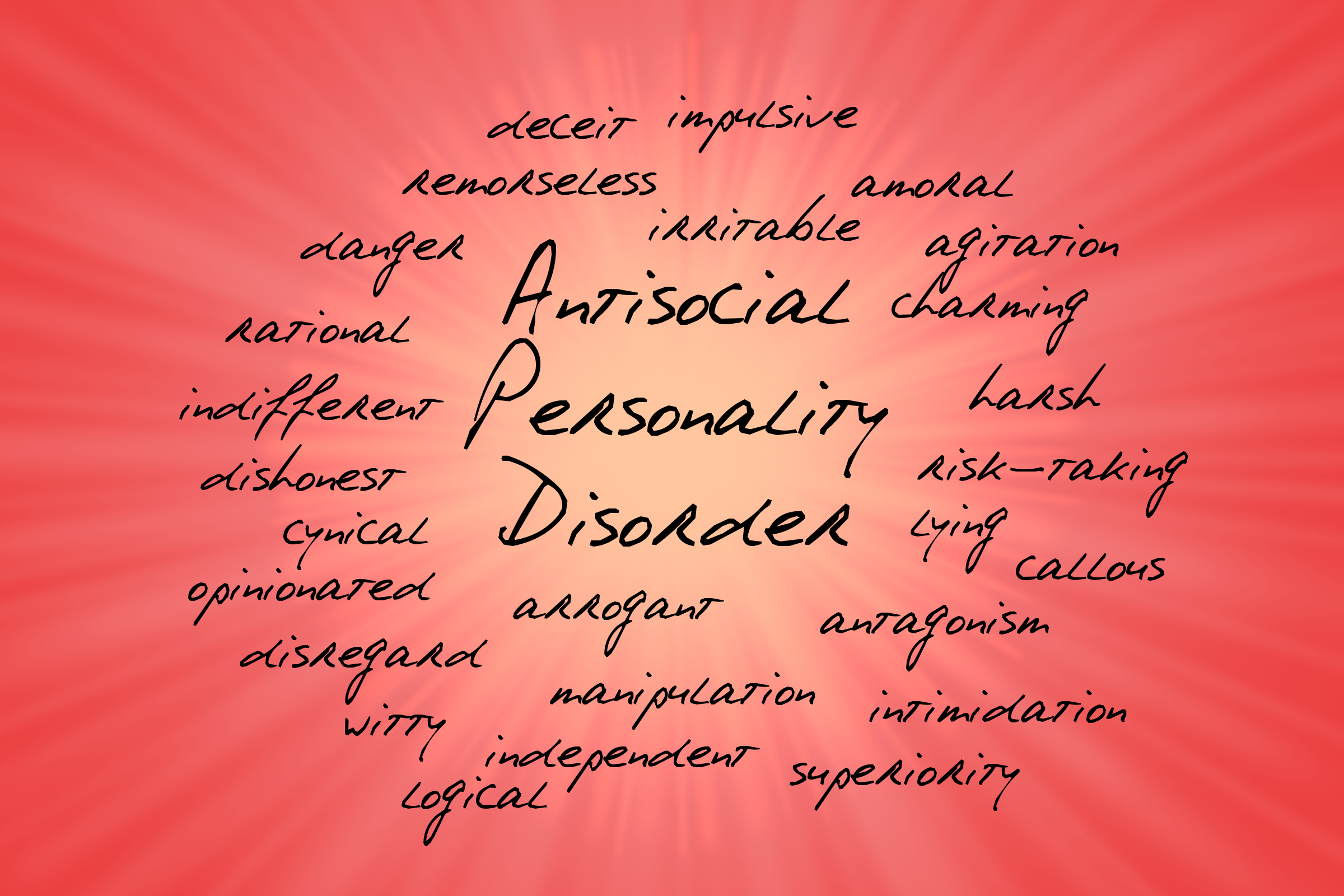
Antisocial personality disorder, sometimes called sociopathy, is a mental health condition in which a person consistently shows no regard for right and wrong and ignores the rights and feelings of others.
Example: People with antisocial personality disorder tend to purposely make others angry or upset and manipulate or treat others harshly or with cruel indifference.
fr: trouble de la personnalité antisociale
attention deficit hyperactivity disorder
noun
A mental condition, beginning in childhood and often persisting into later life, that is characterized by persistent difficulty in maintaining attention and concentration, and is frequently accompanied by hyperactive and impulsive behavior.
Example: Junk food intake has even been highlighted as a possible cause of 'behavioural' disorders (Lupton, 1996, p.77), such as ATTENTION DEFICIT HYPERACTIVITY DISORDER (ADHD), that cause great disruption to learning.
fr: trouble du déficit de l'attention avec ou sans hyperactivité
behaviorism
noun
The theory that human and animal behavior can be explained in terms of conditioning, without appeal to thoughts or feelings, and that some mental conditions are best treated by altering behavior patterns.
Example: "his work was largely superseded by disciplines such as behaviorism, genetics, and evolutionary psychology".
fr: behaviorisme
bipolar disorder
noun
Bipolar disorder (formerly called manic-depressive illness or manic depression) is a mental illness that causes clear shifts in a person’s mood, energy, activity levels, and concentration.
Example: The symptoms of bipolar disorder can impose serious challenges to a person’s mental and physical health.
fr: bipolaire
borderline personality disorder
noun
Borderline personality disorder is a mental health condition that affects the way people feel about themselves and others, making it hard to function in everyday life.
Example: People with borderline personality disorder have a strong fear of abandonment or being left alone.
fr: trouble de la personnalité borderline
clinical Psychology
noun
Clinical psychology is the psychological specialty that provides continuing and comprehensive mental and behavioral health care for individuals, couples, families, and groups; consultation to agencies and communities; training, education and supervision; and research-based practice. It is a specialty in breadth — one that addresses a wide range of mental and behavioral health problems— and marked by comprehensiveness and integration of knowledge and skill from a broad array of disciplines within and outside of psychology proper.
Example: The scope of clinical psychology encompasses all ages, multiple diversities, and varied systems.
fr: psychologie clinique
conditioning
noun
Conditioning is a form of learning in which either (1) a given stimulus (or signal) becomes increasingly effective in evoking a response or (2) a response occurs with increasing regularity in a well-specified and stable environment. The type of reinforcement used will determine the outcome.
Example: On each conditioning trial the sound of a bell or a metronome is promptly followed by food powder blown by an air puff into the dog’s mouth.
fr: conditionnement
dementia
noun
Dementia is an overall term for a set of symptoms caused by disorders affecting the brain.
Example: While most people living with dementia are over the age of 65, a small number of people in their 40s and 50s can and do develop dementia.
fr: démence
generalized anxiety disorder
phrase
Generalized anxiety disorder (GAD). GAD means that you are worrying constantly and can’t control it. Healthcare providers diagnose GAD when your worrying happens on most days and for at least 6 months.
Example: GAD is one of the most common mental disorders in the U.S.
fr: anxiété généralisée
psychology
noun
Psychology is the scientific study of the mind and behavior, encompassing various aspects like mental processes, emotions, motivations, and how individuals and groups interact with their environment. It aims to understand both normal and abnormal behaviors, exploring the influences of internal factors (genes, temperament) and external factors (environment, social interactions).
Example: The discipline of psychology is broadly divisible into two parts: a large profession of practitioners and a smaller but growing science of mind, brain, and social behaviour.
fr: psychologie
theory
noun
In psychology, a theory is a systematic and well-supported explanation of observable phenomena.
Example: Theories aim to explain why people think, feel, and behave in certain ways.
:max_bytes(150000):strip_icc()/General-adaptation-syndrome-overview-5198270_color_final_rev_02-6e66a18d47184fe4920e1229b96ea7b9.jpg)