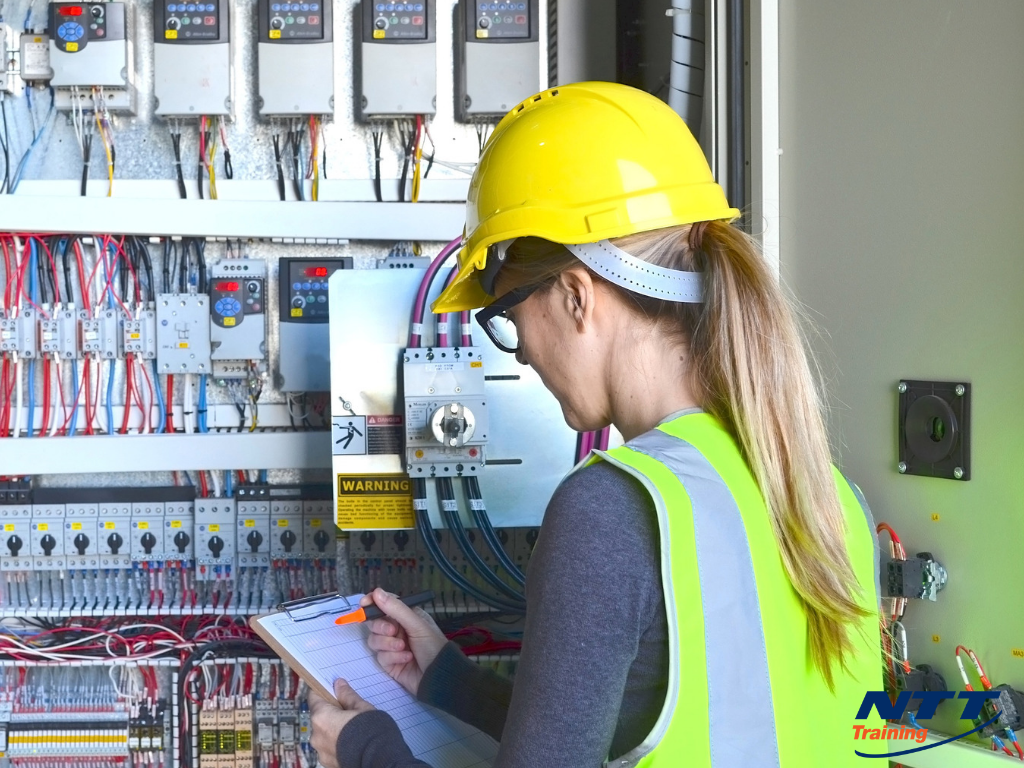
Glossary of Electrotechnical and Automation Systems
21 Electrical Engineering : Automation and Control terms
Hi,
I'm an Electrical Engineering student at Ahuntsic College. I prepared this glossary to help you find most of the useful technical words with their definitions and examples of how to use them in sentences covering electrical, PLC, robot, and safety vocabulary. As we know, there are a lot of technical terms in documentations, datasheets and manuals especially in the field of technology. I created this glossary to make things easier for you. Some words require extra research, which can waste your time especially when you're studying or doing maintenance and repairs and need to act quickly instead of searching for definitions.
I hope this glossary will be helpful to you. All terms in this glossary have been reviewed and corrected using the Virtual Writing Tutor.
bandwidth
noun
In an electrical context, "bandwidth" refers to the range of frequencies a signal or system can handle. It's often measured in hertz (Hz) or megahertz (MHz). For example, a low-pass filter designed with a bandwidth of 20 kHz would allow frequencies below 20 kHz to pass through, while attenuating those above it.In electrical engineering, bandwidth is crucial for designing circuits, filters, and communication systems.
Example :
Filters : Low-pass filters, high-pass filters, and bandpass filters all rely on bandwidth to determine the range of frequencies they allow to pass.
Example: The radio station broadcasts on a frequency with a bandwidth of 200 kHz, which is the typical range for FM radio.
fr: bande passante
control loop
noun
A control loop, or control system, is a feedback mechanism used to maintain a desired process variable at a specific point. It consists of sensors, a controller, and actuators that work together to regulate and adjust a process. Control loops are essential for automating and optimizing electrical systems in various applications, from simple devices like thermostats to complex industrial processes.
Example: The control loop adjusts motor speed based on feedback.
fr: boucle de régulation / boucle de contrôle
duty cycle
noun
Duty cycle is the percentage of time a signal or electrical device is "ON" within a given period. It's a crucial factor in understanding how a device operates, its power consumption, and its ability to handle varying loads.
Example: The solenoid valve has a 50% duty cycle.
fr: facteur de forme / rapport cyclique
fuse
noun
A safety device that protects an electric circuit from excessive current, consisting of or containing a metal element that melts when current exceeds a specific amperage, thereby opening the circuit. The fuse in the circuit breaker blew when the appliance drew too much power.
Example: The fuse blew as he pressed the button to start the motor.
fr: fusible
gripper
noun
A gripper is an end-effector device attached to a robotic arm or automation system to grasp, hold, and manipulate objects. It's like the "hand" of a robot, enabling it to interact with the physical world. Grippers can be powered by electricity, using electric motors to control the gripping force, speed, and position.
Example: The gripper picked up each item from the conveyor.
fr: préhenseur
ground
(noun/verb : to ground)
Ground in electrical engineering serves as a reference point, a current return path, and a safety mechanism. It can be an earth ground (direct connection to the Earth) or a signal ground (reference point within a circuit). These different types of ground are essential for the safe and efficient operation of electrical systems.
Example: All metallic parts must be properly grounded.
fr: terre / mettre à la terre
hysteresis
noun
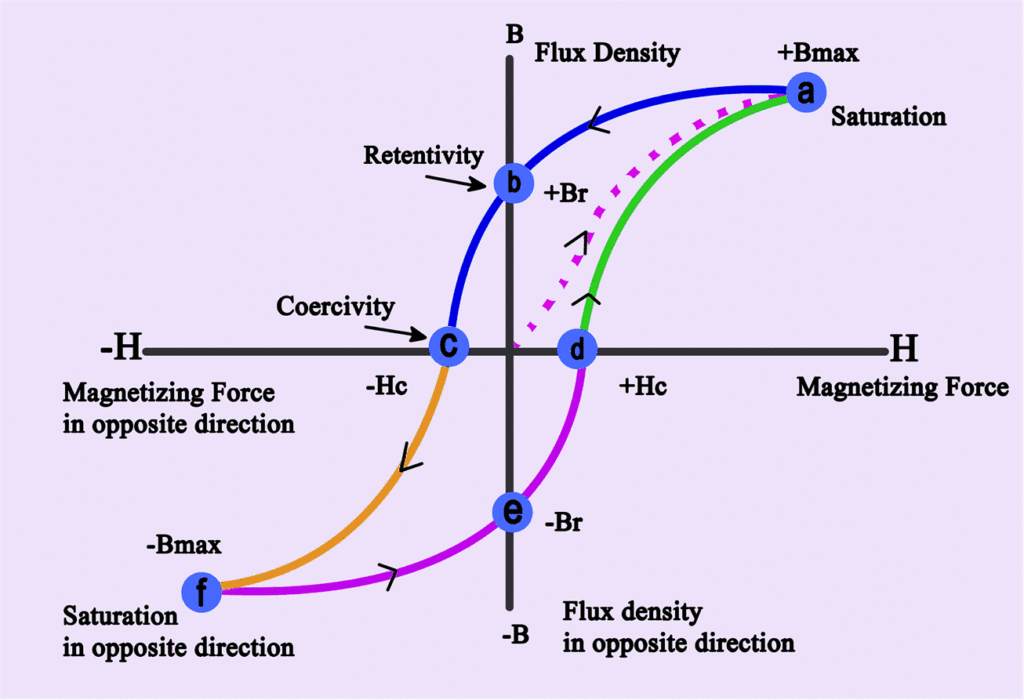
Hysteresis is a phenomenon where a system's state depends on its past history, meaning the output is influenced by how the input was changed, not just its current value. This creates a "lag" or delay in the response. Hysteresis is commonly observed in magnetic materials, digital logic, and control systems.
Example: The thermostat includes a hysteresis to avoid rapid cycling.
fr: hystérésis
interlock
noun
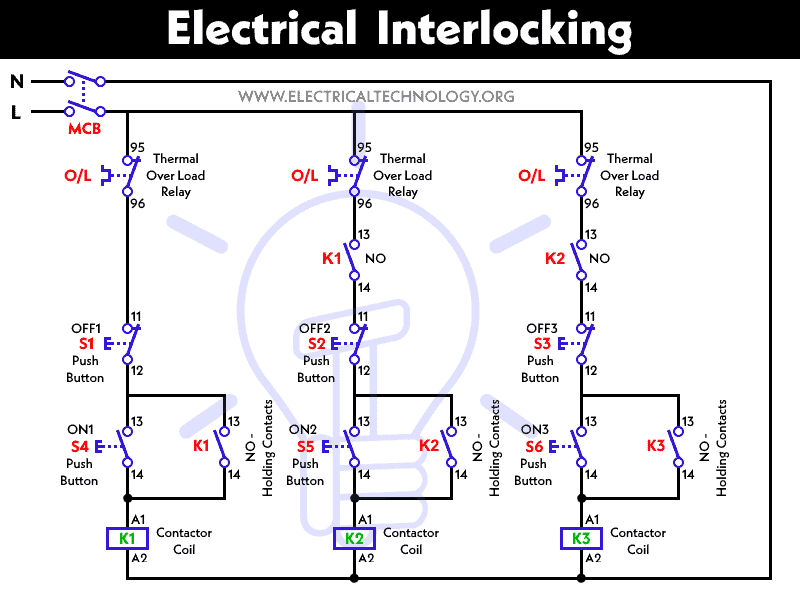
An interlock is a safety mechanism that prevents two or more devices or systems from operating simultaneously or in a specific order, ensuring safe and controlled operation. It's achieved using mechanical or electrical mechanisms, like relays or switches, to create mutually exclusive conditions.
Example: The machine cannot start until the safety gate interlock is closed.
fr: verrouillage de sécurité
megger
noun
A Megger, or insulation tester, is a device used to measure the resistance of electrical insulation. It's essentially a high-range ohmmeter with a built-in DC generator that applies a high voltage to test the insulation. This helps in detecting faults or degradation in insulation, ensuring the safe and reliable operation of electrical equipment.
Example: The technician used a megger to verify the insulation resistance of the motor cables.
fr: mégohmmètre
OB (Organization Block)
noun
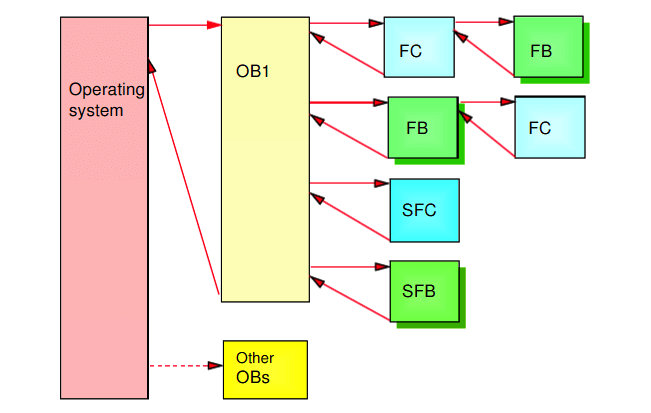
In Siemens PLC programming, an Organization Block (OB) is a fundamental programming structure that forms the interface between the PLC's operating system and the user program. OBs define how the user program is executed and managed, handling tasks like cyclic program execution, interrupt-driven processes, and error handling.
Example: OB1 is the default organization block that runs cyclically.
fr: bloc d’organisation (OB)
PLC (Programmable Logic Controller)
noun
A Programmable Logic Controller (PLC) is a ruggedized computer used to automate industrial processes and control machines, often replacing older electromechanical systems like relays. They operate by monitoring inputs, executing programmed logic, and controlling outputs to manage various aspects of industrial operations.
Example: The PLC controls the conveyor system in the factory.
fr: API (Automate Programmable Industriel)
rated voltage
noun
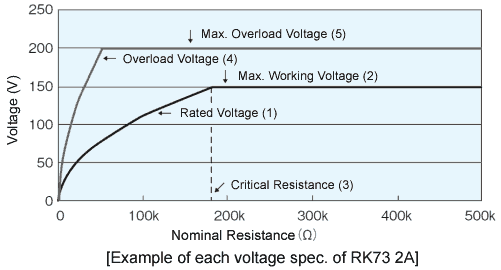
Rated voltage refers to the maximum voltage that a device can safely and reliably operate under normal conditions. It's the voltage at which the device is designed to perform its intended function and is often marked on the device's nameplate.
Example: The rated voltage of the contactor is 230V AC.
fr: tension nominale
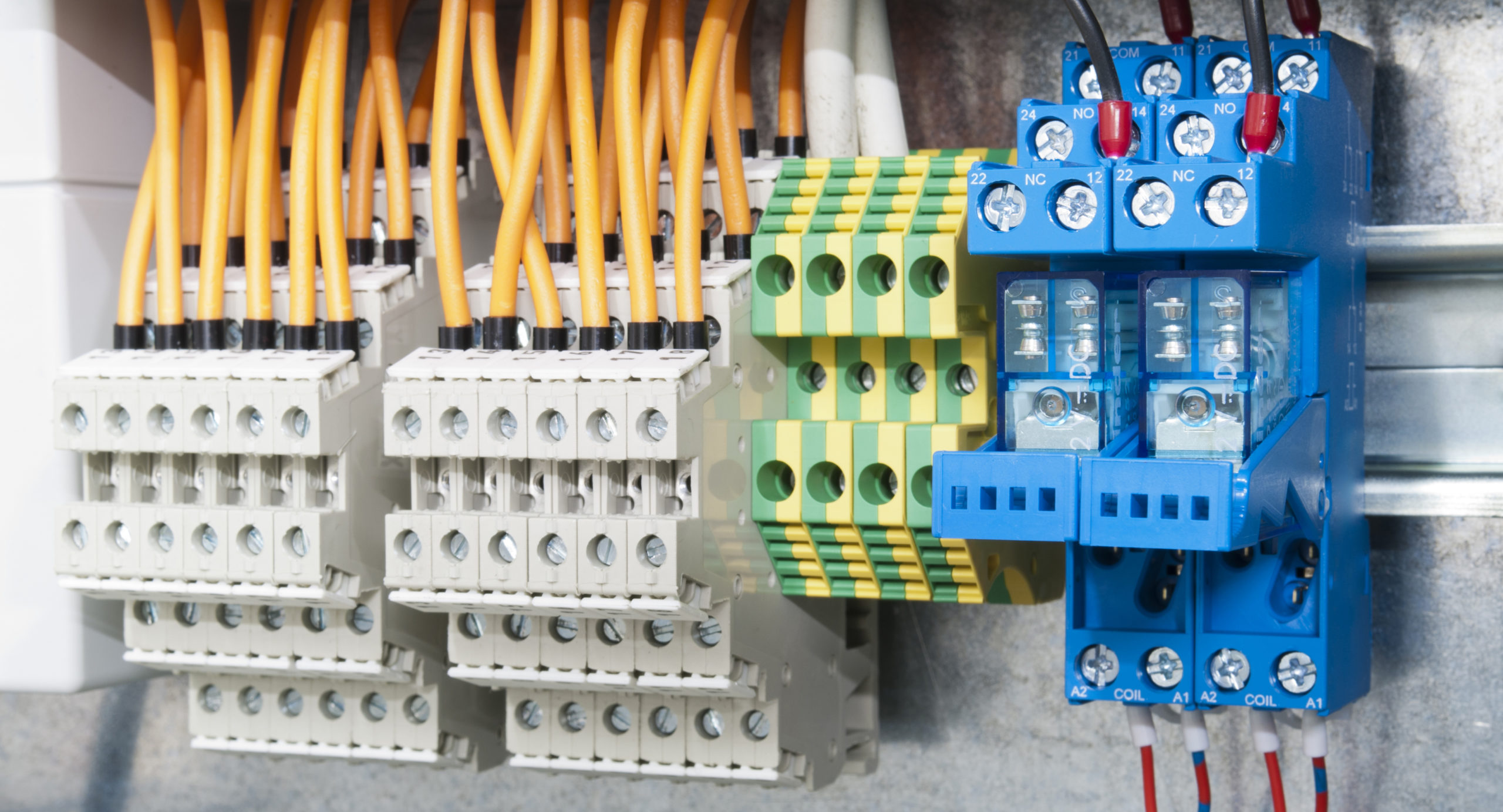
relay
noun
A relay is an electrically operated switch that uses an electromagnet to open or close circuits. It can be used to control high-power or high-voltage devices with a lower-power signal, switching signals, radio frequencies, and high current circuits. Relays are also used in control panels, manufacturing, and building automation to control power and switch smaller current values.
Example: The relay in the engine control unit opens and closes the circuit to the fuel pump.
fr: relais
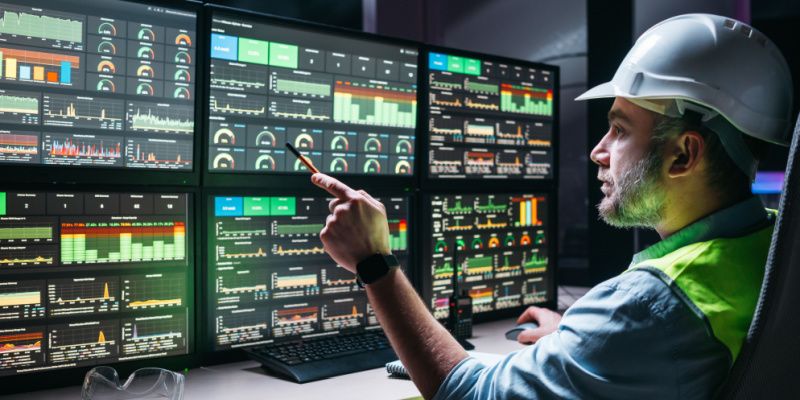
SCADA (Supervisory Control and Data Acquisition)
noun
SCADA (Supervisory Control and Data Acquisition) systems are used to monitor and control industrial processes, particularly in critical infrastructure like power grids and water treatment facilities. These systems gather data from various sensors and devices in the field, transmit it to a central location for monitoring and analysis, and allow operators to remotely control equipment.
Example: The SCADA system displays real-time data from all field devices.
fr: système de Contrôle et d’Acquisition de Données (SCADA)
SIL (Safety Integrity Level)
noun
Safety Integrity Level (SIL) is a measurement of the reliability and risk reduction provided by a Safety Instrumented Function (SIF) within a Safety Instrumented System (SIS). It's used to determine the performance requirements for a SIF, ensuring it can reliably perform its intended safety function. SIL levels range from SIL 1 to SIL 4, with SIL 4 being the most dependable and SIL 1 the least.
Example: The plant’s emergency shutdown system is rated SIL 3.
fr: niveau d'intégrité de sécurité (SIL)
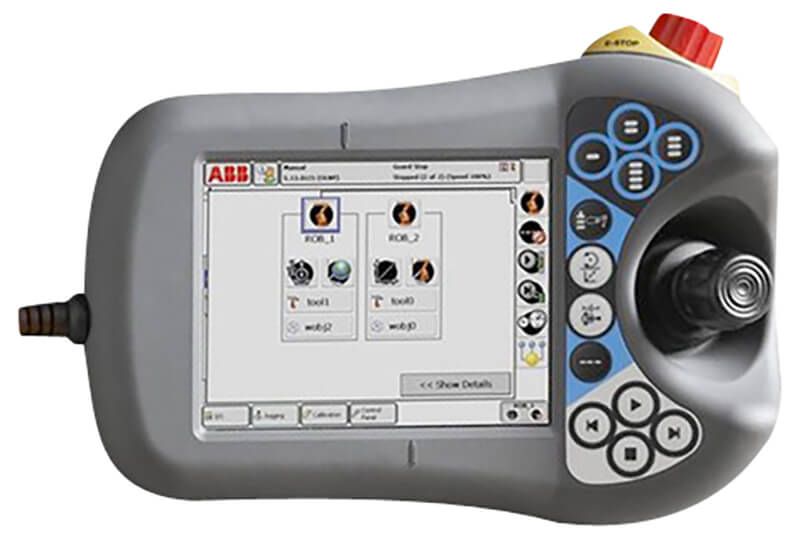
teach pendant
noun
A teach pendant is a handheld control device used in robotics to manually guide and program a robot's movements, effectively teaching the robot new tasks or modifying existing ones. It allows operators to interact with the robot directly, moving its arm and other parts, and then storing these movements as instructions.
Example: The operator used the teach pendant to adjust the robot's path.
fr: boitier de commande et de programmation du robot
terminal
noun
A terminal is the point at which a conductor from a component, device or network comes to an end. Terminal may also refer to an electrical connector at this endpoint, acting as the reusable interface to a conductor and creating a point where external circuits can be connected.
Example: Connect the red wire to the positive terminal.
fr: borne
THD (Total Harmonic Distortion)
noun
Total Harmonic Distortion (THD) measures the deviation of a signal from an ideal sine wave due to the presence of unwanted harmonic frequencies. It quantifies the quality of power delivered to electrical equipment, with lower THD values indicating better power quality and less distortion. THD is a crucial metric for assessing the performance of power systems and electronic equipment, as high THD can lead to various issues like overheating, reduced lifespan, and malfunction.
Example: The inverter must maintain THD below 5% to meet power quality standards.
fr: distorsion harmonique totale
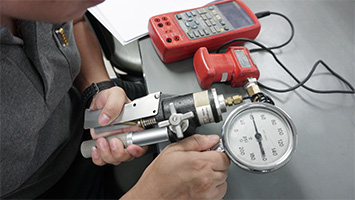
to calibrate
verb
Calibration is the process of verifying and adjusting the accuracy of measuring instruments. This involves comparing the instrument's readings to a known standard, ensuring that the device provides accurate measurements within specified tolerances. Calibration is essential for quality control, safety, and innovation, as it guarantees the reliability of electrical measurements.
Example: The pressure transmitter was calibrated to maintain accuracy.
fr: étalonner
to trigger
verb
To trigger generally means to initiate a specific event or action within an electronic circuit or system. This can involve activating a switch, starting a process, or changing the state of a device in response to a specific input signal or condition.
Example: The proximity sensor triggers the conveyor belt to stop.
fr: déclencher
to troubleshoot
verb
Troubleshooting in electrical engineering is the systematic process of diagnosing and resolving issues within electrical systems, circuits, and equipment. It involves identifying the source of the problem, isolating the cause, and implementing effective solutions to restore functionality and safety.
Example: To properly troubleshoot this malfunctioning circuit, we need to use a multimeter to check for open circuits and short circuits.