I am a student in the program of technique of criminology intervention. At the time, it used to be called technique of delinquency intervention. I've been in the program for 4 years now. My glossary will help people understand the world of delinquency and to understand the terms that we use on the regular. To find the words and the definitions, I used internet and my old text books. You can now read my glossary.
Child Neglect
Noun
Child neglect is the failure of a parent or caregiver to provide necessary care, supervision, or basic needs (such as food, shelter, medical care, or emotional support) for a child, resulting in harm or risk of harm to the child’s health or development.
Example: The social worker reported the case of child neglect to ensure the child received proper care.
fr: Négligence envers un enfant
Criminal record
Noun
A criminal record is an official record maintained by law enforcement agencies that lists a person’s past criminal convictions and arrests. It is used to track an individual’s legal history and may affect employment, travel, or legal rights.
Example: Before hiring a candidate, the company often checks their criminal record.
fr: Casier judiciaire
Emotional Abuse
noun
Emotional abuse is the use of verbal or non-verbal actions to control, intimidate, or harm another person’s emotional well-being. It includes behaviors such as threats, humiliation, manipulation, isolation, and constant criticism that cause emotional pain or distress.
Example: The victim suffered from psychological abuse, including constant threats and verbal insults.
fr: Abus psychologique
Intervention plan
Noun
An intervention plan is a structured document that is used to plan coordinated actions to help a person, often a child, a student or even adults, overcome challenges or difficulties. It is used in clinical and educational contexts to establish a profile of the individual's specific needs and to coordinate the efforts of the professionals involved. This plan aims to promote the development and success of the individual by implementing actions tailored to their specific needs.
Example: I am making an intervention plan with my client.
fr: Plan d'intervention
Legal custody
Noun
Legal custody refers to the legal authority granted to a parent or guardian to make major decisions regarding a child’s welfare, including education, health care, and religious upbringing. This right can be sole (held by one parent) or joint (shared between parents or guardians).
Example: His sister has the legal custody of him.
fr: Garde légale
Physical Abuse
Noun
Physical abuse is the intentional use of physical force that causes injury, harm, or pain to another person. It includes actions such as hitting, slapping, shaking, burning, or other forms of physical violence.
Example: The child was removed from the home due to signs of physical abuse.
fr: Abus physique
Placement
Noun
Assigning a youth to a foster home or care setting.
Example: The child was placed in foster care after the placement decision was made by the court.
fr: Placement
Precocity
Noun
Precocity is an early delinquency is a deviant or marginal behavior that can start before the age of 14. It is multi factorial and complex, and its prevention is essential for developing effective strategies.
Example: My client had a high precocity.
fr: Précocité
Protective factors
Noun
Protective factors are characteristics, conditions, or resources that decrease the likelihood that a person will develop a problem or engage in risky behavior. They help strengthen resilience and promote healthy development despite challenges.
Example: Strong family support and positive peer relationships are important protective factors against adolescent risky behavior.
fr: Facteurs de protection
Recidivism
Noun
Recidivism refers to a person's relapse into criminal behavior, often after receiving sanctions or undergoing intervention for a previous crime.
Example: The criminal recidivism among men is higher than women.
fr: Récidive
Risk factors
noun
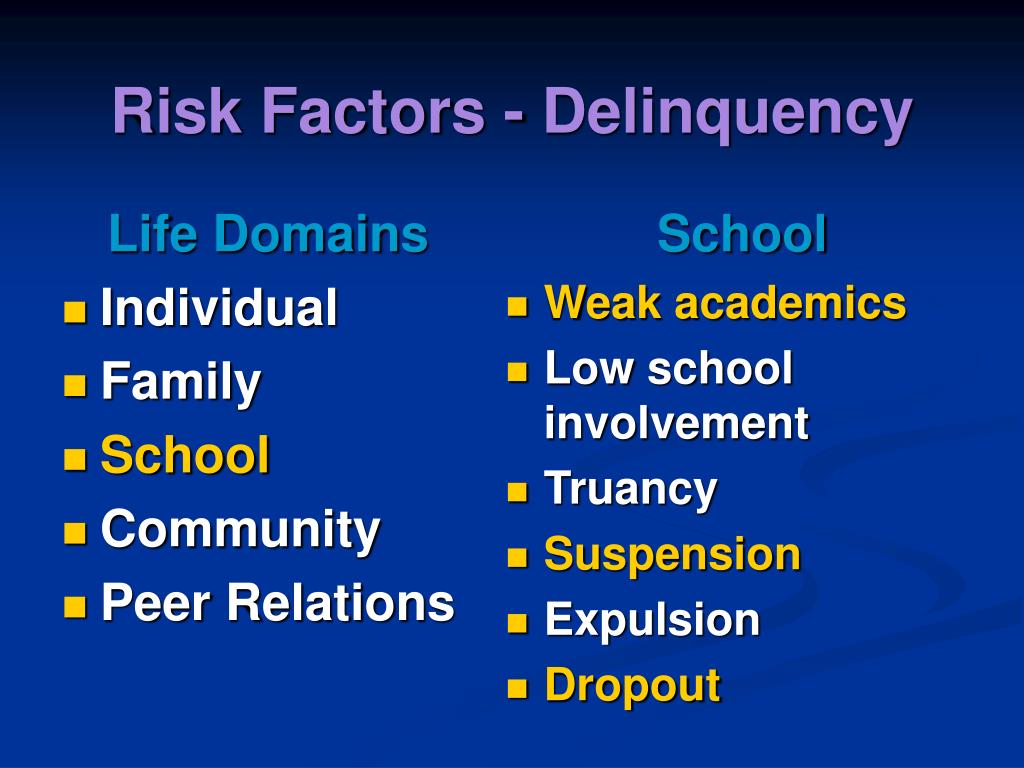
Risk factors are characteristics, situations, or conditions that will increase the probability that a person will develop a problem or engage in risky behavior.
Example: Poverty and family conflict are common risk factors for youth delinquency.
fr: Facteurs de risques
Runaway
Noun
A runaway is a child or adolescent who leaves home without permission from their parents or guardians and stays away, typically overnight or longer, without intending to return, often due to conflict, abuse, neglect, or personal problems.
Example: The organization offers emergency housing for runaway and homeless youth.
fr: Fugue
Truancy
Noun
Truancy is the act of staying away from school without permission or a valid reason. It usually refers to when a student skips school deliberately, without parental or school approval.
Example: The child's truancy worried his parents ans teachers.
fr: Absentéisme scolaire
Warning
Noun
An official notice given by a police officer to a youth for minor offense, instead of laying charges.
Example: The youth received a warning from the police after being caught vandalizing public property.
fr: Avertissement
Youth Criminal Justice Act
Noun
The Youth Criminal Justice Act is a law that governs how young people (usually aged 12 to 17) are treated in the criminal justice system. It focuses on rehabilitation and reintegration rather than punishment, aiming to hold youth accountable while promoting their development and protecting the public.
Example: The Youth Criminal Justice Act aims to balance accountability and rehabilitation for young offenders.
fr: Loi sur le système de justice pénale pour les adolescents
Youth Protection Act
Noun
The Youth Protection Act is a law designed to protect children and adolescents who are at risk of harm or neglect. It establishes the responsibilities of authorities and organizations to intervene when a young person’s safety, well-being, or development is threatened.
Example: Teachers are required to report any suspicions of abuse according to the Youth Protection Act.
fr: Loi sur la protection de la jeunesse
Youth shelter
Noun
A youth shelter is a safe place that provides temporary housing, support, and resources for young people who are homeless, runaway, or in crisis. It aims to offer protection and help youth access services like food, counseling, and education.
Example: The youth shelter provides a safe place where teenagers can sleep and get support
fr: Refuge jeunesse
Youth worker
Noun
A youth worker is a professional who supports, guides, and helps young people, often by organizing activities, providing advice, and promoting their personal and social development.
Example: The youth worker organizes activities to help teenagers build their self-confidence.