In this glossary, you will find 19 words that are commonly used in the Medical Electrophysiology field. It will help you understand the language we use at the hospital between us and the doctors. Most of the words in this glossary were found directly in my book notes.
aneurysm
noun
A localized, pathological, blood-filled dilatation of a blood vessel caused by a disease.
Example: This patient has a brain aneurysm that needs to be checked.
fr: anévrisme
arrhythmia
noun
Abnormal rhythm of the heart.
Example: This patient has arrhythmia.
fr: arythmie
bradycardia
noun
A heartbeat that is below 60 bpm.
Example: This patient felt dizzy yesterday, she must had bradycardia.
fr: bradycardie
carpal tunnel syndrome
noun
Pressure on the median nerve in the carpal tunnel of the wrist. The carpal tunnel is a narrow passageway surrounded by bones and ligaments on the palm side of the hand. When the median nerve is compressed, symptoms can include numbness, tingling and weakness in the thumb and fingers.
Example: Her symptoms and examination findings are classical of carpal tunnel syndrome.
fr: syndrome du tunnel carpien
catheter
noun
A thin, flexible tube used to diagnose and treat heart conditions. Usually inserted into a blood vessel (groin or arm) and guided to the heart using X-ray guidance.
Example: A contrast dye was injected by the catheter to visualize blood vessels and heart structures.
fr: cathéter
coma
noun
A state of deep unconsciousness that lasts for a prolonged or indefinite period, caused especially by severe injury or illness.
Example: This patient was in a coma when I did his electroencephalography.
fr: coma
electrocardiogram
noun
It is a non-invasive medical test used to assess the electrical activity of the heart. It measures and records the heart's electrical signals, providing information about its rhythm, rate, and overall function.
Example: Last week, I had an electrocardiogram to make sure my heart was beating normally.
fr: électrocardiogramme
electroencephalography
noun
A graphic record of the electrical activity of the human brain produced by an electroencephalograph.
Example: I had an electroencephalography to diagnose my epilepsy.
fr: électroencéphalogramme
electromyography
noun
It is a test to measures muscle response or electrical activity in response to a nerve's stimulation of the muscle. The test is use to help detect neuromuscular abnormalities.
Example: To diagnose my carpal tunnel syndrome, I had an electromyography.
fr: électromyogramme
epilepsy
noun
A disorder of the nervous system, characterized by seizures (or not).
Example: My brother was diagnosed with epilepsy when he was 6 years old.
fr: épilepsie
heart ablation
noun
Treatment for irregular heartbeats, called arrhythmias. It uses heat or cold energy to create tiny scars in the heart.
Example: My father had a heart ablation to stop his arrhythmia.
fr: ablation
latency time
noun
It is a measurement of how long it takes for nerve transmission from the two points of stimulus to recording.
Example: The normal latency time for the stimulation of the median nerve should be below 4,2 ms.
fr: temps de latence
myocardial infarction
noun
A heart attack. It is a medical emergency where the heart muscle begins to die because it isn’t getting enough blood flow. A blockage in the arteries that supply blood to the heart usually causes this.
Example: An old man died of myocardial infarction last week before he got to the hospital.
fr: infarctus du myocarde
myotonia
noun
Rare genetic condition in which your muscles aren't able to relax after they contract.
Example: This patient has a myotonic dystrophy.
fr: myotonie
nystagmus
noun
A congenital or acquired persistent, rapid, involuntary, and oscillatory movement of the eyeball, usually from side to side.
Example: My eyes keep moving on their own, I think I might have a nystagmus.
fr: nystagmus
pacemaker
noun
A small electronic device implanted in the body (usually below the left collarbone) to regulate a slow or irregular heartbeat.
Example: Recently, she has had a myocardial infarction, which was treated with coronary artery stenting and insertion of a pacemaker.
fr: cardiostimulateur
palpitation
noun
A rapid, strong, or irregular heartbeat due to agitation, exertion, or illness. People can experience chest pain.
Example: This patient felt a lot of palpitations after going up the stairs.
fr: palpitation
tachycardia
noun
A heartbeat that is above 100 bpm.
Example: Last night, I felt a lot of palpitations, I probably had tachycardia.
fr: tachycardie
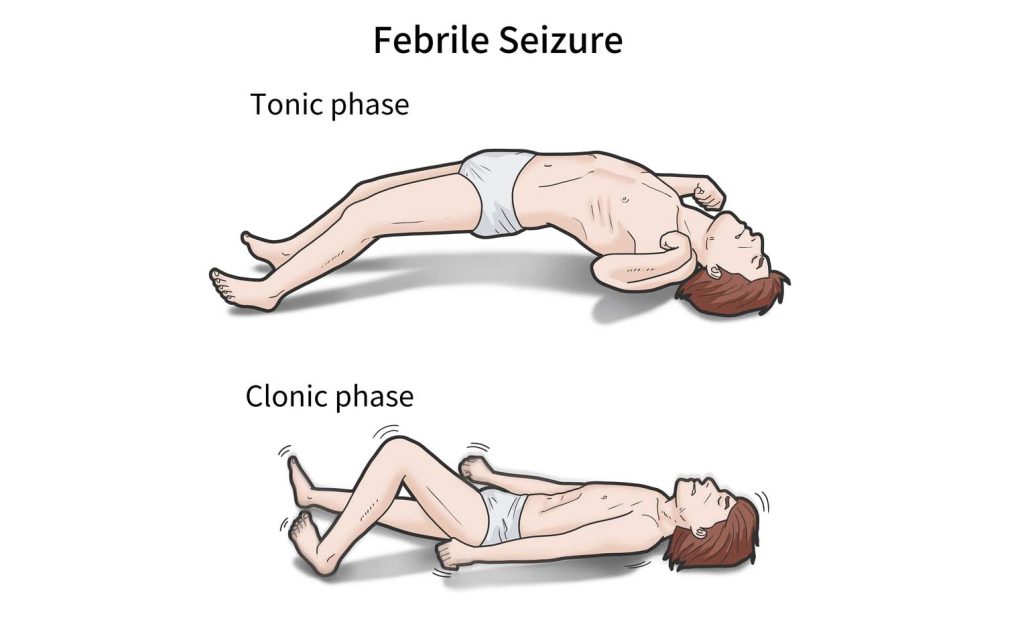
tonic-clonic seizure
noun
A type of seizure that combines the characteristics of tonic and clonic seizure.
The tonic phase comes first. After the first phase, comes the clonic phase.
The person’s face may look dusky or a bit blue if they are having trouble breathing or the seizure lasts too long.
The person may lose control of their bladder or bowel as the body relaxes.
Consciousness returns slowly.
Example: This little boy has had a lot of tonic-clonic seizures in the past month.