Hi, I'm Yasmina im writing a glossary to my teacher. I'm in this program for a year now and so wonderful to learn some new things. This glossary contains all the words that I learned in this program. I learned a lot of great subjects and words.
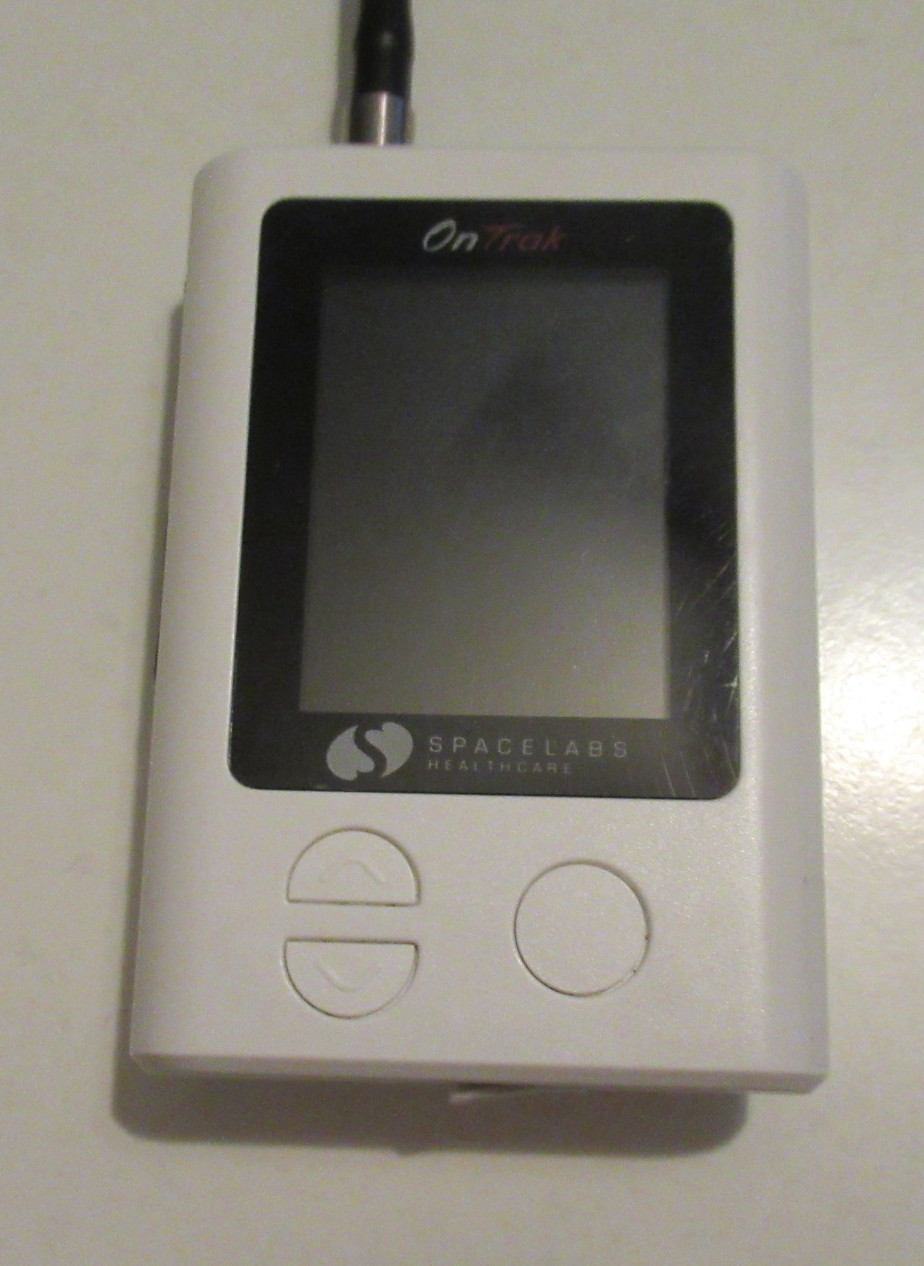
ambulatory blood pressure monitoring
noun
The ambulatory blood pressure monitoring (commonly called MAPA) is a device for automated blood pressure measurement repeatedly during 24 h.
Example: This is connected to a small digital blood pressure monitor which may be directly attached to the cuff.
en: monitoring ambulatoire de pression artérielle
artifacts
noun
The disturbances in rhythm monitoring caused by movement of the electrodes.
Example: This is all tied up in the belief systems that existed at the time, but also provides archaeologists with a window into the past, the goods and ARTIFACTS found have a lot to say about the lifestyle and profession of the deceased.
en: artéfact
auditory evoked potentials
noun
Auditory evoked potentials (AEPs), also referred to as evoked responses, are a record of the time it takes nerves in the auditory system to respond to sound and electrical stimulation.
Example: This test can diagnose hearing ability and can point to possible brainstem tumors or multiple sclerosis.
en: potentiel évoqué auditif
bradycardia
noun
Bradycardia, also called bradyarrhythmia, is a resting heart rate under 60 beats per minute.
Example: Reperfusion arrhythmias Studies have shown that after reperfusion of the myocardium, ventricular arrhythmias, such as ideoventricular rhythm, non-sustained ventricular tachycardia and BRADYCARDIA have occurred.
en: brachycardie
cardiac stress test
noun
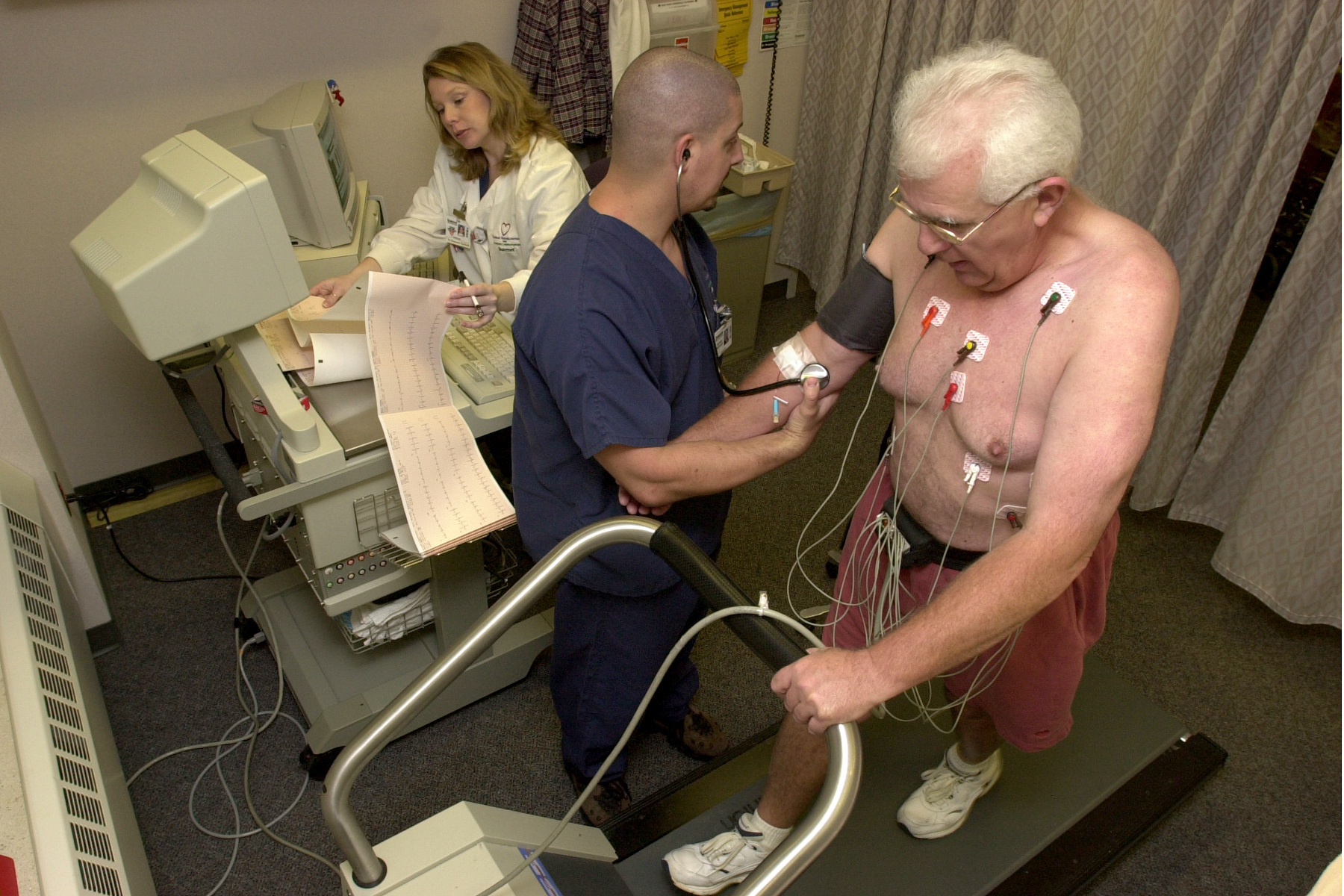
The cardiac exercise stress test, you'll walk on a treadmill or cycle on an exercise bike until you reach your “target heart rate”
Example: A cardiac stress test is a cardiological examination that evaluates the cardiovascular system's response to external stress.
en: cardiologie test a l'effort
defibrillator
noun
Defibrillation is a treatment for life-threatening cardiac arrhythmias, specifically ventricular fibrillation and non-perfusing ventricular tachycardia.
Example: Has become the standard therapy for protecting patients against sudden cardiac death.
en: défibrillateur
electrocardiogram
noun
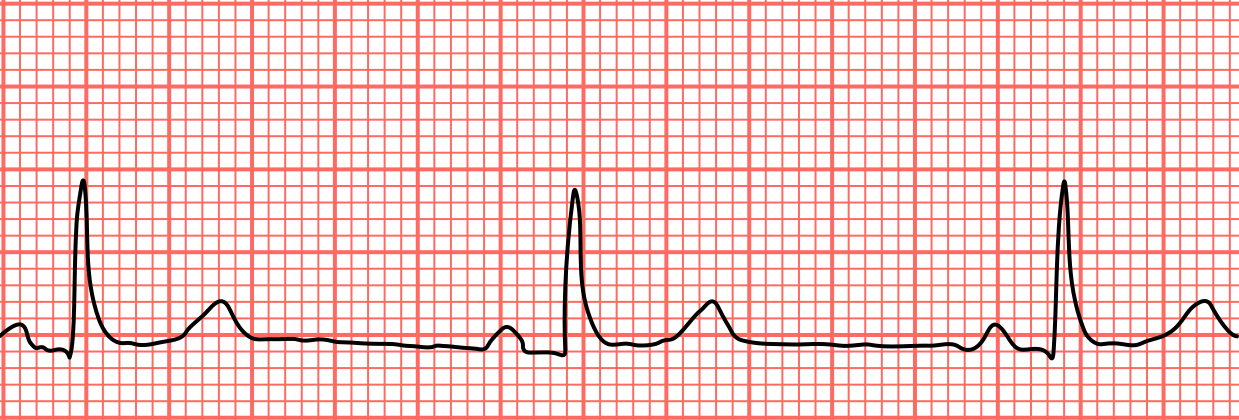
An electrocardiogram is a test to record the electrical signals in the heart. It shows how the heart is beating.
Example: Monitoring 12 lead electrocardiograms (ECG) are used to monitor changes in the electrical activity (PQRST wave) of the heart during thrombolytic therapy to detect coronary reperfusion.
en: électrocardiogramme
Electrode
noun
Electrodes (small, plastic patches that stick to the skin) are placed at certain spots on the chest, arms, and legs.
Example: The electrodes are connected to an ECG machine by lead wires. The electrical activity of the heart is then measured, interpreted, and printed out. No electricity is sent into the body.
en: Électrode
electroencephalogram
noun
An electroencephalogram (EEG) is a recording of brain activity. During this painless test, small sensors are attached to the scalp to pick up the electrical signals produced by the brain.
Example: This may help diagnose brain conditions such as epilepsy and other seizure conditions.
en: électroencéphalogramme
Electromyogram
noun
Measures muscle response or electrical activity in response to a nerve's stimulation of the muscle.
Example: Figure 2 presents the envelop signal of the ELECTROMYOGRAM (EMG) with the same sampling rate.
en: Électromyographie
electromyographie
noun
Electromyography is a technique for evaluating and recording the electrical activity produced by skeletal muscles.
Example: EMG results can reveal nerve dysfunction, muscle dysfunction or problems with nerve-to-muscle signal transmission.
en: électromyographie
labyrinthine
adjective
A labyrinthine disorder is defined as a condition characterized by severe vertigo, nausea, vomiting, and other autonomic symptoms, often accompanied by deafness and tinnitus.
Example: Defect in Fgfr2 results in a block in the trophoblast cell proliferation and the outcome is a failure in LABYRINTHINE portion of placenta.
en: labyrinthique
peace maker
noun
A pacemaker is used to control or increase the heartbeat. It stimulates the heart as needed to keep it beating regularly.
Example: Electrical pulses to help your heart beat at a normal rate and rhythm.
en: faiseur de paix
Polysomnographie
noun
Polysomnography, known as a sleep study, is a test used to diagnose sleep disorders. Polysomnography records your brain waves, the oxygen level in your blood.
Example: Medical uses Polysomnography is used to diagnose or rule out many types of sleep disorders.
en: polysomnographie
sinus node
noun
Sinus node dysfunction, also known as sick sinus syndrome, is a group of abnormal heart rhythms usually caused by a malfunction of the sinus node, the heart's primary pacemaker.
Example: Node generates an electrical signal that causes the upper heart chambers (atria) to contract.
en: noeud sinusal
somesthetic evoked potential
noun
Somatosensory evoked potentials (SEPs) are electric signals generated by the nervous system following a somatosensory stimulus.
Example: Have been in use for decades as an integral method of intraoperative neurophysiological monitoring for spinal,.
en: potentiel évoqué somesthésique
stethoscope
noun
Medical instrument for listening to the action of someone's heart or breathing, typically having a small disk-shaped resonator that is placed against the chest, and two tubes connected to earpieces.
Example: We use that to hear the heart beats.
en: stéthoscope
tachycardia
noun
It's the medical term for a heart rate over 100 beats a minute.
Example: Blood pressure 155 81 - known hypertension of long duration, indicative of current reasonable control. Radial pulse palpable, rate 88 bpm - (TACHYCARDIA resulting from possible anxiety), regular, radial and carotid pulses normal strength All other peripheral pulses palpable JVP normal Heart sounds I and II normal No murmurs or displacement of the apex beat.
en: tachycardie
The 10-20 System
noun
The 10–20 system or International 10–20 system is an internationally recognized method to describe and apply the location of scalp electrodes.
Example: The 10-20 system name is based on the percentages used for determining electrode placements.
en: le système 10-20
visual evoked potential
noun
Visual Evoked Potential/Response (VEP/VER) measures the electrical signal generated at the visual cortex in response to visual stimulation. The visual cortex is primarily activated by the central visual field and there is a large representation of the macula in the occipital cortex.
Example: Helps healthcare providers diagnose certain conditions that affect how your eyes and brain work together to interpret what you see.