15 Essential Programming and Networking Terms terms
Hello, my name is Massi Mechedou. I am 19 years old, and I have been studying computer programming and networking for about three years. This glossary is designed for future programmers who want to understand key terms they will often hear in the field of computer science. The purpose of this glossary is to help students and aspiring IT professionals grasp important technical vocabulary. Understanding these terms is essential for learning programming, networking, and troubleshooting IT-related issues. This glossary contains 15 terms, each with a clear definition to make technical concepts easier to understand. To select the words for this glossary, I used the Actively Engage notebook as a reference. I then searched the internet for accurate and reliable definitions. This ensures that the explanations are clear and up-to-date. I encourage you to read through the glossary and use it as a helpful resource in your learning journey.
application
noun
A program or piece of software designed and written to fulfill a particular purpose of the user.
Example: Critical examination of the classification system and database APPLICATION employed to manage the archaeological record of Queensland, Australia, revealed serious problems that effectively nullify the system's validity.
fr: application
bit
noun
A unit of information expressed as either a 0 or 1 in binary notation.
Example: It has an Effective Number of BIT (ENOB) of 9.3 bits and power dissipation of 1.1mW. Then an on-chip On Off Keying (OOK) active transmitter, consuming 2.2mW, is used to send the results back to an external receiver with a BIT rate of 2.56Mbps. The BIT error rate is less than 10 -7 over a range of 10mm or shorter and the carrier frequency is adjustable from 50MHz to 150MHz.
fr: bit
data
noun
The quantities, characters, or symbols on which operations are performed by a computer, being stored and transmitted in the form of electrical signals and recorded on magnetic, optical, or mechanical recording media.
Example: The focus of the research is the technologies needed to achieve a seamless digital relationship between the architectural office and the construction site and the goal is to develop an appropriate DATA transfer system that is both costs effective and easy to use by all types of users. Using Visual Basic for Applications (VBA) as a programming language, the demonstration prototype converts the BIM-based DATA of the building components into an XML files format that can be queried as needed.
fr: données
internet
noun
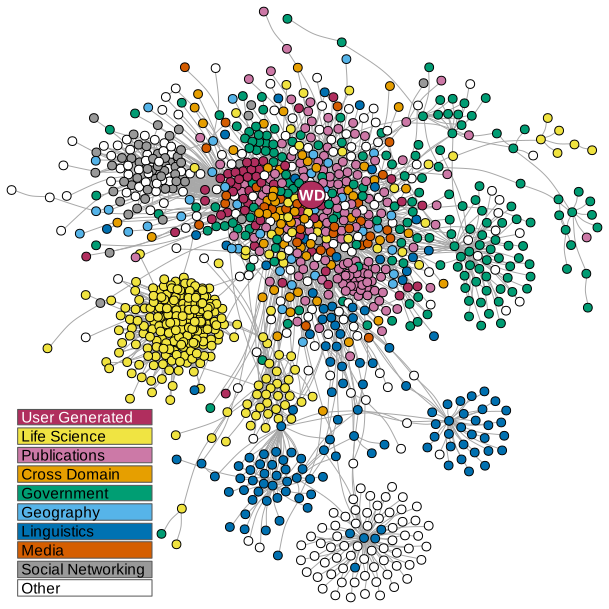
A global computer network providing a variety of information and communication facilities, consisting of interconnected networks using standardized communication protocols.
Example: Currently (1993) there are some twenty million users worldwide of the most commonly used electronic network, INTERNET, a figure that is growing at a rate of ten percent per month.
fr: internet
network
noun
A group of computers connected to each other in order to send and receive data.
Example: This research tries to answer some of the most fundamental questions of why and how companies adopt e-business application by studying the e-business fast mover's behaviors in the following three domains: the initiative for firm to adopt e-business, the business model and strategy developed to leverage Internet-based NETWORK system, and the barriers to implementing e-business practice. (1) The initiative for firm to adopt B2B e- business: the improvement of economic efficiency is used to measure firm's incentive in adopting E-business.
fr: réseau
packet
noun
A block of data transmitted across a network.
Example: The Token Ring Network uses an active architecture because each node has to pass data on to its nearest active downstream neighbour in a ring in order for it to reach its destination. In contrast, Ethernet uses a passive architecture as it waits and listens on the transmitting line for any messages that are waiting for it. Each PACKET of data has a MAC address on it and the corresponding NIC picks up the PACKET. Both methods get the data from A to B but Ethernet is typically faster when network traffic is low as nodes can transmit when they like; no token is needed, but faster flavours of Token Ring are being developed. However, when the network traffic increases the Ethernet architecture's performance is reduced as collisions occur.
fr: paquet
peripheral device
noun
A peripheral device is a hardware device that connects to a computer to expand its capabilities. Peripherals are not essential for a computer to function, but they can make it more user friendly.
Example: SCSI (Small Computer System Interface) is used to attach a wide range of PERIPHERAL devices (up to 8 including host controller) to computers and can provide really fast data transmission rates (up to 80mb s).
fr: périphérique
pixel
noun
One point within an image.
Example: The ground resolution of a TM image is such that a PIXEL has about a 30 m side, which seems appropriate for the scale of analysis used. Indeed, it may be that an image of higher spatial resolution, such as one obtained by a SPOT satellite (20 10 m), would prove counterproductive, giving too much local variation in PIXEL reflectance.
fr: pixel
protocol
noun
A set of rules governing the exchange or transmission of data between devices.
Example: However, even a properly designed network with a properly configured firewall cannot prevent following dangers: Malicious use of authorised services : e.g. a firewall cannot prevent someone from using an authenticated Telnet session to compromise your internal machines or from tunnelling an unauthorised PROTOCOL through another PROTOCOL.
fr: protocole
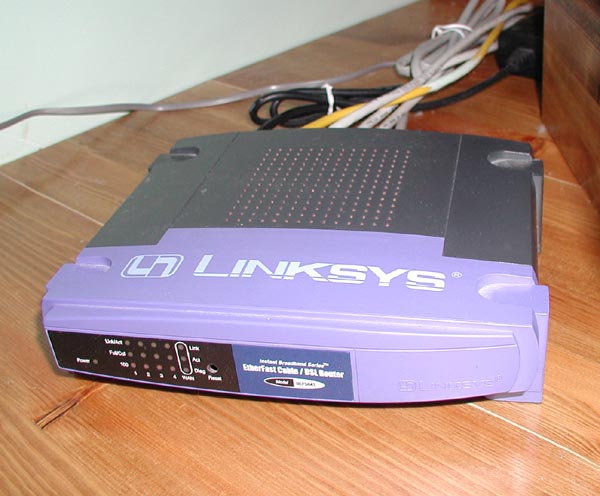
router
noun
A device that forwards data packets to the appropriate parts of a computer network.
Example: ROUTER and switch configurations, firewall rules and programming, server access, restrictions, and policies are all important and disruption or change to these could cause the operation of the internal network, or the connection to the internet (and thus customers) to be threatened.
fr: routeur
script
noun
An automated series of instructions carried out in a specific order without user interaction.
Example: With Local cross-site scripting vulnerabilities, the problem exists within a page's client-side SCRIPT itself. For instance, if a piece of JavaScript accesses a URL request parameter and uses this information to write some HTML to its own page, and this information is not encoded using HTML entities, an XSS hole will likely be present, since this written data will be re-interpreted by browsers as HTML which could include additional client-side SCRIPT. Because of the way Internet Explorer treats client-side SCRIPT in objects located in the "local zone" (safe zone), an XSS hole of this kind in a local page can result in remote execution vulnerabilities. For example, if an attacker hosts a malicious website, which contains a link to a vulnerable page on a client's local system, a SCRIPT could be injected and would run with privileges of that user's browser on their system.
fr: script (literal definition : scénario)
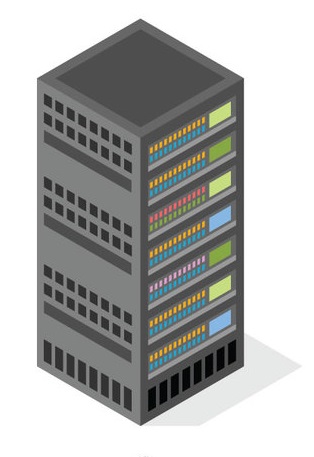
server
noun
A computer or computer program which manages access to a centralized resource or service in a network.
Example: The display unit should be able to receive information from the SERVER, through the barcode system, and display it appropriately.
fr: serveur
software
noun
The programs and other operating information used by a computer.
Example: In time, the theory and the techniques to solve this problem have evolved and, today, hardware and SOFTWARE technologies thrive to achieve high-performance systems for the efficient solution of systems based on what is now defined as matrix linear algebra and, in turn, efficient matrix computations and matrix algorithms.
fr: logiciel
upload
verb
Transfer (data) from one computer to another, typically to one that is larger or remote from the user or functioning as a server.
Example: Create a table row 2.4 Uploading Results to Website To UPLOAD the HTML files to the WMAGA web-server a File Transfer Protocol (FTP) program was written.
fr: télécharger
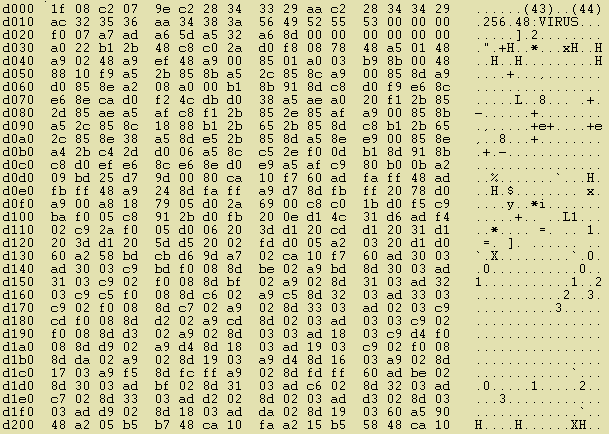
virus
noun
A piece of code that is capable of copying itself and typically has a detrimental effect, such as corrupting the system or destroying data.
Example: Pennsylvania makes it crime to spread a computer virus.