My name is Emmanuel, and I am studying social science. My field of study is psychology. I have been in this program since 2023 . Hopefully, I will finish my program this summer and enter university in the fall. At first, I was hesitating between politics and psychology, but I chose psychology because it is more important to me. However, politics and diplomatic relations are also interesting topics. This glossary will help therapists who speak French and English-speaking therapists understand each other. It contains 20 words. I used my notes and the internet to find the words, and I took the definitions from the internet. I would like all readers to review this glossary.
Attachment Theory
noun
psychological model that explains how early relationships influence emotional bonds in adulthood.
Example: Attachment theory suggests that early relationships with caregivers shape an individual's emotional bonds and behavior in future relationships.
en: Théorie de l'attachement
behaviorism
noun
a branch of psychology that focuses on how people learn through their interactions with the environment
Example: Behaviorism emphasizes the role of environmental factors in shaping human and animal behavior.
en: béhaviorisme
Bipolar disorder
noun
a mental health condition that causes extreme mood swings
Example: People with bipolar disorder may experience episodes of intense energy followed by deep sadness or fatigue.
en: trouble bipolaire
Cognition
noun
The mental processes involved in acquiring knowledge and understanding, such as thinking, memory, and perception.
Conditioning – A learning process in.
Example: Cognition plays a crucial role in learning, decision-making, and reasoning.
en: Cognition
Cognitive Bias
noun
A systematic error in thinking that affects decisions and judgments.
Example: Cognitive bias can lead people to make irrational decisions, such as overestimating the likelihood of an event based on recent experiences.
en: Biais cognitif
Defense Mechanism
noun
Unconscious strategies the mind uses to protect itself from anxiety and distress.
Example: Using humor as a defense mechanism, she laughed off her nervousness before the big presentation.
en: mécanisme de défense
Dopamine
noun
A neurotransmitter associated with pleasure, motivation, and reward-seeking behavior
Example: The release of dopamine in the brain is often associated with feelings of happiness and satisfaction.
en: dopamine
Ego
noun
In Freudian theory, the part of the personality that mediates between the id, superego, and reality.
Example: According to Freud, the ego helps manage the demands of the id and superego, ensuring that behavior is both realistic and socially acceptable.
en: égo
Empiricism
noun
The view that knowledge comes from experience and observation rather than innate ideas.
Example: Empiricism asserts that knowledge is derived from sensory experience and evidence, rather than from innate ideas or intuition.
en: empirisme
Free Association
noun
A psychoanalytic technique in which a person speaks freely to uncover unconscious thoughts
Example: In therapy, the psychologist used free association to encourage the patient to speak freely and uncover unconscious thoughts and feelings.
en: Association libre
Groupthink
noun
A psychological phenomenon in which a desire for harmony leads to poor decision-making in groups.
Example: Groupthink can lead to poor decision-making, as members of a group prioritize consensus over critical thinking and ignore alternative perspectives.
en: pensée de groupe
Id
noun
In Freudian theory, the primitive and instinctual part of the mind that seeks immediate gratification.
Example: The id operates unconsciously, constantly striving to satisfy primal urges, regardless of social norms or consequences.
en: Ça
Obsessive-Compulsive Disorder (OCD)
noun
A mental health condition characterized by intrusive thoughts (obsessions) and repetitive behaviors (compulsions).
Example: Obsessive-Compulsive Disorder (OCD) can cause individuals to repeatedly check things or perform rituals to alleviate intrusive, anxiety-inducing thoughts.
en: Trouble obsessionnel compulsif
Operant Conditioning
A learning process where behavior is shaped by rewards and punishments.
Example: Operant conditioning is often used in classrooms, where teachers reward students for positive behavior to encourage repetition of that behavior.
en: Conditionnel opérant
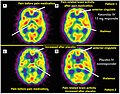
placebo effect
noun
A psychological phenomenon where people experience improvement due to their belief in treatment rather than the treatment itself.
Example: The placebo effect can occur when a patient experiences improvements in their condition simply because they believe they are receiving treatment, even if the treatment is inactive.
en: effet placebo
Psychoanalysis
noun
A therapeutic approach founded by Freud that explores unconscious thoughts and past experiences.
Example: Psychoanalysis focuses on uncovering repressed memories and unresolved conflicts to help individuals gain insight into their behavior and emotions.
en: psychanalyse
Schema
noun
A mental framework that helps organize and interpret information.
Example: A schema helps us quickly process new information by organizing it into familiar categories, such as understanding a restaurant as a place to eat and socialize.
en: Schéma
schizophrenia
noun
Schizophrenia is a chronic psychotic disorder that affects the way a person interacts with and understands the world.
Self-Actualization
noun
The realization of one’s full potential, as described by Maslow’s hierarchy of needs.
Example: After years of personal development, she felt a deep sense of self-actualization, having finally pursued her passion for art.
en: Actualisation de soi
subconscious
noun
The part of your mind that notices and remembers information when you are not actively trying to do so, and influences your behaviour even though you do not realize it.
Example: The memory was buried deep within my subconscious.



:max_bytes(150000):strip_icc()/what-is-cognition-2794982_final1-fc2c7c2b8e77444f84ca5726400f1a3d.png)


:max_bytes(150000):strip_icc()/GettyImages-1437219879-3061e4b0a7d64484ab5e20187f73d203.jpg)