20 Computer Science - Web and Mobile Programming terms
I’m studying Computer Science Techniques with a specialization in Web and Mobile Programming at Ahuntsic College. This program introduces to the world of computer systems, new technologies, progressive web apps and AI (Artificial Intelligence). It’s helping to become a developer, who will create innovative and user-friendly applications that truly impacts people’s lives. My specialization covers both front-end and back-end development, allowing people to handle every aspect of app creation, from design to functionality. The long-term vision for this program is to lead innovative projects that bridge the gap between technology and daily life, making digital experiences more accessible and enjoyable for everyone.
If you are a new or just a beginner in IT (Information Technology), this glossary can be very helpful as it clarifies technical terms, ensuring a better understanding of concepts and components of computer systems. It can also assist in learning new technologies, improve communication with colleagues, and make troubleshooting more efficient by offering clear definitions. Additionally, it serves as a quick reference guide, helping you stay updated with the latest IT terms.
algorithm
noun
A finite sequence of mathematically rigorous instructions, typically used to solve a class of specific problems or to perform a computation. Used as specifications for performing calculations and data processing.
Example: The development and adaptation of a view-invariant Curvature Scale Space (CSS) landmark extraction ALGORITHM.
The ALGORITHM is sufficiently robust to sensor noise and is capable of reliably detecting and extracting landmarks that are naturally present in the environment from laser rangefinder scans.
en: algorithme
antivirus program
noun
A security program designed to prevent, detect, search and remove viruses and other types of malware from computers, networks and other devices.
Example: The other solution is putting the ANTIVIRUS programmes into use and keeping them up to date.
en: programme antivirus
API (application programming interface)
noun
A set of functions and procedures allowing the creation of applications that access the features or data of an operating system, application, or other service.
Example: To use one of these models via the OpenAI API, you’ll send a request to the Chat Completions API containing the inputs and your API key, and receive a response containing the model’s output.
en: interface de programmation d'application
backend
noun
A part of a computer system or application that is not directly accessed by the user, typically responsible for storing and manipulating data. Also covers server-side web application logic and integration and activities, like writing APIs, creating libraries.
Example: In general, the popular backend languages are Python, Java, JavaScript, Ruby, C#, and PHP. These backend languages are responsible for retrieving data from the stored database when processed through an application.
en: back-end
backup
noun
A copy of computer data taken and stored elsewhere so that it may be used to restore the original after a data loss event.
Example: The barcode system should have a BACKUP - If the something went wrong, perhaps the barcode wand broke, there should be an alternative method of number entry so that operations could still be carried out.
en: sauvegarde
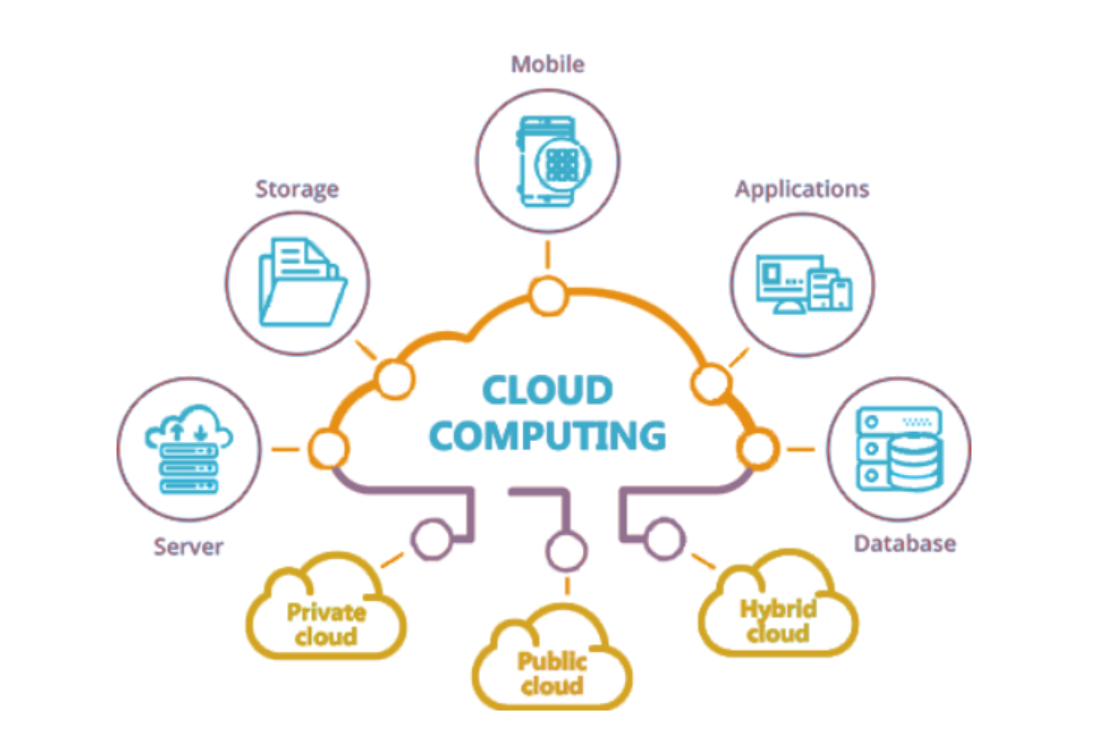
cloud computing
noun
A delivery of computing services—including servers, storage, databases, networking, software, analytics, and intelligence — over the Internet (“the cloud”) to offer faster innovation, flexible resources, and economies of scale.
Example: Getting cloud computing certifications includes validating your expertise to potential or existing employers, increasing your earning potential, or helping you stand out among candidates in a growing field.
en: informatique en nuage
database
noun
An organized collection of data or a type of data store based on the use of a database management system (DBMS), the software that interacts with end users, applications, and the database itself to capture and analyze the data.
Example: The large geographical DATABASE held in the system covers Europe as far east as the Urals.
en: base de données
encryption
noun
A process of transforming (more specifically, encoding) information in a way that, ideally, only authorized parties can decode.
Example: My main aim in this essay is to discover how the world would need to evolve, from internet security and ENCRYPTION, to the laws we live by in order to cope with such a powerful collection of data on a person's life.
en: cryptage
frontend
noun
Relating to or denoting the part of a computer system or application with which the user interacts directly. It refers to the user-facing components of a website or application, created using technologies like HTML, CSS, and JavaScript.
Example: Frontend frameworks are a collection of pivotal tools, libraries, and pre-designed components. These frameworks come equipped with reusable components (code snippets) for Javascript, CSS, and HTML that developers can reuse in “n” number of projects.
en: front-end
hardware
noun
Any physical parts or components that contribute to a computer system. It includes the physical parts of a computer, such as the central processing unit (CPU), random access memory (RAM), motherboard, computer data storage, graphics card, sound card, and computer case.
Example: If the period of historic relevance is measured in hundreds of years, then even periodic recopying and migration to new generations of HARDWARE will not effectively provide for the preservation of information long enough to meet historians" long - term needs.
en: matériel
machine learning
noun
A branch of artificial intelligence (AI) and computer science that focuses on the using data and algorithms to enable AI to imitate the way that humans learn, gradually improving its accuracy.
Example: This transformation is achieved by MACHINE LEARNING of a corpus of hand- labeled post lexical pronunciations that have been aligned with lexical pronunciations. The MACHINE LEARNING is conducted by a neural network, whose architecture and data encoding we describe.
en: apprentissage automatique
memory
noun
A physical device that stores data or information temporarily or permanently in it is called memory. It’s a device where data is stored and processed.
Example: For this step the COMPUTER MEMORY is separated into three regions: cells in the W-region are used for storage of the forms in the text-form list; cells in the X-region and Y region are reserved as information cells for text forms.
en: mémoire
motherboard
noun
A circuit board inside computers that stores electrical components and helps them communicate.
Example: For instance, the expansion slot on the MOTHERBOARD which support or work together with the processor, Intel developed its de facto standards for PCI and AGP slot which are now the basic layout on any MOTHERBOARD (Intel, 2006).
en: carte mère
open source
noun
A source code that is made freely available for possible modification and redistribution. Products include permission to use the source code, design documents or content of the product.
Example: As AMD pursue for the "OPEN SOURCE" policy, the lack of formal innovation strategy on building up its proprietary standards is likely to be the reason that AMD cannot defect Intel in a long run. Thus, the developing of new competence on proprietary standards as well as reviewing the OPEN SOURCE policy are vital.
en: source ouverte
processor
noun
A logic circuitry that responds to and processes the basic instructions that drive a computer.
Example: Once Intel exert a pushing force on one side, a new model of PROCESSOR for instance, it will pass not only to the innovation side, but also transfer to their proprietary standards and lock up the complementors due to the wider adoption in the market.
en: processeur
protocol
noun
A set of standards that programmers follow so that their work can be decoded by other computers.
Example: RSA type of encryption is employed in web browsing programs like Netscape Navigator and Microsoft Explorer, where it use used in implementations of the Secure Sockets Layer (SSL) PROTOCOL.
en: protocole
router
noun
A computer and networking device that forwards data packets between computer networks, including internetworks such as the global Internet.
Example: For the best security, performance, and reliability, we recommend these settings for Wi-Fi routers, base stations, or access points used with Apple products.
en: routeur
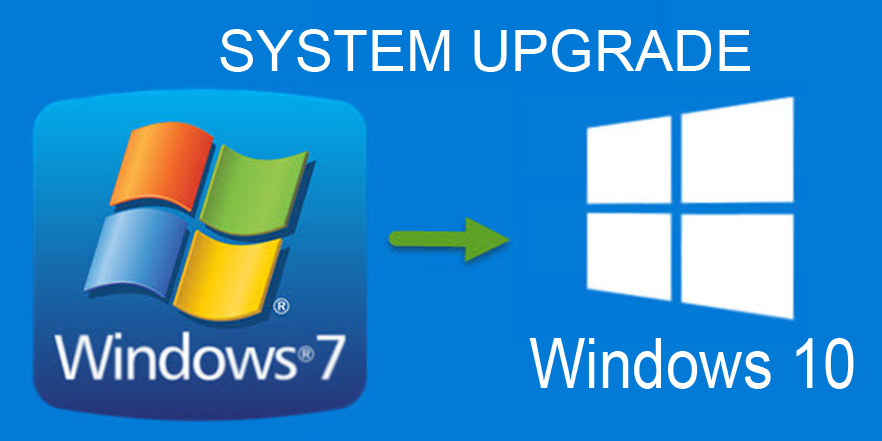
upgrade
noun
A new, improved, or fixed software that replaces older versions of the same software.
Example: There are a number of reasons for organisations, of all sizes, but particularly larger ones, to find cause to replace Information Systems that are the result of years of development, UPGRADE, modification and change.
en: mise à niveau
VPN (virtual private network)
noun
An encrypted connection over the Internet from a device to a network.
en: réseau privé virtuel
web application
noun
A computer application that is coded in a browser-supported language (such as HTML, JavaScript, Java, etc.) and relies on a common Web browser to render the application executable.
Example: Back-end website application and code The Amazon.co.uk website is generated dynamically using a combination of server-side dynamic HTML and client-side JavaScript, using a custom DLL (programming library) containing the functions used by the Amazon.co.uk WEB APPLICATION.