My name is Charlotte Landry, I’m 18 years old, and it is my second year studying Police Technology. This field of study is often misunderstood because people associate it with violence when in reality our role is to maintain peace, security and justice in our community. In fact, we learn throughout our studies how to intervene and interact with different clienteles from babies to senior citizens and people with intellectual deficiency and criminal records by learning the laws we need to follow and enforce and also by learning communication, first care and defense skills. Therefore, this glossary will help to solve communication problems with the different organisations that we work with like lawyers and Pre-Hospital emergency care, but it can also be destined to those who are interested in this field of study and want to know more before getting into it. This glossary containing 20 words will feature technical words, police jargon and equipment.
arrest
verb
To seize and hold under the authority of law.
Example: One of the officers decided to arrest Jarrett for suspected theft of the car, but after an altercation Jarrett was in fact charged with assaulting a police - officer.
en: arrêter
autopsy
noun
A postmortem examination to discover the cause of death or the extent of disease.
Example: Upon the death of the patient an autopsy showed a severe lesion to the frontal lobe of the brain.
en: autopsie
court
noun
A tribunal presided over by a judge, judges, or a magistrate in civil and criminal cases.
Example: When someone has to give evidence in a court of law they "swear an oath".
en: tribunal
detective
noun
A member of a law enforcement agency or a private person, whose occupation is to investigate and solve crimes.
Example: At university I chanced to meet a detective sergeant who had been in the Durham drug squad outside the Sociology building in New Elvet, Durham city.
en: détective
drug
noun
A substance taken for its narcotic or stimulant effects, typically illegally.
Example: Unfortunately, Belushi died only two years later, due to a drug overdose.
en: drogue
evidence
noun
The available body of facts or information indicating whether a belief about a crime is true or valid.
Example: The powers of the police are to record crime, gather evidence and seek out offenders.
en: preuve
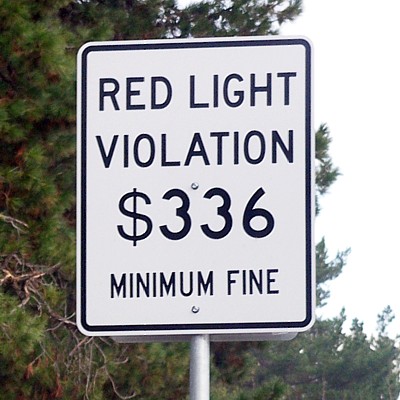
fine
noun
A sum of money exacted as a penalty by a court of law or other authority.
Example: These include facing a minimum driving ban of a year, a fine of up to £5000, and the possibility of six months imprisonment.
en: amende
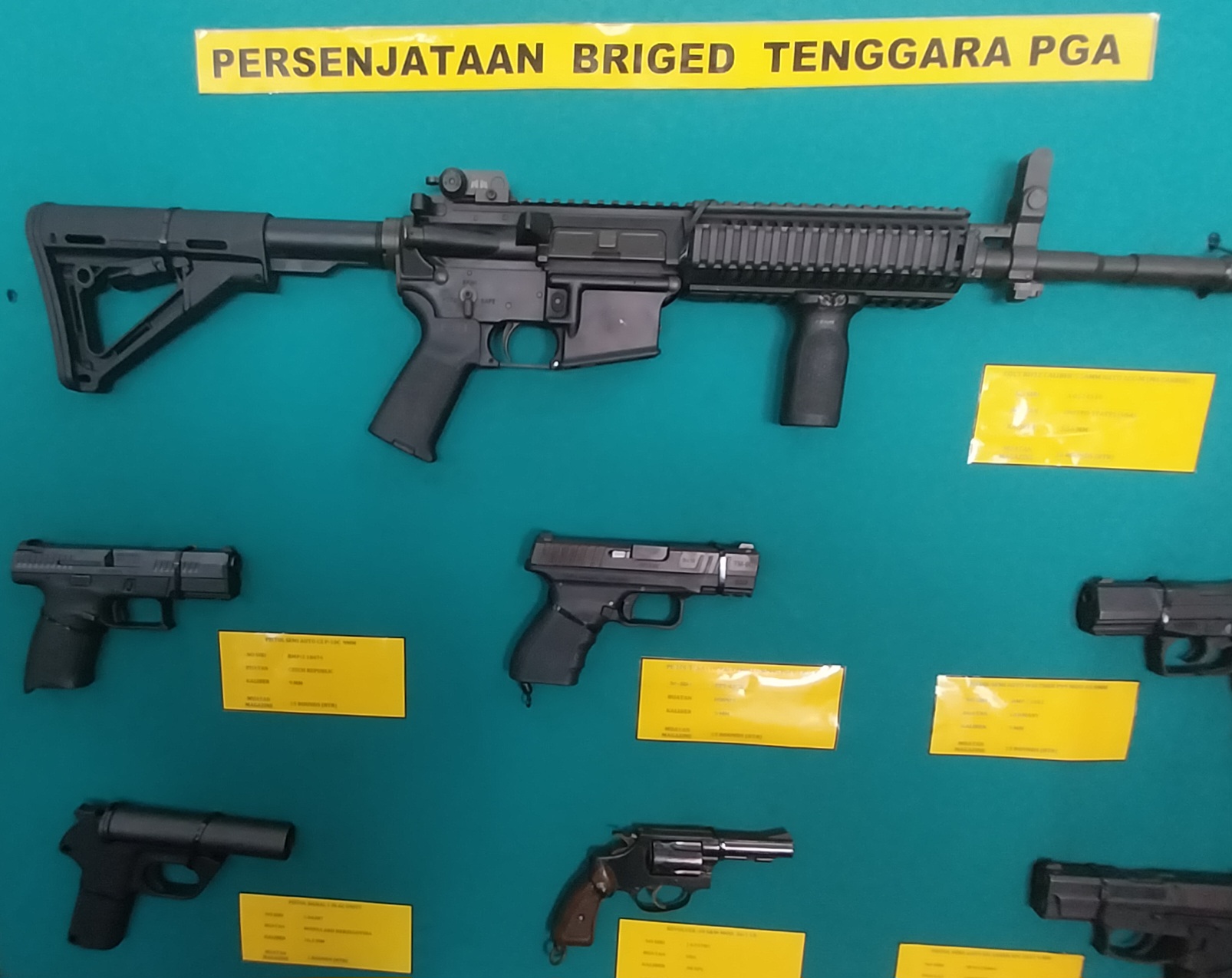
firearm
noun
A rifle, pistol, or other portable gun.
Example: Facts : pleaded guilty to robbery, having a firearm with intent and driving while disqualified.
en: arme à feu
handcuffs
noun
A pair of lockable linked metal rings for securing a prisoner's wrists.
Example: The steward then dragged him out towards the police who handcuffed him.
en: menottes
inmate
noun
A person confined to an institution such as a prison or hospital.
Example: The focus was on the social relationships in the prison (especially the informal ones), prison culture, argot roles and the "inmate code".
en: détenu
jail
noun
A place for the confinement of people accused or convicted of a crime.
Example: Those who could not meet such fines could be sent to JAIL.
en: prison
judge
noun
A public official appointed to decide cases in a court of law.
Example: Then follows this evidence put forward in front of a JUDGE jury who will ultimately decide whether they agree beyond reasonable doubt that the alleged offender committed the crime and thus how they should be punished.
en: juge
lawyer
noun
A person who practices or studies law; an attorney or a counselor.
Example: Lenin was the son of an education official in Simbirsk province and trained to be a LAWYER.
en: avocat
radar
noun
A system for detecting the speed of vehicles, by sending out pulses of high frequency electromagnetic waves that are reflected back to the source.
en: radar
suspect
noun
A person thought to be guilty of a crime or offense.
Example: Considered independent and impartial he is obligated to carry out investigations into evidence that will absolve, as well as incriminate the suspect.
en: suspect
trial
noun
A formal examination of evidence before a judge, and typically before a jury, in order to decide guilt in a case of criminal or civil proceedings.
Example: The McLibel TRIAL is a British court case between McDonald's and a postman and a gardener from London (Helen Steel and Dave Morris).
en: procès
victim
noun
A person harmed, injured, or killed as a result of a crime, accident, or other event or action.
Example: There is also the question of taking a sample with or without consent at a crime scene from a victim, a suspect or others who maybe connected.
en: victime
warrant
noun
A document issued by a legal or government official authorizing the police or some other body to make an arrest, search premises, or carry out some other action relating to the administration of justice.
Example: In Washington, D.C. and Baltimore, Maryland between 40-50% of the black male population between the ages of 18 and 15 is at any given moment either in prison, on probation, parole or there is a warrant out for their arrest .
en: mandat
weapon
noun
A thing designed or used for inflicting bodily harm or physical damage.
Example: I believe that section 18 GBH is the most likely charge here, due to Felicity carrying a 'weapon', and then stabbing it into the particularly vulnerable area of the eye.
en: arme
witness
noun
A person who sees an event, typically a crime or accident, take place.
Example: His could easily explain the witness's misidentification in this case; as the hypnosis was carried out by a detective there was increased pressure, from this authority figure, to identify the culprit.