Hello, my name is Matteo and I am currently a third-year student at Ahuntsic. Next year, I will be attending university to study to become a physiotherapist. I have chosen this field of work because it allows me to stay connected to my passion for football even after my playing career is over. Additionally, I am eager to help other young athletes throughout their sporting careers. Physiotherapy is a healthcare profession that focuses on human function and movement, with the goal of maximizing physical potential. It encompasses various areas such as promoting, preventing, treating, rehabilitating, and habilitating individuals to improve their quality of life and movement potential. I am creating this glossary to help future teenagers learn more about physiotherapy and potentially guide them in deciding if they want to pursue this field of work. The glossary will contain 20 terms related to physiotherapy, providing a better understanding of this profession.
Compression
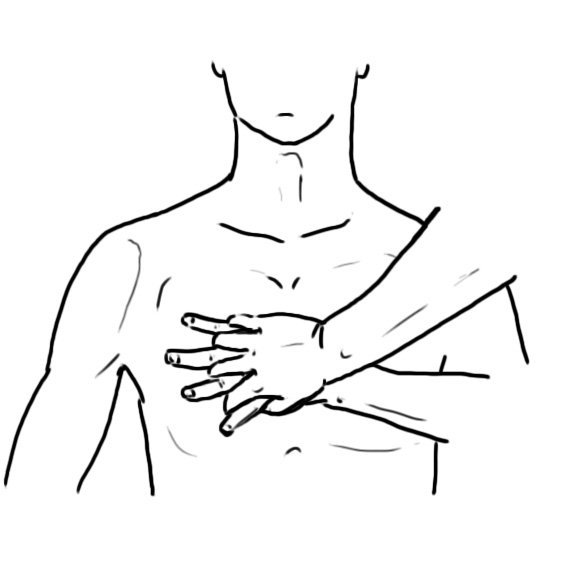
Compression in physiotherapy refers to the application of pressure to a specific area of the body, typically through the use of specialized equipment or manual techniques. This pressure can help to reduce swelling, improve circulation, and alleviate pain or discomfort in the affected area.
Example: A weakness in this muscle indicates median nerve COMPRESSION.
fr: Compression
Diagnosis
The identification of the nature of an illness or other problem by examination of the symptoms.
Example: The patients expected A&E attendance to provide a DIAGNOSIS timely treatment.
fr: Diagnostic
Discomfort
Discomfort refers to a physical or emotional sensation of mild to moderate pain, unease, or irritation that may be experienced by a patient during a physiotherapy session.
Example: There should be at least 12 weeks of abdominal DISCOMFORT.
fr: Inconfort
Dislocation
Dislocation is a joint injury that occurs when the bones in a joint are forced out of their normal position, causing the joint to become unstable and painful.
Example: The injury was an anterior or posterior DISLOCATION.
fr: Dislocation
Episode of care
An episode of care in physiotherapy refers to a period of time during which a patient receives a specific course of treatment for a particular condition or injury.
Example: The ultimate goal of an EPISODE OF CARE is to improve the patient's functional abilities and quality of life.
fr: Épisode de soins
Etiology
Etiology refers to the study of the causes and origins of a particular condition or disease, as well as the factors that contribute to its development and progression. In physiotherapy, understanding the etiology of a patient's condition is crucial in developing an effective treatment plan that addresses the underlying causes of their symptoms.
Example: It must be a disease with a specific ETIOLOGY and a predictable course.
fr: Étiologie
Evaluation
Evaluation in physiotherapy refers to the process of assessing a patient's physical abilities, limitations, and impairments in order to develop an individualized treatment plan. This includes gathering information about the patient's medical history, conducting physical examinations, and administering various tests and measures to determine the patient's functional status
Example: I am gonna do the EVALUATION of your shoulder right now.
fr: Évaluation
Exercise
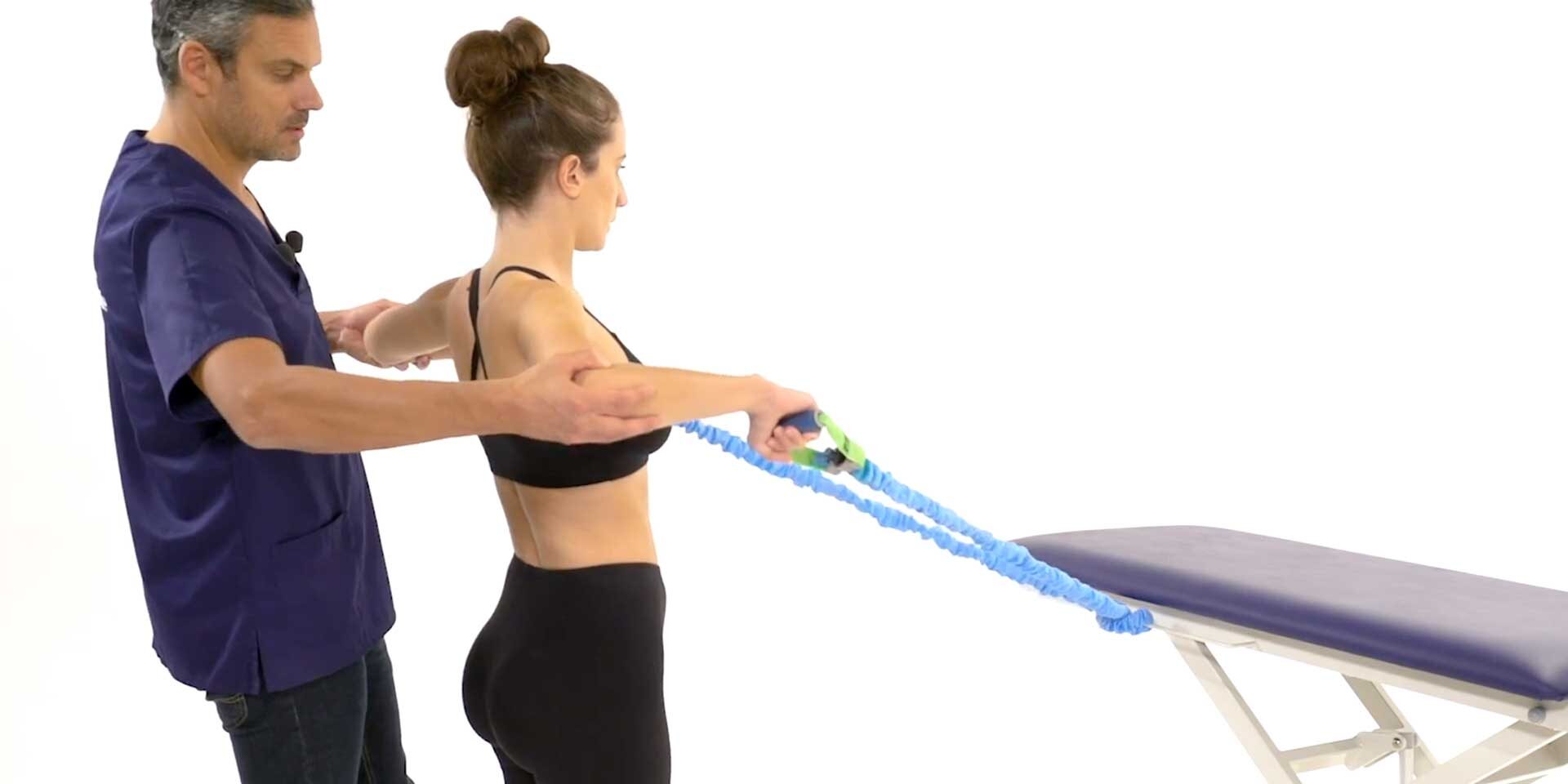
Exercise in physiotherapy refers to a therapeutic activity or movement prescribed by a physiotherapist to improve or maintain physical function, strength, endurance, flexibility, balance, coordination, and/or range of motion.
Example: Do this EXERCISE everyday for the next month.
fr: Exercice
Flexion
Flexion is a movement that decreases the angle between two body parts, typically at a joint, resulting in the bending of the joint and shortening of the muscle.
Example: loss of FLEXION /extension / lateral movements and weakness
fr: Flexion
Goal
A goal in physiotherapy refers to a specific and measurable objective that a patient and their physiotherapist work towards achieving during the course of treatment.
Example: My GOAL is to be able to play in 3 weeks.
fr: but
Hyperextension
The forceful extension of a limb or joint beyond its normal limits, either in exercise or therapy or so as to cause injury.
Example: Left Knee Flexion approx 80 degrees, no HYPEREXTENSION No pain or crepitus on movement.
fr: Hyperextension
Inflammation
Inflammation is a physiological response to tissue injury or infection, characterized by redness, swelling, heat, pain, and loss of function.
Example: The abdominal pain may be caused by INFLAMMATION and spasm.
fr: Inflammation
Joints
Joints refer to the articulations between two or more bones that allow for movement and stability. In physiotherapy, the term joints specifically refers to the assessment, treatment, and management of joint-related conditions, including joint pain, stiffness, swelling, and limited range of motion.
Example: The stabilisation of limbs and JOINTS.
fr: Articulations
Ligaments
A tough fibrous band of tissue connecting the articular extremities of bones or supporting an organ in place.
Example: This involves dividing the transverse carpal LIGAMENTS to relieve the pressure on the median.
fr: Ligament
massage
The rubbing and kneading of muscles and joints of the body with the hands, especially to relieve tension or pain.
Example: This MASSAGE will help you with your back pain.
fr: massage
Mobility
The ability to move your muscle freely and easily.
Example: The patients are encouraged to regain independent MOBILITY.
fr: Mobilité
Nerve
A whitish fiber or bundle of fibers that transmits impulses of sensation to the brain or spinal cord, and impulses from these to the muscles and organs.
Example: You have NERVE problem.
fr: nerf
Pain
Physical suffering or discomfort caused by illness or injury.
Example: Released her of her PAIN.
fr: douleur
Physiotherapy
The treatment of disease, injury, or deformity by physical methods such as massage, heat treatment, and exercise rather than by drugs or surgery; physical therapy.
Example: Their results suggest that one session of PHYSIOTHERAPY training has a significant effect on health.
fr: Physiothérapie
Rehabilitation
Rehabilitation in physiotherapy refers to the process of restoring physical function, mobility, and strength through a combination of therapeutic exercises, manual techniques, and other modalities, with the goal of improving a patient's quality of life and ability to perform daily activities.
Example: Lung disease and the effect of pulmonary REHABILITATION.