My name is Éliane Laperrière-Roger, and I study Business Management at Ahuntsic College. I have changed programs three times because I struggled to find a field of study that truly inspired me to pursue a career. Since I’ve always wanted to open my own boutique, I chose a program that would teach me the fundamental skills of running a business. We cover topics like finance, marketing, customer service management, and more. In this glossary, I have selected 20 business-related terms that are commonly used in the field and can be useful to know if you want to study Business Management.
amortize
verb
Reduce or pay off (a debt) with regular payments.
fr: amortir
asset
noun
An item of property owned by a person or company, regarded as having value and available to meet debts, commitments, or legacies.
Example: The reality is that a house is a risky ASSET.
fr: actif
benchmarking
noun
Comparing one’s products to those of competitors in order to improve quality and performance.
Example: As differentiation between firms diminishes and management emulating techniques such as BENCHMARKING become exhausted, competition takes the form of rival takeover.
fr: analyse comparative
benefits
noun
A payment made or an entitlement available in accordance with a wage agreement, an insurance policy, or a public assistance program.
Example: While profit used to be viewed as a sufficient objective in itself, creating BENEFITS for stakeholders is seen as the ultimate objective.
fr: bénéfice
bond
noun
A debt investment in which an investor loans money to an entity (corporate or governmental) that borrows the funds for a defined period of time at a fixed interest rate.
Example: Under this BOND the bank guarantees repayment of such funds in the event of an exporter's liquidation.
fr: obligation
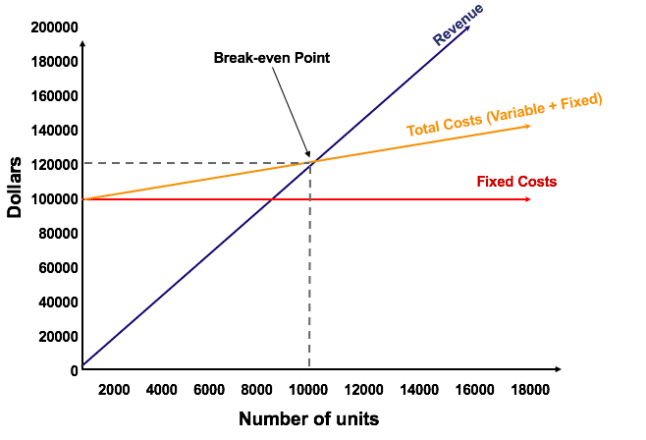
breakeven point
noun
The point which the income from sale of a product or service equals the invested costs, resulting in neither profit nor loss; the stage at which income equals expenditure.
Example: Breakeven points Next, we needed to decide how many products we should sell to cover all costs.
fr: point mort
capital
noun
Wealth in the form of money or other assets owned by a person or organization or available or contributed for a particular purpose such as starting a company or investing.
Example: A firm will have accepted all projects that offer a return greater than the cost of CAPITAL in such way that any other interim cash flows could only be reinvested at the cost of CAPITAL.
fr: capital
commodity
noun
A raw material or primary agricultural product that can be bought and sold, such as copper or coffee.
Example: Robert Davies, Chief Executive explains that COMMODITY prices, in particular the price of steel, along with exchange rate movements have caused significant increases in input costs within the entity.
fr: marchandise
corporation
noun
An association of individuals, having a continuous existence independent of its members and with powers and liabilities distinct from those of its members.
Example: Corporations, which are mainly owned by shareholders are said to be depriving them from their property rights by being socially responsible.
fr: corporation
dividend
noun
A portion of a company’s earnings which is paid to the shareholders or stockholders on a quarterly or annual basis.
Example: A limitation of this ratio is such that when an entity records a loss, no earnings are available but still a DIVIDEND is often paid.
fr: dividende
incentive
noun
A thing that motivates or encourages one to do something.
Example: Employees are satisfied due to the implementation of sophisticated HRM policies coupled with good pay and flexibility benefits and thus see no INCENTIVE for joining a union.
fr: incitation
interest
noun
Money paid regularly at a particular rate for the use of money lent, or for delaying the repayment of a debt.
Example: The polish government expects a reduction of the nominal and real INTEREST rates as a result of further macroeconomic stabilisation and the inclusion of Polish agriculture to the CAP.
fr: intérêt
liability
noun
An obligation that legally binds an indi- vidual or company to settle a debt.
Example: For the same reason, the present case and the latter is not granted for their claims for LIABILITY.
fr: responsabilité
liquidity
noun
The availability of liquid assets to a market or company.
Example: If confidence was able to be maintained, countries should be able to gain sufficient LIQUIDITY from private sources.
fr: liquidité
margin
noun
The difference between a sale price and a cost.
Example: However, Hyundai has higher gross profit MARGIN almost by twice showing that it has been having a better net profit than Audi for three consecutive years.
fr: marge
mortgage
noun
A debt instrument that is secured by the collateral of specified real estate property and that the borrower is obliged to pay back with a predetermined set of payments.
Example: Inflation lowers owning costs because of the tax-deductibility of MORTGAGE payments.
fr: hypothèque
overdraft
noun
A loan arrangement under which a bank extends credit up to a maximum amount against which a current checking account customer can write checks or make withdrawals.
Example: Thus, because of the importance of cash position in a business, managers often plans cash movements in advance, which enable them to be confident of adequate cash, or to have enough time to negotiate OVERDRAFT facilities.
fr: découvert
prime cost
noun
The direct cost of a commodity in terms of the materials and labor involved in its production, excluding fixed costs.
Example: The overhead costs of production are added to the PRIME COST, which comprised direct materials and direct labour for each unit.
fr: coût de revient
shareholder
noun
An owner of shares in a company.
Example: A large SHAREHOLDER may free ride on insider information such as growth opportunities by exploiting them through his her share and control in another firm.
fr: actionnaire
solvency
noun
The ability to meet maturing obligations as they come due.
Example: This succeeded in restoring the nation's confidence in the financial system by proving the SOLVENCY of banks and ensuring the security of money deposited in them, persuading people to utilise them again.