This glossary was created as part of my studies in paralegal technology. As a 19-year-old student, I am learning about law, the court system, and the paralegal profession. This glossary includes key terms I've learned so far, with definitions in both English and French, to help others starting out in this field.
affidavit
noun
A written statement confirmed by oath or affirmation, used as evidence in court.
Example: The witness signed an affidavit stating that he saw the defendant at the crime scene.
en: affidavit
bail
noun
A temporary release of an accused person awaiting trial, sometimes on the condition of a sum of money being lodged to guarantee their appearance in court.
Example: The judge set bail at $10,000 to ensure the defendant would return for the trial.
en: caution
brief
noun
A legal document submitted to a court that outlines the facts and legal arguments supporting a client's position.
Example: The attorney prepared a brief for the court detailing why the case should be dismissed.
en: mémoire
case law
noun
Law established by previous court decisions, which can be used as precedent in future cases.
Example: The lawyer cited case law to support her argument in court.
en: jurisprudence
contract
Noun
A legally binding agreement between two or more parties.
Example: They signed a contract to lease the apartment for one year.
en: contrat
deposition
Noun
An out-of-court testimony given under oath, used to gather information before a trial.
Example: The witness gave a deposition that was recorded for use during the trial.
en: déposition
discovery
noun
The pre-trial process where parties exchange information and gather evidence to prepare for trial.
Example: During discovery, the defense requested copies of the plaintiff's medical records.
en: communication des preuves
due deligence
The comprehensive appraisal of a business or individual, typically in preparation for a legal transaction.
Example: The buyer performed due diligence before purchasing the company.
en: diligence raisonnable
estate
Noun
All the assets and liabilities left by an individual at death.
Example: The lawyer helped manage the estate after her father's passing.
en: domaine
hearsay
noun
Evidence based on what someone heard from another person, rather than what they directly experienced, often inadmissible in court.
Example: The judge ruled that the statement was hearsay and could not be admitted as evidence.
en: ouï-dire
injunction
Noun
A court order requiring a party to do or refrain from doing a specific act.
Example: The court issued an injunction to stop the company from using the patented technology.
en: injonction
jurisdiction
noun
The authority granted to a legal body to make legal decisions and judgments.
Example: The case was dismissed because the court lacked jurisdiction.
en: juridiction
letter of demand
noun
Formal document sent to a person or organization demanding that they take specific actions, such as paying a debt or stopping a particular behavior, within a specified timeframe. It often serves as a precursor to legal action if the demands are not met.
Example: The landlord sent a demand letter to the tenant to pay the overdue rent or face legal action.
en: mise en demeure
litigation
Noun
The process of taking legal action or resolving disputes in court.
Example: The company decided to avoid litigation by settling the dispute out of court.
en: litige
notary
noun
An official authorized to witness the signing of documents and administer oaths.
Example: The contract was signed in the presence of a notary.
en: notaire
pleadings
noun
The formal statements of the parties in a lawsuit detailing their claims and defenses.
Example: The pleadings included the plaintiff's complaint and the defendant's answer.
en: plaidoiries
power of attorney
noun
A legal document allowing one person to act on behalf of another.
Example: She granted her brother power of attorney to handle her financial affairs.
en: procuration
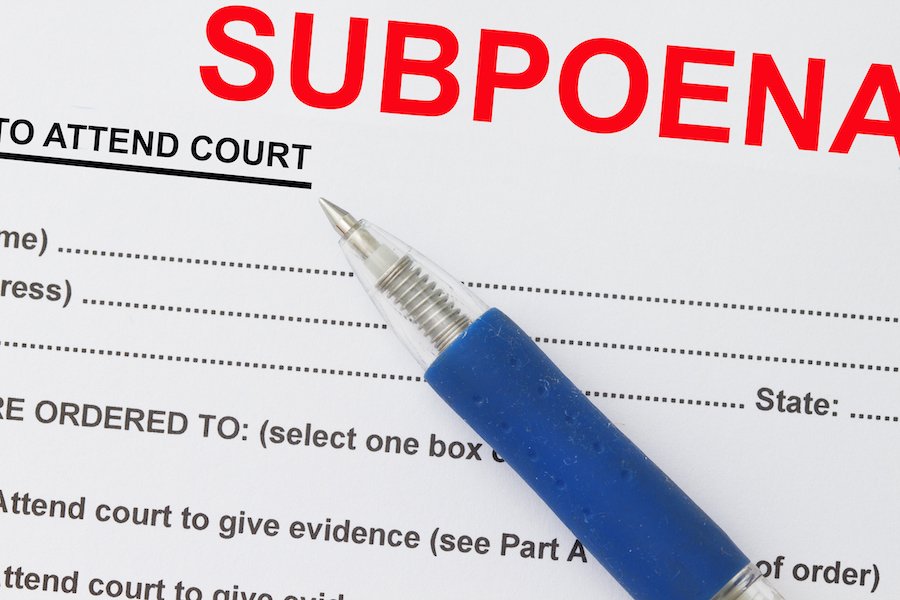
subpoena
Noun
A document ordering a person to attend court or produce evidence.
Example: He received a subpoena to testify in court next month.
en: assignation
tort
noun
A civil wrong, other than a breach of contract, that causes harm or loss, leading to legal liability.
Example: The company was sued for the tort of negligence after the accident.
en: délit
verdict
Noun
The decision reached by a jury or judge on the issues presented in a trial.
Example: The jury delivered a verdict of not guilty.
en: verdict / décision
will
Noun
A legal document expressing a person’s wishes regarding the distribution of their property after death.
Example: His will specified that all his assets would go to his children.