Web page glossary
Web page glossary
20 Digital literacy terms
This is a glossary that helps you to define and understand business management terms
- Bounce rate
- The percentage of visits to your website where only 1 page was viewed. When we say users "bounce," we mean they viewed a page of your site or a landing page but didn’t engage further. They didn’t click on links or view more pages. There are many methods for improving your pages so more users stick around. An offer, call to action (CTA), ad copy, and design can all be optimized through A/B testing.
https://mailchimp.com/marketing-glossary/#backlinks
- Breadcrumbs
- If you’re thinking "Hansel and Gretel," you’re right. This fairy tale duo left a trail of breadcrumbs as they ventured into the forest so they could find their way back home. Digital breadcrumbs serve the same purpose. They’re a form of website navigation that shows users the sections they’ve visited in the order they visited them so they can retrace their steps easily.
https://mailchimp.com/marketing-glossary/#backlinks
- Buyer Behavior
- The ways a consumer identifies, considers, and chooses products and services. Buyer behavior is often influenced by the consumer's needs, desires, aspirations, inhibitions, role, social and cultural environment.
https://blog.hubspot.com/marketing/sales-terms-glossary

- Buying criteria
- All the information a consumer needs to make a buying decision. It can be written or unwritten, and often answers questions like, "what is it?; "why should I buy it?"; "what is the price?"; "why do I need it?" and so on.
https://blog.hubspot.com/marketing/sales-terms-glossary
- Buying signal
- A communication from a prospect indicating they are ready to make a purchase, either verbal or non-verbal. An example would be them asking the sales rep, "When can it be delivered?"
https://blog.hubspot.com/marketing/sales-terms-glossary
- Classified advertising
- Ads appearing on the same page and grouped into categories in a list-like format. Common categories are real estate, home services, clothing, and cars. Compared to display ads, classified ads usually don’t have images alongside the ad copy - and they’re less expensive. They can be a cost-efficient advertising tactic for reaching people who are interested in a category relevant to your product or service. Classified ads also lend themselves naturally to localization.
https://mailchimp.com/marketing-glossary/#backlinks

- Cold calling
- Making unsolicited calls in an attempt to sell products or services. It's also a very inefficient way to find potential customers.
https://blog.hubspot.com/marketing/sales-terms-glossary

- Contact form
- A page on a website that contains a brief questionnaire that allows users to provide information about themselves and indicate an interest in being contacted about your products or services. Common form fields are first name, last name, email address, and area of interest. Essential elements of a contact form are a statement confirming the user is giving you permission to make contact and a link to your privacy policy.
https://mailchimp.com/marketing-glossary/#backlinks

- Customer relationship management
- Software that let companies keep track of everything they do with their existing and potential customers. At the simplest level, CRM software lets you keep track of all the contact information for these customers. But CRM systems can do lots of other things, too, like track email, phone calls, faxes, and deals; send personalized emails; schedule appointments; and log every instance of customer service and support. Some systems also incorporate feeds from social media such as Facebook, Twitter, LinkedIn, and others. The goal is to create a system in which sales reps have a lot of information at their fingertips and can quickly pull up everything about a prospect or existing customer.
https://blog.hubspot.com/marketing/sales-terms-glossary
- Decision-maker
- The person who, or role that, makes the final decision of a sale. They are often "guarded" by a gatekeeper.
https://blog.hubspot.com/marketing/sales-terms-glossary

- End user
- The person who uses a product or service. If you make T-shirts, a person wearing your shirt is the end user. If you make websites, the person who hires you is your client or customer and the person using the website is the end user. Either way, do your best to avoid referring to people as “users” in your marketing materials. It’s accurate but not ideal.
https://mailchimp.com/marketing-glossary/#backlinks
- Eye tracking
- Measuring and recording the movement of eyes as they look at a web page. In digital marketing, eye tracking is often used to figure out what parts of a web page or email people look at first or spend the most time looking at, which is often displayed as a heat map. Marketers use this data to strategically place elements, such as call-to-action buttons, where they are most likely to be seen and clicked on.
https://mailchimp.com/marketing-glossary/#backlinks

- Gatekeeper
- A person who, or role that, enables or prevents information from getting to another person(s) in a company. For example, a receptionist or personal assistant.
https://blog.hubspot.com/marketing/sales-terms-glossary

- Go-to-market strategy
- A plan that helps you launch your new business, product, service, or brand to your customers. It usually includes target audience research, the key differentiators in your market, and a planned approach for marketing and distribution.
https://mailchimp.com/marketing-glossary/#backlinks
- Paid search
- Online advertising that is triggered when users perform searches using keywords that a company has purchased. Ads look like organic search results, but they appear more prominently on a search engine results page (SERP) than they would have organically. They are also labeled as “ad” or with another word indicating “paid.” You’ll often see paid search in crowded categories such as airline flights, hotels, and laptops. The pricing model is usually pay-per-click (PPC).
https://mailchimp.com/marketing-glossary/#backlinks

- Sound bite
- A series of words or phrases sales reps use to respond to and overcome a customer objection.
https://blog.hubspot.com/marketing/sales-terms-glossary
- Unique visitor
- The number of individuals who visited your website in a defined amount of time. This is often compared to visits, which is the number of times your website was accessed during a set period. If 2 people went to your website 10 times in a day, you would have 20 visits and 2 unique visitors. Repeat visits are important because they could be a sign of loyalty or a response to an abandoned cart email.
https://mailchimp.com/marketing-glossary/#backlinks
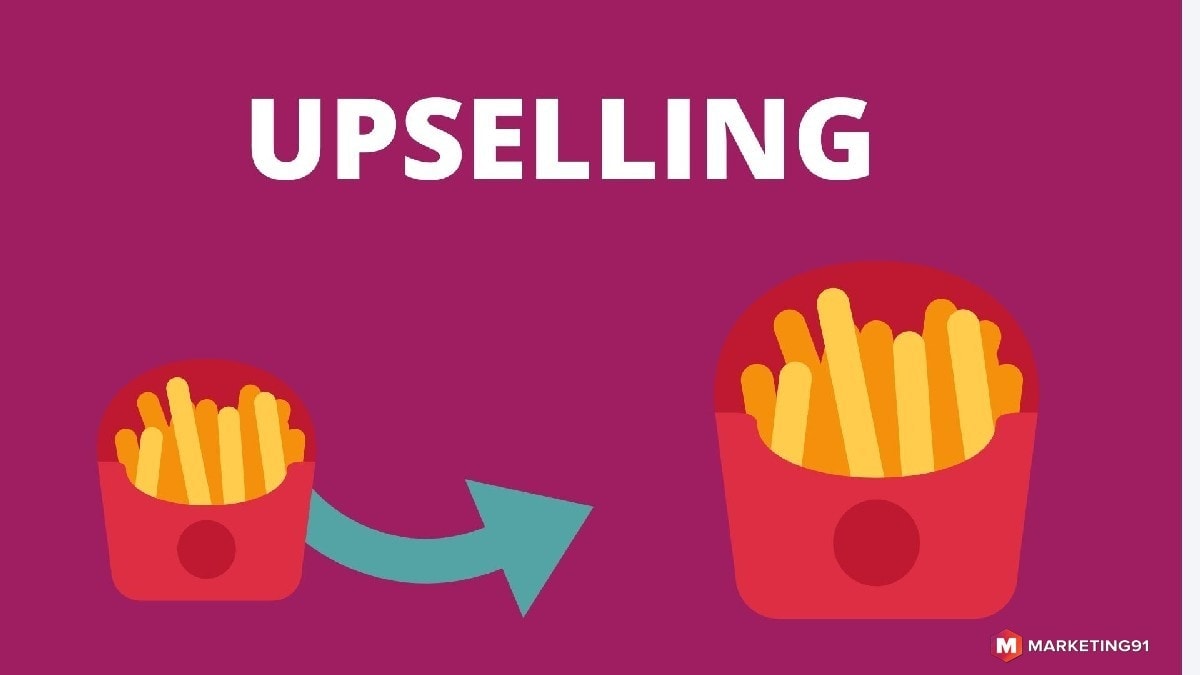
- Up-selling
- When a sales rep sells an existing customer a higher-end version of the product that customer originally bought. For example, if you bought a cell phone plan and a sales rep successfully persuaded you to upgrade to a plan with more minutes or data, then that's an up-sell.
https://blog.hubspot.com/marketing/sales-terms-glossary
- Value proposition
- "Value prop" for short. A benefit of a product or company intended to make it more attractive to potential buyers and differentiates it from competitors.
https://blog.hubspot.com/marketing/sales-terms-glossary
- Word of mouth marketing
- Person-to-person conversation that promotes a product or service. For example: “Hey, I loved that movie. You should check it out.” Word-of-mouth marketing (WOM marketing) can be organic. A brand can also script and direct it. In social media marketing, influencers are a common type of WOM marketing. A trusted expert or celebrity is paid to talk about their experience with a product or service. Authenticity is essential for WOM marketing to be successful, so it’s not always as positive as other types of marketing messages.
https://mailchimp.com/marketing-glossary/#backlinks
