Marketing and sales Glossary
Marketing and sales Glossary
20 Marketing and Sales terms
This glossary covers essential terms in marketing and sales. It is designed to help you understand key concepts and navigate the language of the industry, whether you're a beginner or looking to refresh your knowledge.
- A/B Tests
- Noun
- Creating 2 versions of a digital asset to see which one users respond to better. Examples of assets include a landing page, display ad, marketing email, and social post. In an A/B test, half of your audience automatically receives “version A” and half receives “version B.” The performance of each version is based on conversion rate goals such as the percentage of people who click on a link, complete a form, or make a purchase.
(https://mailchimp.com/marketing-glossary/)
- en: Test a/b

- Backlinks
- Noun
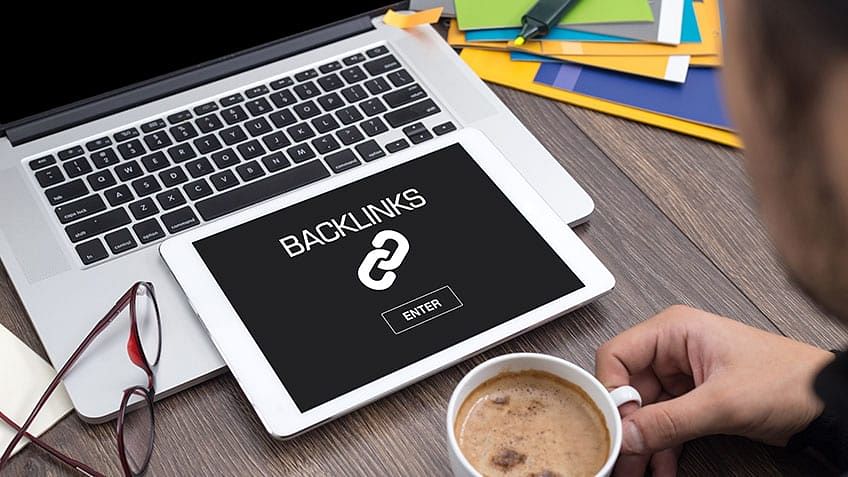
- Links on websites other than your own that go back to a page on your website. Backlinks are also called inbound links because they represent traffic coming to your website from somewhere else. The quality and quantity of your backlinks can help you rank higher in search engines such as Google and Bing. This is because your backlinks are considered an indicator of how popular your website is with users.
(https://mailchimp.com/marketing-glossary/)
- en: Analytique
- Banner Ad
- Noun
- A standard horizontal ad placement at the top of a web page. The term “banner” is borrowed from print newspapers. It can refer to the newspaper’s name at the top of the front page or a story headline that spans the full width of the front page. Banners have been around since the early days of the web. While their popularity has decreased as newer display ad formats have become available, they can still be an effective element in your advertising mix, offering visibility at a relatively low cost.

- Business to customer (B2C)
- Noun
- Business-to-customer (B2C) refers to sales that happen between businesses and individual consumers. B2C sales include your typical purchases from various stores—clothing, furniture, groceries, and everyday essentials. Compared to B2B sales, B2C sales are usually more spontaneous and generate a lower profit per sale.
(https://www.zendesk.com/blog/sales-terms/)
- en: Taux de rebond
:max_bytes(150000):strip_icc()/btoc.asp-final-37a45954e5a846b8b1db4ac6a5e688e9.jpg)
- Business-to-business (B2B)
- Noun
- Business-to-business (B2B) refers to sales that happen between one business and another. These transactions can be with partners, distributors, suppliers, or clients. Many B2B companies sell to individual customers, too, but they often have separate departments for both, as B2B sales are more complex with a longer sales process.
(https://www.zendesk.com/blog/sales-terms/)

- Closing ratio
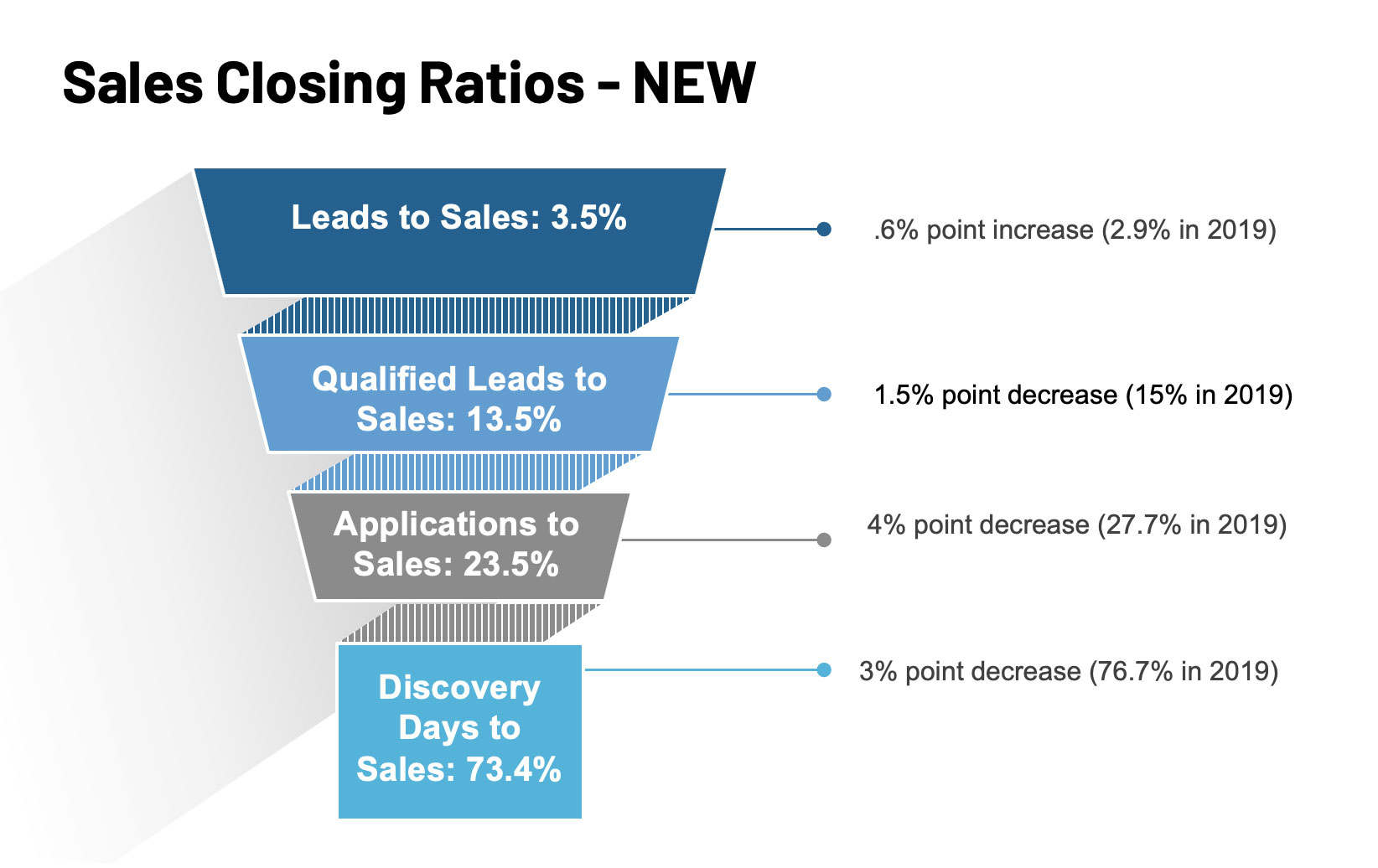
- The closing ratio is a sales metric used to measure sales agent success. It compares the number of closed deals to the number of prospects the agent interacted with. A closing ratio can also be used to predict future sales or make strategy adjustments. For instance, if the best agents in the company are averaging a 5-percent closing ratio, it’s probably not a reflection of their work ethic.
(https://www.zendesk.com/blog/sales-terms/)
- Conversion
- A conversion is any prospect that moves to the next step in the sales pipeline. Conversions can refer to sales, but they can also refer to prospects setting up a meeting to discuss pricing. In that case, the meeting is the conversion metric.
(https://www.zendesk.com/blog/sales-terms/)

- Cost Per Acquisition (CPA)
- How much you spend to win a single paying customer. Cost per acquisition (CPA) is a marketing success metric that can be calculated for a campaign, a digital marketing channel (such as email), or across all channels and tactics. At a campaign level, the formula is: total campaign cost / conversions (paying customers) = CPA. This metric is commonly used to determine the results of display ad and affiliate marketing campaigns.
(https://mailchimp.com/marketing-glossary/)

- CPM
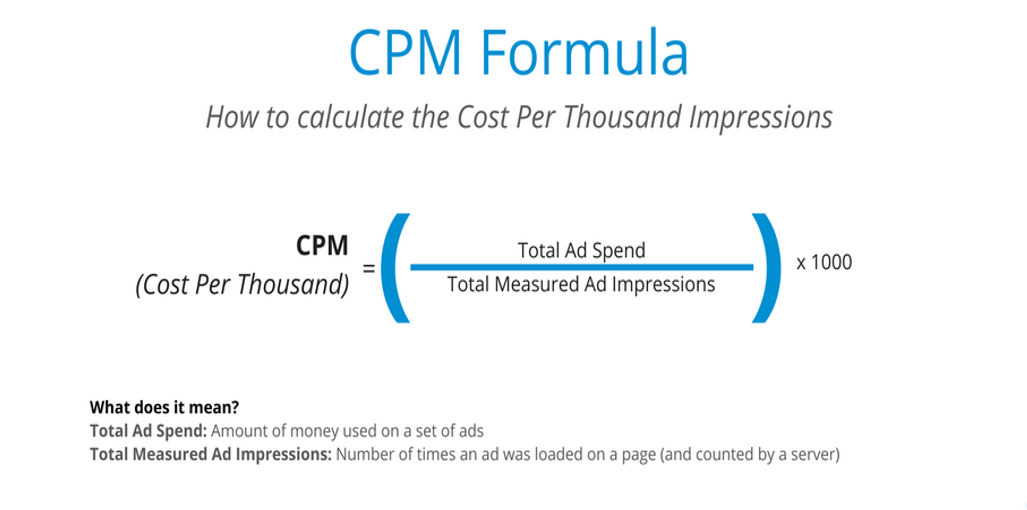
- Cost per thousand impressions of an online ad. When an ad is served to a user, it’s counted as an impression. If an ad network charges you $1,000 for delivering 1 million impressions, your CPM is $1. A CPM model can be a good strategy if your campaign goal is to raise awareness of your brand. If your campaign goal is to increase user interaction with your brand or prompt users to take a specific action such as signing up for a loyalty program, a cost-per-click (CPC) model may be a better choice.
(https://mailchimp.com/marketing-glossary/)
- Customer Acquisition Cost (CAC)
- Customer acquisition cost (CAC) is the amount of money a company spends to get a new customer. It helps measure the return on investment of efforts to grow their clientele. CAC is calculated by adding the costs associated with converting prospects into customers (marketing, advertising, sales personnel, and more) and dividing that amount by the number of customers acquired.
(https://mailchimp.com/marketing-glossary/)

- Forecasting
- Sales forecasting is the process of predicting future sales so your company can make budgeting, supply, and marketing decisions. Forecasts come from a variety of factors, including past profits, industry trends, supply chain status, and sales rep success metrics.
(https://www.zendesk.com/blog/sales-terms/)

- Key performance indicators (KPIs)
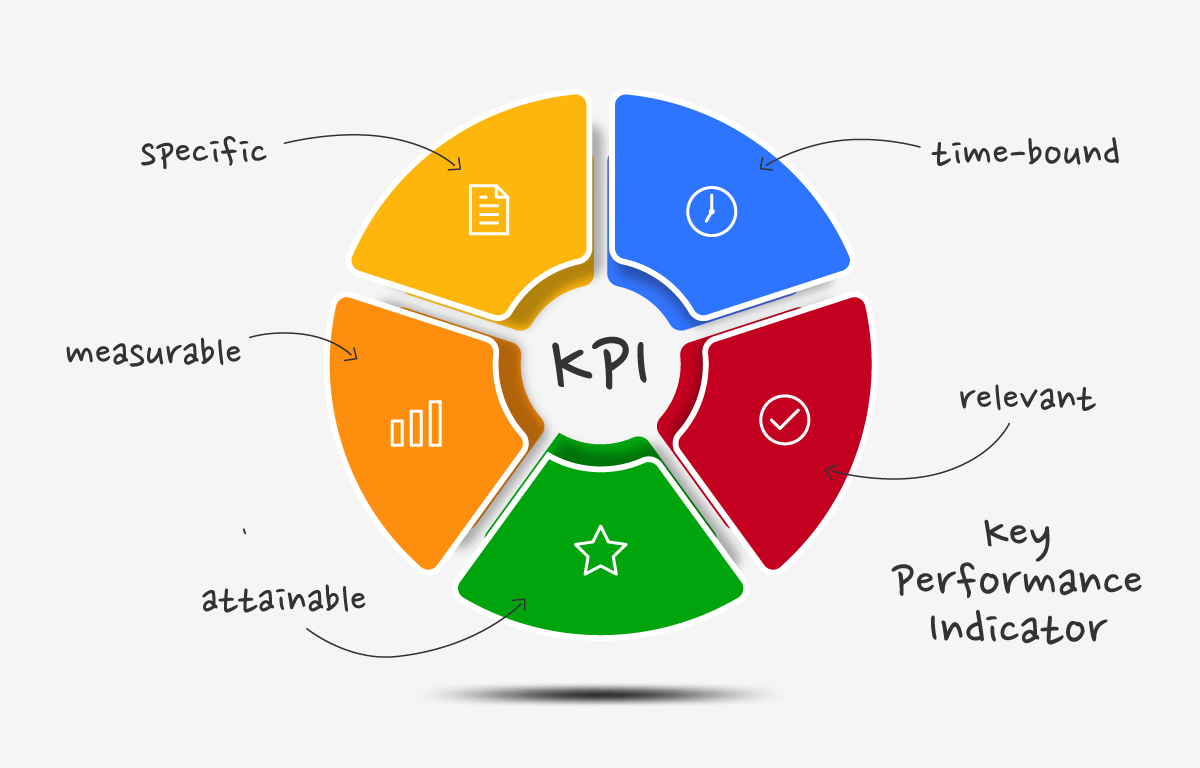
- Key performance indicators (KPIs) are numerical measurements that reflect how a business or individual employee is performing. KPIs are normally set as goalposts, not requirements. Common KPIs include annual growth, conversion rates, number of cold calls made, and number of products sold.
(https://www.zendesk.com/blog/sales-terms/)
- Key Success Factors
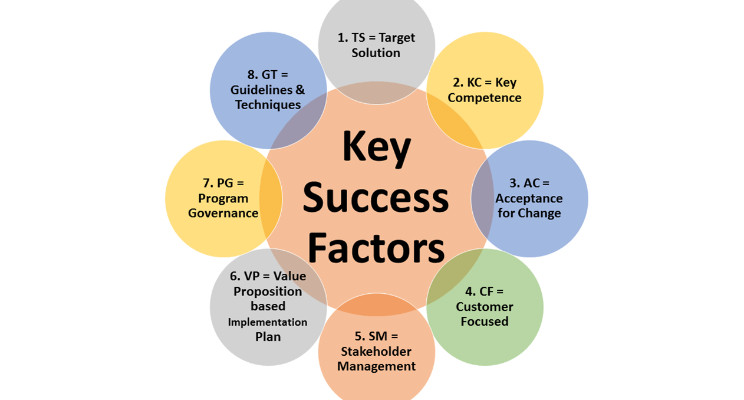
- The 5 elements that determine whether or not a company will be effective in capturing its target audience. The key success factors are strategic focus, people, operations, marketing, and finances. These factors are also known as strategic posture or competitive emphasis.
(https://mailchimp.com/marketing-glossary/#key-success-factors)
- Lead scoring
- Lead scoring is a ranking system that prioritizes leads by their potential value to the business. This helps sales reps identify which leads are the most likely to buy the product. Top-ranking leads are in a financial position to purchase the product, would benefit from the product, and actively need the product.
(https://www.zendesk.com/blog/sales-terms/)
- LinkedIn Advertising
- A platform for promoting your company’s products or services on LinkedIn. Several formats are available, including text-only ads, sponsored ads with images and button links, and sponsored InMail communications. The LinkedIn advertising platform allows you to select your target audience based on criteria such as industry, title, and geographic location. It also provides reporting tools for analyzing ad impressions and click-through rate (CTR). A/B tests are part of the package as well.
(https://mailchimp.com/marketing-glossary/#key-success-factors)

- Lookalike Audience Finder
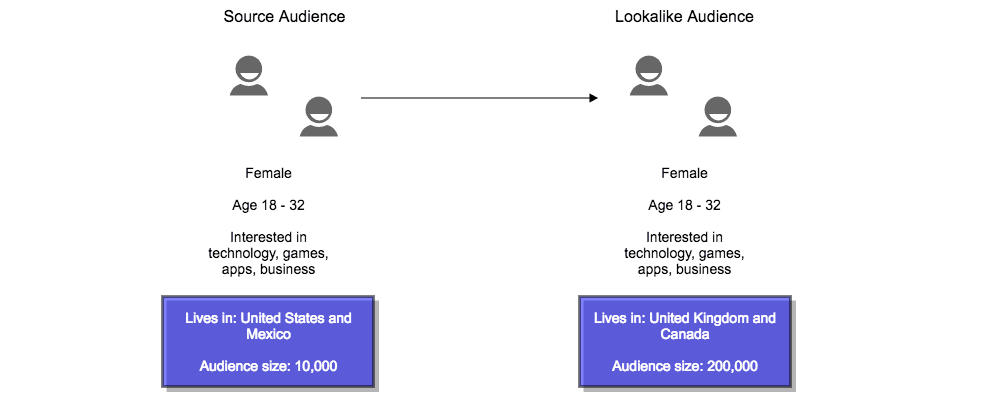
- Mailchimp’s lookalike audience finder is an attribute of social ads that uses what you already know about your contacts and data from our large audience network to build a lookalike audience. A lookalike audience is made up of people who share interests with your existing contacts but aren’t a part of your audience yet. These people will not be added to your audience unless they opt in or engage with your marketing.
(https://mailchimp.com/marketing-glossary/#key-success-factors)
- Market Share
- The percentage of the market for your product or service that you want to capture. The formula for market share is: a company’s sales / industry sales over the same time period. To improve market share, companies may focus on strengthening customer loyalty or innovating products and services. They may also buy key competitors.
(https://mailchimp.com/marketing-glossary/#key-success-factors)

- Marketing Mix
- The 4 “P”s: price, product, promotion, and place (point of sale). Your marketing mix covers these must-have elements when bringing a product to market. The marketing mix is inextricable from the marketing objectives in your business plan. Some companies add “P”s that are of high importance to them, such as packaging or positioning. Packaging and positioning arguably overlap with promotion, but calling out the extra “P”s can be useful in focusing your organization.
(https://mailchimp.com/marketing-glossary/#key-success-factors)

- Monthly recurring revenue (MRR)
- Monthly recurring revenue (MRR) is the same concept as annual recurring revenue (ARR) but is measured on a monthly scale. This term is almost exclusively used by subscription-based companies
(https://www.zendesk.com/blog/sales-terms/)

- Net Promoter Score® (NPS)
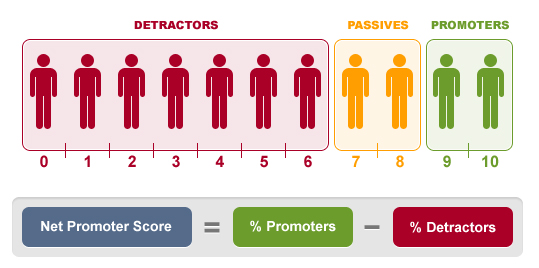
- NPS is a metric used to assess customer loyalty. It’s measured via a survey that asks customers how likely they are to recommend the business or product to someone they know. Respondents select a number between 0 and 10, and their answer places them into one of three categories: promoters (repeat, satisfied buyers), passives (satisfied but wouldn’t necessarily recommend the product), or detractors (dissatisfied and wouldn’t promote). Companies want as many customers as possible to be promoters.
(https://www.zendesk.com/blog/sales-terms/)