This glossary is for people who would like to discover the therms that are used in our program. This is to show you a world that you don't know yet and to make you learn new topics. My name is Zach and I'm a future police officer. I want to show people the reality of the job and how we really help people in society. I want you to understand the risk of this job and how important it is to use our words.
arrest
verb
seize (someone) by legal authority and take into custody.
Example: Having already been required to establish a prima facie case before ARREST, the police are heavily discouraged from using coercive means to secure a confession.
en: Arrestation
autopsy
noun
a postmortem examination to discover the cause of death or the extent of disease.
Example: Working during the nineteenth century, French anatomist Paul Broca conducted an AUTOPSY on a mute, revealing a lesion or defect on a particular area of the brain.
en: Autopsie
badge
noun
a distinctive emblem worn as a mark of office, membership, achievement, licensed employment, etc.
Example: That may be dismissed as simply a voice through Perón's rhetoric, but even that was a significant positive for the Argentine descamisados , that term had been a haughty middle-class insult, but 'the Peróns...were quick to seize the epithet and turn it against their opposition' and they transformed it into a BADGE of defiance.
en: Badge
court
noun
a tribunal presided over by a judge, judges, or a magistrate in civil and criminal cases.
Example: Nonetheless, 'the most detailed information we have about ordinary marriages comes from the histories of marriages that went seriously wrong and ended up in COURT'.
en: Tribunal
criminology
noun
the scientific study of crime and criminals.
Example: Labelling theory (Lemert 1967, cited in Griffin 1993:109) influenced studies of CRIMINOLOGY during the 1970s and supports the concept that stereotyping increases rather than reduces criminal offending (Becker 1963, cited in Muncie 1999:307; Hebdige 1988).
en: Criminologie
evidence
noun
he available body of facts or information indicating whether a belief or proposition is true or valid.
Example: There is certainly EVIDENCE, as Ian Tattersall indicates, in the form of skeletal and ancient tool assemblages that a significant period of overlapped occurred between the two population in Europe.
en: Preuve
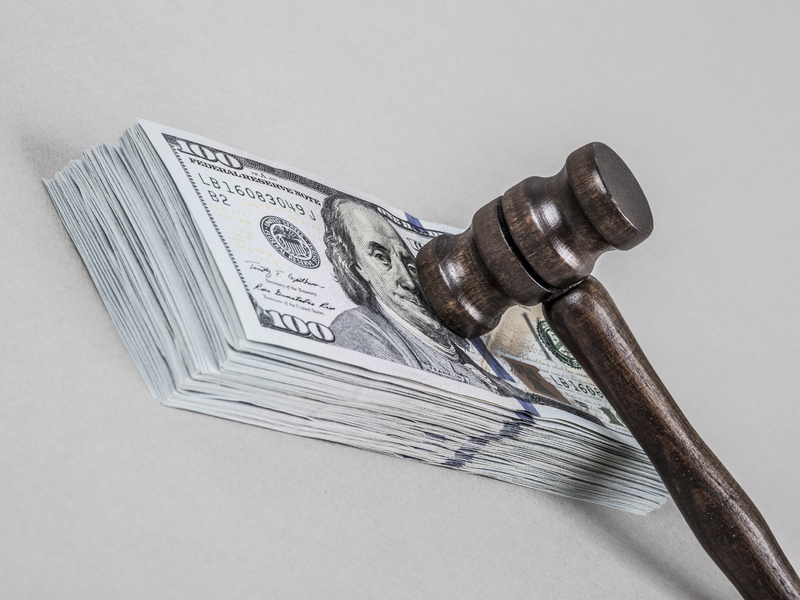
fine
noun
a sum of money exacted as a penalty by a court of law or other authority.
en: Amende
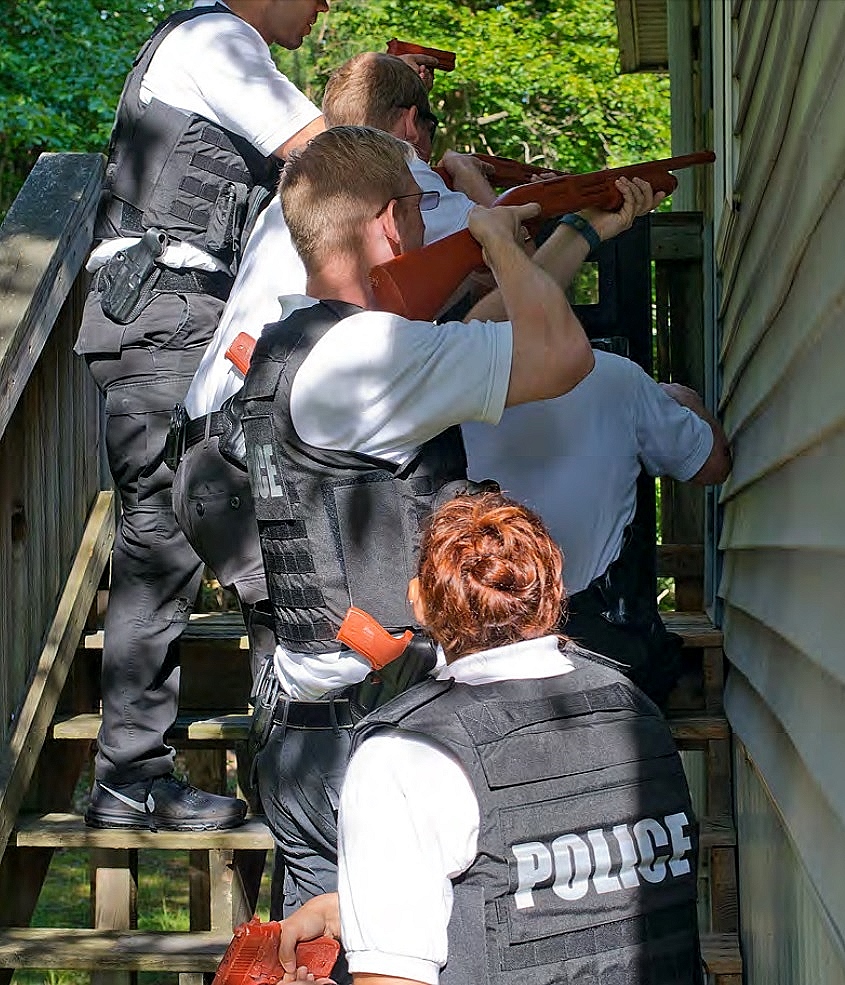
firearm
noun
a rifle, pistol, or other portable gun.
en: Arme à feux
handcuffs
noun
a pair of lockable linked metal rings for securing a prisoner's wrists.
Example: Losing control, Jack knocks Sarah unconscious, HANDCUFFS her, and calls for help.
en: Menottes
hostage
noun
a person seized or held as security for the fulfillment of a condition.
en: Otage
inmate
noun
a person confined to an institution such as a prison or hospital.
Example: The inmates are waiting for there time to end, so they can get out.
en: Détenu
jail
noun
a place for the confinement of people accused or convicted of a crime.
en: Détention
lawyer
noun
a person who practices or studies law; an attorney or a counselor.
en: Avocat
prison
noun
a building in which people are legally held as a punishment for a crime they have committed or while awaiting trial.
en: Prison
radar
noun
a system for detecting the presence, direction, distance, and speed of aircraft, ships, and other objects, by sending out pulses of high-frequency electromagnetic waves that are reflected off the object back to the source.
Example: The front follows the trailing edge of cloud and the heaviest rain: This can be seen in the satellite and RADAR and also in the weather reports from stations 2C, 2E, 2H and 2I.
en: Radar
search warrant
noun
a legal document authorizing a police officer or other official to enter and search premises.
Example: You need a search warrant to legally go inside someone's house and take whatever you want as evidence.
en: Mandat de perquisition
suspect
noun
have an idea or impression of the existence, presence, or truth of (something) without certain proof.
Example: Due to the above circumstances as well as the fact, that the three examples used to prove the transition and as Gardiner claims in his work, the three of them are 'SUSPECT'
en: Suspect
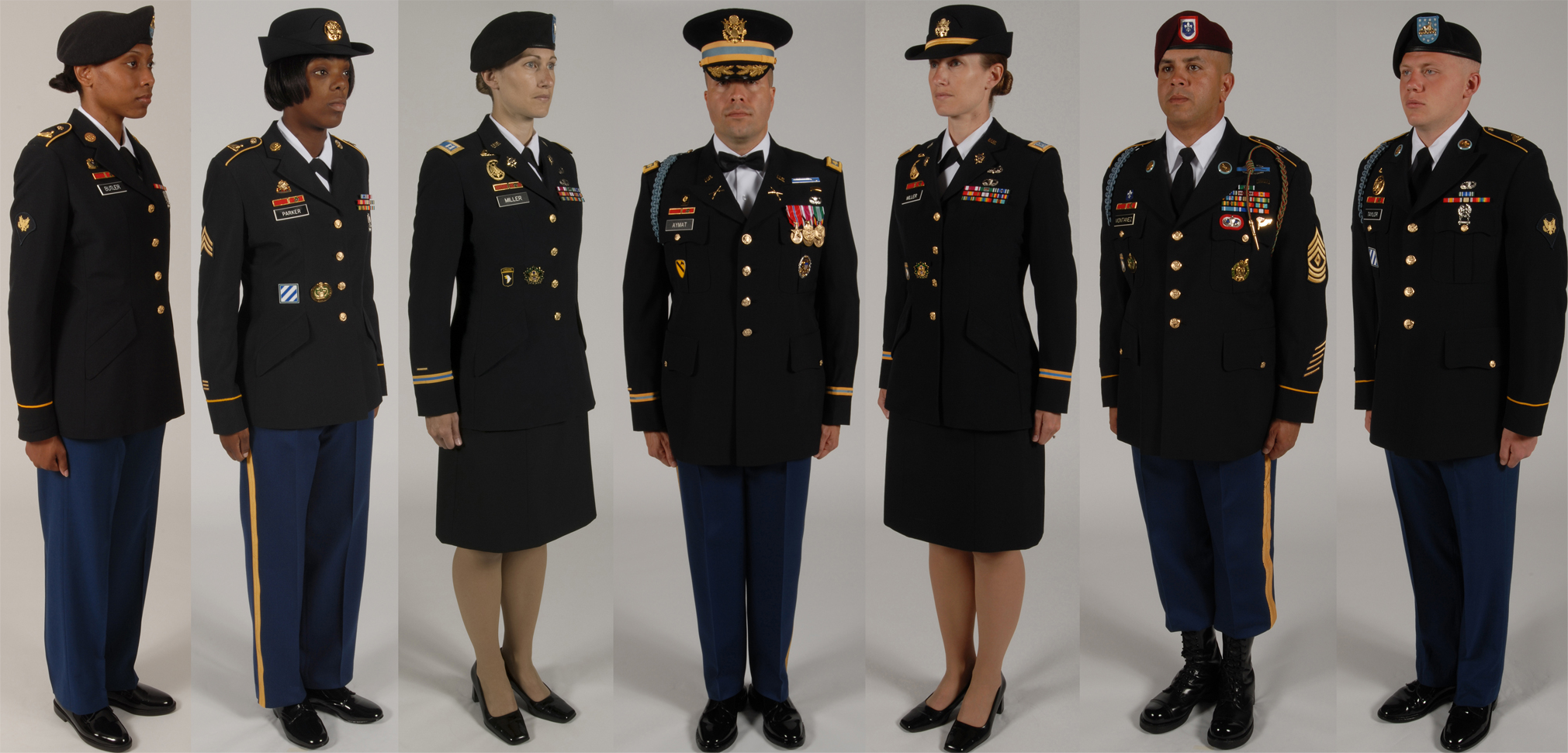
uniform
noun
remaining the same in all cases and at all times; unchanging in form or character.
Example: The history of the UNIFORM we wear still influences public opinion of those in the nursing and midwifery profession, but the UNIFORM is only a strong part of nursing history.
en: Uniforme
victim
noun
a person harmed, injured, or killed as a result of a crime, accident, or other event or action.
Example: Contributory negligence will only succeed if the VICTIM's conduct negligently contributed to the losses for which damages are to be awarded.
en: Victime
witness
noun
a person who sees an event, typically a crime or accident, take place.
Example: However, non state theorists would argue that the detcective's authority increased the WITNESS's acceptance to suggestions, as research has shown misinformation acceptance to increase with the perceived authority of the source of that misinformation (Toglia, et al., 1992).