Hi, my name is Laurence Bouchard. I live in Repentigny. I have been studying Police Technology for 2 years at Ahuntsic College. My field of study is law enforcement. The glossary that I have made could be useful for the students already studying Police Technology and also for the new students in this field of study. Each word in this glossary is related to the basic notions of law enforcement and each of them is part of the vocabulary commonly used in this field. Indeed, these words have been specially chosen because their use is unfamiliar to non-experts. By learning the meaning of the words that are in this glossary, you could learn a lot about law enforcement and the different terms that are used to this field.
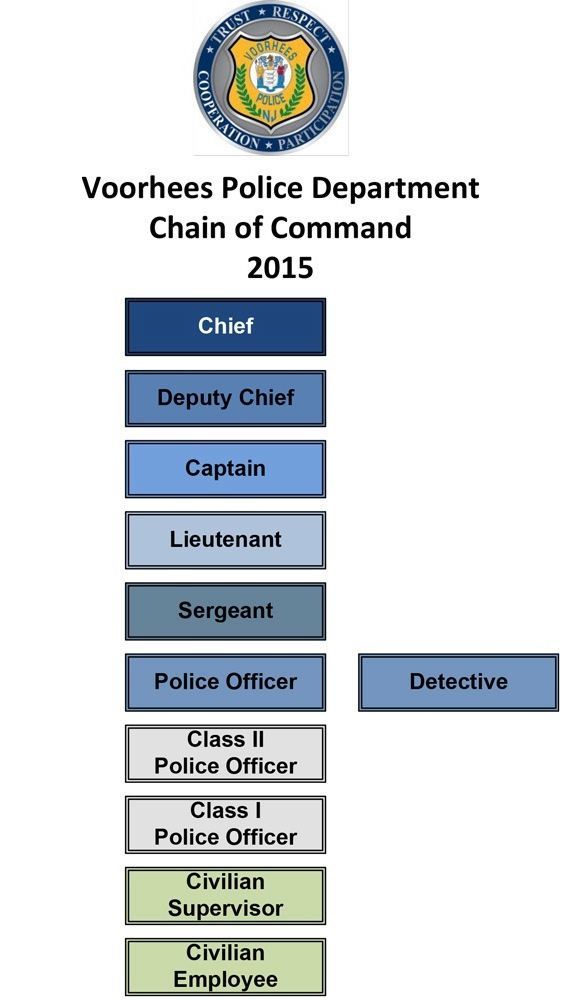
chain of command
noun phrase
The chain of command is the hierarchical arrangement of positions or offices within this Department by level of duty or responsibility. This establishes vertical authority by relationships in which each level is distinguished from all others by specific title, rank, or other special designation.
Example: If an officer in the chain of command sabotaged the measure, however, the policy did not survive.
en: chaîne de commandement
consent
noun
Voluntary agreement by a person in the possession and exercise of sufficient mental capacity to make an intelligent choice to do something proposed by another. Consent is implied in every agreement.
Example: No one may use the vehicle without the consent of the owner.
en: consentement
contraband
noun
Property unlawful to possess.
Example: Most of the city markets were flooded with contraband goods.
en: contrebande
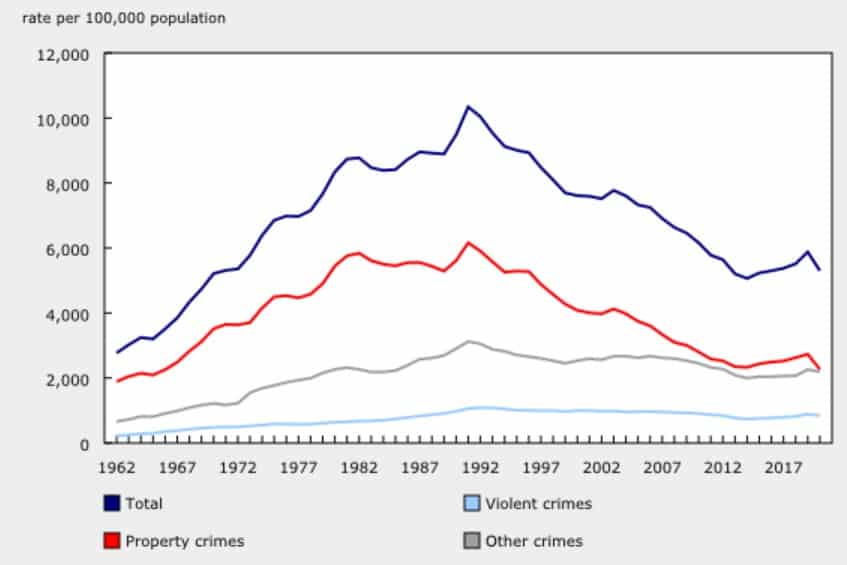
crime rate
noun
Number of crimes per 100,000 population.
Example: The overall crime rate was down 11.9% last year.
en: taux de criminalité
diversity
noun
The range of our visible and invisible qualities, experiences, and identities that shape who we are, how
we are perceived, and how we engage with the world. These can include race, gender, age, sexual
orientation, physical or mental abilities, socio-economic status, religious or spiritual beliefs, personality,
and perspectives. Each person has many layers of diversity that intersect and make our lived experiences unique.
Example: The city is known for its cultural diversity.
en: diversité
excessive force
noun
Force whose use in the given situation does not accord with ordinary common sense.
Example: Six were reprimanded for using excessive force but all kept their jobs.
en: force excessive
illegally obtained evidence
phrase
Evidence which is obtained in violation of defendant’s rights because officers had no warrant and no probable cause to arrest or because the warrant was defective and no valid grounds existed for seizure without a warrant.
Example: The exclusion of illegally or improperly obtained evidence is a powerful remedy for the violation of constitutional rights.
en: preuve obtenue illégalement
juvenile
noun
A juvenile is a person of less than 18 years-of-age, or any other person under the continued jurisdiction of the Juvenile Court.
Example: Most of the suspects were juveniles under the age of 17.
en: juvénile
mental health related call
phrase
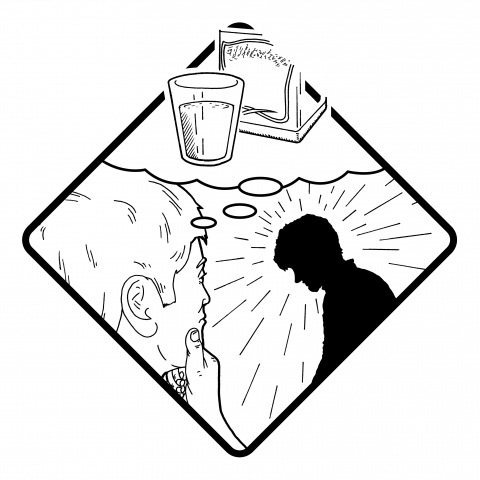
An incident requiring police intervention that involves a mentally ill person in crisis or involves a mental health issue.
Example: We received a mental health related call.
en: appel lié à la santé mentale
neglected child
phrase
Neglected children are those whose parent, guardian, or custodian has abandoned them or has subjected them to mistreatment or abuse; or who lacks proper parental care by reason of the fault or habits of the parent, guardian, or custodian; or whose parent, guardian, or custodian fails or refuses to provide proper or necessary subsistence, education, or medical care, including surgery or psychiatric services when required, or any other care necessary for their health, morals, or well-being; or who are at risk of being neglected or abused because another minor in the same home is a neglected or abused child
Example: This seems to be descriptive of a rejected rather than a neglected child.
en: enfant négligé
plain view doctrine
noun
Plain view doctrine is a rule of criminal procedure which allows an officer to seize evidence of a crime without a warrant when the evidence is clearly visible.
Example: The contraband must be in plain view.
en: doctrine de l'objet bien en vue
racism
noun
Ideology or belief system that either directly or indirectly asserts that one group is inherently superior
to others based on race. It can be openly displayed in racial jokes and slurs or hate crimes but it can
be more deeply rooted in attitudes, values and stereotypical beliefs. In some cases, these are unconsciously held and have become deeply embedded in systems and institutions that have evolved over
time. Racism operates at a number of levels, in particular, individual, systemic and societal.
Example: It appears to me that racism is growing at a faster rate than racial harmony.
en: racisme
reasonable suspicion
noun
Such suspicion which will justify an officer in stopping the defendant in a public place is quantum of knowledge sufficient to induce an ordinarily prudent and cautious person under the circumstances to believe criminal activity is at hand. It must be based on specific and articulable facts, which, when taken together with rational inferences from those facts, reasonably warrant intrusion.
Example: There can be no arrest without reasonable suspicion.
en: soupçon raisonnable
search incident to arrest
phrase
A police officer who has the right to arrest a person either with or without a warrant may search his person and the immediate area of the arrest for weapons.
Example: This search is considered a search incident to arrest.
en: fouille accessoire à l'arrestation
search warrant
noun
An order in writing, issued by a justice or other magistrate, in the name of the state, directed to a sheriff, constable, or other officer, authorizing him to search for and seize any property that constitutes evidence of the commission of a crime, contraband, the fruits of a crime, or things otherwise criminally possessed; or, property designed or intended for use or which is or has been used as the means of committing a crime. A warrant may be issued upon an affidavit or sworn oral testimony.
Example: He made an application to a magistrate for a search warrant, and it was granted.
en: mandat de perquisition
search without warrant
noun
Is presumed to be a violation of the Constitution. In order to validate such a search the state must prove an exception to the warrant requirement such as consent, exigent circumstances, or a search incident to arrest.
Example: There is an emergency power given to a superintendent of police to make a search without warrant in cases of great urgency.
en: perquisition sans mandat
strip-search
verb
A search conducted by a police officer on a person, which includes the removal of some or all clothing
that reveals under-garments and/or a visual inspection of the body.
Example: We were stopped by customs officers at the airport and strip-searched for no apparent reason.
en: fouille à nu
vehicle pursuit
noun
An attempt by an officer to stop a moving vehicle when the driver knowingly resists apprehension by fleeing or failing to stop.
Example: Before they know it, they are in a vehicle pursuit.
en: poursuite de véhicule
watch
noun
A watch designates one of the three basic time units for assignment of personnel, usually specified in terms of eight, ten or twelve hour periods.
Example: I'm on my watch tonight.
en: quart
weapons
noun
A weapon is any thing used, designed to be used, or intended for use in causing death or injury to any
person, or for the purpose of threatening or intimidating any person.
Example: The youths were dragged from their car and searched for weapons.