Youth and Adult Correctional Intervention Glossary
20 Youth and Adult Correctional Intervention Glossary terms
Hi, my name is Mélodie Bélanger and I study Youth and Adult Correctional Intervention at Ahuntsic College.
The purpose of this glossary is to help other students who struggle with the English terms of the field of study. Since we have to write a lot and talk to many people it is important to be prepared in French and in English. This list of 20 words and definitions will hopefully help you remember some words or make you learn a few. I used tools like Wikimedia and Google to find the definitions for you.
addiction
noun
The fact or condition of being addicted to a particular substance, thing, or activity.
Example: Snoop Dogg smokes weed every day. He has an addiction.
fr: dépendance
authority
noun
The power or right to give orders, make decisions, and enforce obedience.
Example: Emma is a prison officer. She has authority over the prisoners.
fr: autorité
bullying
verb
Bullying is a form of aggressive behavior in which someone intentionally and repeatedly causes another person injury or discomfort.
Example: For three months, John was pushed down the hallway by a group of boys. A teacher saw them and asked them to stop bullying John.
fr: intimidation
consequence
noun
The effect, result, or outcome of something occurring earlier.
Example: A young person's criminal family dynamic has the effect of influencing them to adopt similar behaviors. Reinforced over time, these behaviors can lead to serious consequences.
fr: conséquence
counseling
noun
The provision of assistance and guidance in resolving personal, social, or psychological problems and difficulties, especially by a professional.
Example: Jason has difficulty expressing his emotions. His mother wants him to go to counseling.
fr: suivi psychologique
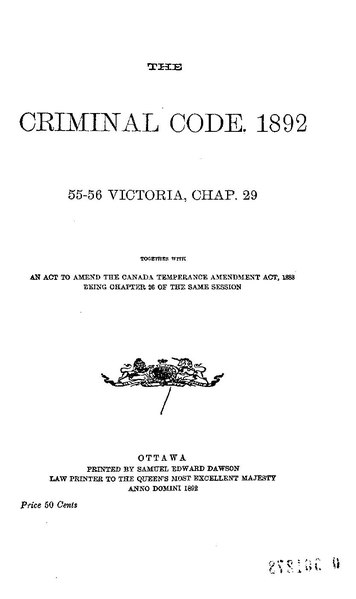
criminal code
noun
The Criminal Code is a federal law that includes definitions of most of the criminal offences that the Parliament of Canada has enacted.
Example: A man committed manslaughter. This corresponds to article 222 of the criminal code.
fr: code criminel
criminality
noun
Behavior that is contrary to or forbidden by criminal law.
Example: Studies show that rejected children are prone to delinquency and adult criminality.
fr: criminalité
criminogenic factors
adjective+noun
Criminogenic Needs are factors in an offender's life that are directly related to recidivism. Research has identified six factors that are directly related to crime: low self-control, anti-social personality, anti-social values, criminal peers, substance abuse and dysfunctional family.
Example: Jérôme lives in Montreal North where crime is more widespread. The demographic area he comes from contributes to one of his criminogenic factors.
fr: Facteurs criminogènes
crisis
noun
A time of intense difficulty, trouble, or danger
Example: Justin has no money to buy crack. His withdrawal symptoms cause him to have seizures. Once he leaves the hospital, he realizes that he is in a crisis situation
fr: crise
drug
noun
A medicine or other substance which has a physiological effect when ingested or otherwise introduced into the body.
Example: Cocaine is a drug.
fr: drogue
drug trafficking
noun
Drug trafficking is a global illicit trade involving the cultivation, manufacture, distribution and sale of substances which are subject to drug prohibition laws.
Example: The Crips and the Bloods are two street gangs at war over drug trafficking.
fr: trafic de drogue
empathy
noun
The ability to understand and share the feelings of another.
Example: She doesn't care about hurting people. She has no empathy.
fr: empathie
habit
noun
A settled or regular tendency or practice, especially one that is hard to give up.
Example: She has a habit of biting her nails.
fr: une habitude
halfway house
noun
A center for helping former drug addicts, prisoners, psychiatric patients, or others to adjust to life in general society.
Example: Gilbert was released from prison yesterday. He now has to live in a halfway house for a few months to help him reintegrate into society.
fr: maison de transition
homeless
adjective
(of a person) without a home, and therefore typically living on the streets.
Example: He has no money or accommodation. This man is homeless.
fr: sans-abri
intervention
noun
The action or process of intervening.
Example: Two men were fighting in a park. The police had to do an intervention.
fr: intervention
marginal
adjective
If you describe people as marginal, you mean that they are not involved in the main events or developments in society because they are poor or have no power.
Example: He decided to leave everything behind and travel the world even though he has no money. This man is marginal.
fr: marginal
mental health
noun
A person’s condition with regard to their psychological and emotional well-being.
Example: Since her divorce, Elena's mental health hasn't been the best.
fr: santé mentale
prison cell
noun
A cell in a prison, in which a prisoner is locked.
Example: The murderer got arrested. He lives in a prison cell now.
fr: cellule de prison
victim
noun
A person harmed, injured, or killed as a result of a crime, accident, or other event or action.
Example: Victoria was robbed last night. She is a victim.