20 The topic of this glossary is my field of study, natural sciences. terms
This program is a very vast field of study since it is meant for students to choose on what they will extend their studies once they reach university. The principal subjects studied in this program are biology, chemistry, mathematics, and physics. Most of these subjects have direct connections between each other. This program requires a lot of hours of work each week for the students. The terms in this glossary include the subjects and all the material that is often use in this program.
Acceleration
noun
The act or process of moving faster or happening more quickly : the act or process of accelerating.
Example: You can not study the movement of an object if you do not consider his acceleration.
fr: accélération
Atom
noun
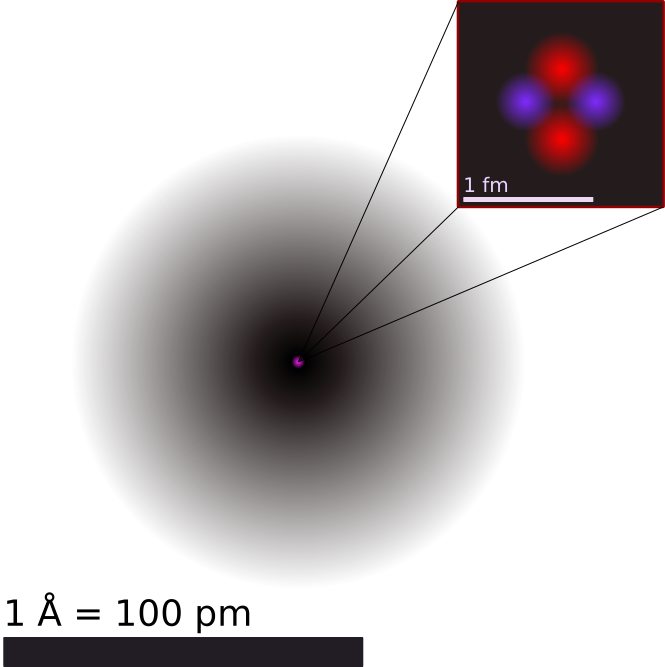
The basic unit of a chemical element.
Example: Atoms are so tiny, there is no way you could ever observe one, even with a microscope.
fr: atome
Beaker
noun
A lipped cylindrical glass container for laboratory use.
Example: In this beaker, the substances mixed are not toxic at all.
fr: bécher
Biology
noun
The study of living organisms, divided into many specialized fields that cover their morphology, physiology, anatomy, behavior, origin, and distribution.
Example: If you ever wondered how is your body working, then you should read a book about biology.
fr: Biologie
Body
noun
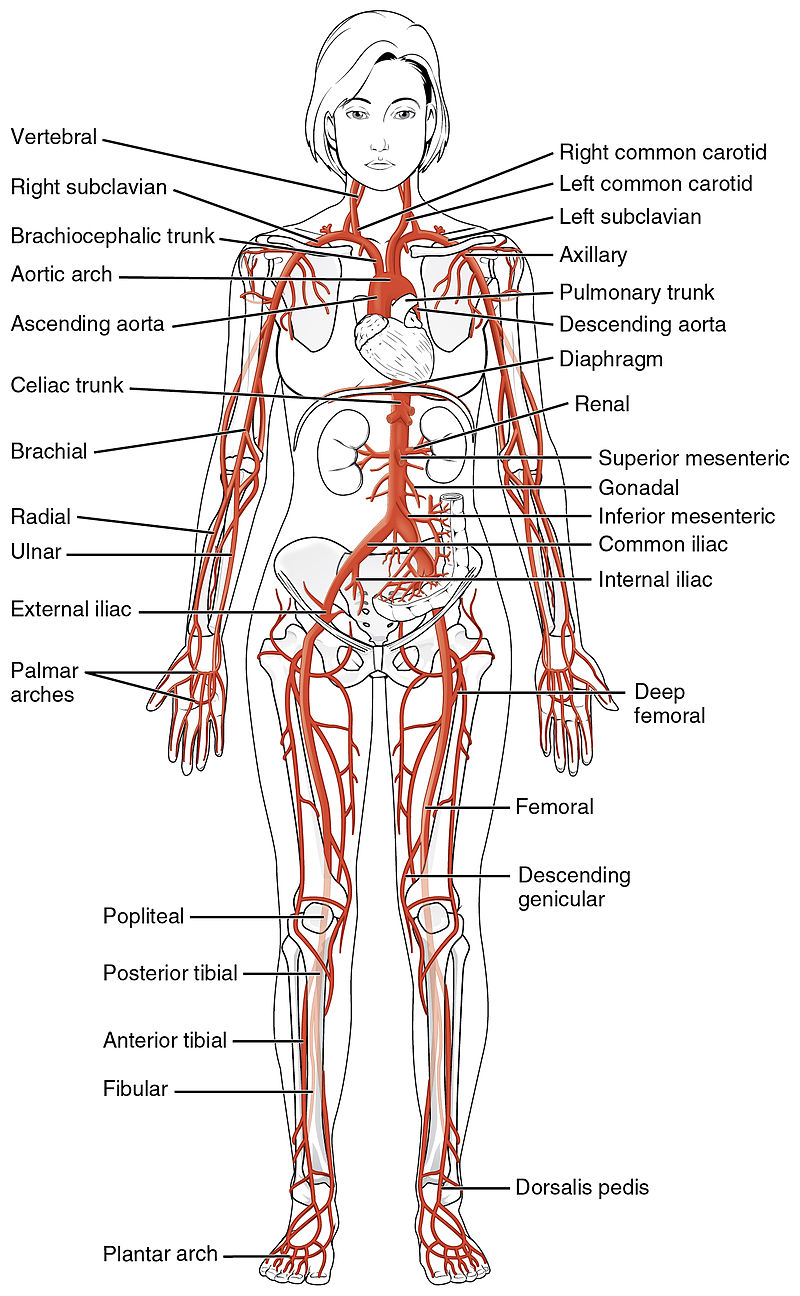
The organized physical substance of an animal or plant either living or dead.
Example: I wanted to eat junk food earlier today, but then I told myself that it isn't a good way to feed my body.
fr: Corps
Calculator
noun
Something used for making mathematical calculations, in particular a small electronic device with a keyboard and a visual display.
fr: calculatrice
Chemistry
noun
The branch of science that deals with the identification of the substances of which matter is composed; the investigation of their properties and the ways in which they interact, combine, and change; and the use of these processes to form new substances.
Example: Chemistry explains a lot of things about how different substances interact with each others.
fr: Chimie
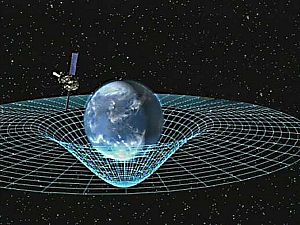
Earth
noun
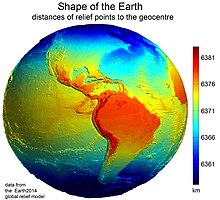
The planet on which we live; the world
Example: Earth is fascinating, but humans are slowly destroying it.
fr: Terre
Electricity
noun
A form of energy resulting from the existence of charged particles (such as electrons or protons), either statically as an accumulation of charge or dynamically as a current.
Example: Almost everything around you depends on electricity: it is what gives them the energy needed to work.
fr: électricité
Electron
noun
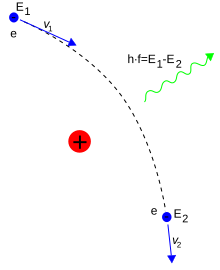
An elementary particle consisting of a charge of negative electricity equal to about 1.602 × 10⁻¹⁹ coulomb and having a mass when at rest of about 9.109 × 10⁻³¹ kilogram or about ¹/₁₈₃₆ that of a proton.
Example: Electrons are even smaller than atoms since they are a part of them.
fr: électron
Erlenmeyer flask
noun
A flask having a wide base, narrow neck, and conical form, convenient in laboratory experimentation for swirling liquids by hand.
Example: In this Erlenmeyer flask, the substances mixed are not toxic at all.
fr: Erlenmeyer
Forest
noun
A large area covered chiefly with trees and undergrowth.
Example: Some forests are fascinating to visit, they offer a huge diversity of species of trees and other plants.
fr: Forêt
Function
noun
A relationship or expression involving one or more variables.
Example: The amount of money you gained in the last month can be expressed by a mathematical function.
fr: fonction
Gravity
noun
The force that attracts a body toward the center of the earth, or toward any other physical body having mass.
Example: Gravity is the force that maintains us on the ground.
fr: gravité
Mass
noun
The quantity of matter which a body contains, as measured by its acceleration under a given force or by the force exerted on it by a gravitational field.
Example: The mass of a body and the force of the gravity is what determine the weight of this object.
fr: masse
Mathematics
noun
The abstract science of number, quantity, and space. Mathematics may be studied in its own right ( pure mathematics ), or as it is applied to other disciplines such as physics and engineering ( applied mathematics ).
Example: I had to find the specific amount of time I needed to work to reach $5000 in my bank account, so I used mathematics.
fr: mathématique
Microscope
noun
An optical instrument consisting of a lens or combination of lenses for making enlarged images of minute objects.
Example: In my Biology class, we had to use a microscope to observe miniature bacteria.
fr: Microscope
Multiplication
noun
The act or process of multiplying or the state of being multiplied.
Example: The multiplication of two numbers gives the product of these two numbers.
fr: multiplication
Number
noun
An arithmetical value, expressed by a word, symbol, or figure, representing a particular quantity and used in counting and making calculations and for showing order in a series or for identification.
Example: Words are written with letters, not numbers.
fr: nombre
Physics
noun
The branch of science concerned with the nature and properties of matter and energy. The subject matter of physics, distinguished from that of chemistry and biology, includes mechanics, heat, light and other radiation, sound, electricity, magnetism, and the structure of atoms
Example: If you are searching a way to explain the movement of something, physics can probably answer your questions.