Hi, my name is Jonathan Charlot. I am from Laval. I have been studying Physical Technologies for 2 years at Montmorency College. My field of study is Industrial Electronics. The Glossary that I made is mostly useful for the students that are already in the same field of study as me or even the ones that are kind of curious about that field of study. The words down below are some common notions related to my field of study, and they are also common in the vocabulary in Industrial Electronics but uncommon for people who don’t study on that field at all. Eventually, with these words in the glossary, you will start to get the hang of these words that are usually said in my program.
Circuit
Noun
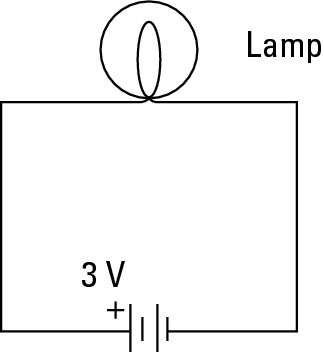
Uninterrupted series of electrical conductors
Example: This project seeks to develop wireless circuit interface and associated electronics for an implantable neural stimulating microsystem, with a large number of stimulating sites for use in neural prostheses.
fr: Circuit
Conductor
Adjective
A material or device that conducts or transmits heat, electricity, or sound, especially when regarded in terms of its capacity to do this.
Example: Graphite is a reasonably good conductor of electricity.
fr: Conducteur
Frequency
Noun
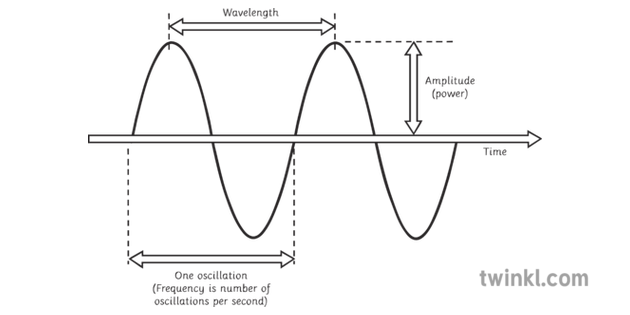
The number of cycles or completed alternations per unit time of a wave or oscillation.
Example: In agreement with previous acoustic measurements, increased viscosity of the overlying liquid dampens the mechanical resonance manifesting itself as a change in frequency coupled with a decrease in resonant amplitude and quality factor
fr: Fréquence
Ohm
Noun
Unit of measurement for electrical resistance (Ω symbol).
Example: The physics teacher showed his students resistors in the middle of which were rings indicating the value in ohms.
fr: Ohm
Signal
Noun
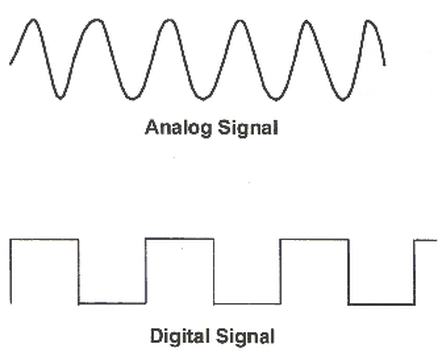
In electronics and telecommunications, it refers to any time varying voltage, current or electromagnetic wave that carries information.
Example: The nature of the signals produced from the two devices are compared based on their respective signal-to- noise rations and relative standard deviations.