This glossary is for people who want to learn more about human anatomy. It can help everybody learn more about their bodies and how it is working. Every organ in our body is important and has a role. If it does not do what it has to do, you will probably be sick, and you may need surgery. I looked for these words and their definition on the internet using reliable sources. In this glossary, you will find 20 words about human anatomy.
Abdominal
adjective
From the abdomen.
Example: Waist-hip circumference ratio can be used to establish the distribution of subcutaneous and intra-ABDOMINAL adipose tissue, and is thought to be more precise than skinfold measurements (Gibson, 2002).
fr: Abdominal
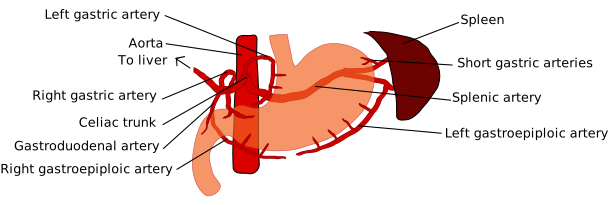
Aorta
noun
The main artery of the body, supplying oxygenated blood to the circulatory system. In humans it passes over the heart from the left ventricle and runs down in front of the backbone.
Example: These include the pulmonary vein and thoracic AORTA, and thus effective treatments are inevitably highly sought after and rapidly administered.
fr: Aorte
Artery
noun
Any of the muscular-walled tubes forming part of the circulation system by which blood (mainly that which has been oxygenated) is conveyed from the heart to all parts of the body.
Example: Thrombolytic therapy is most commonly used for reperfusion of the infarct related ARTERY (IRA) within the NHS (Spiers 2003).
fr: Artère
Bladder
noun
A membranous sac in humans and other animals, in which urine is collected for excretion.
Example: Patients were asked to empty their BLADDERS before going to bed.
fr: Vessie
Brain
noun
An organ of soft nervous tissue contained in the skull of vertebrates, functioning as the coordinating center of sensation and intellectual and nervous activity.
Example: In relevance to the second point of criteria, there is substantial doubt that the language function cannot reliably be inferred from the structure of Endocasts BROCA's AREA, neither are language related parts of the BRAIN as well localised as previous studies implied (Galaburda & Pandya 1982; Gannon et.al 1998).
fr: Cerveau
Diaphragm
noun

A dome-shaped muscular partition separating the thorax from the abdomen in mammals. It plays a major role in breathing, as its contraction increases the volume of the thorax and so inflates the lungs.
Example: Malignancy involving pleura or pathology under the DIAPHRAGM - no history of weight loss, malaise.
fr: Diaphragme
Gallbladder
noun
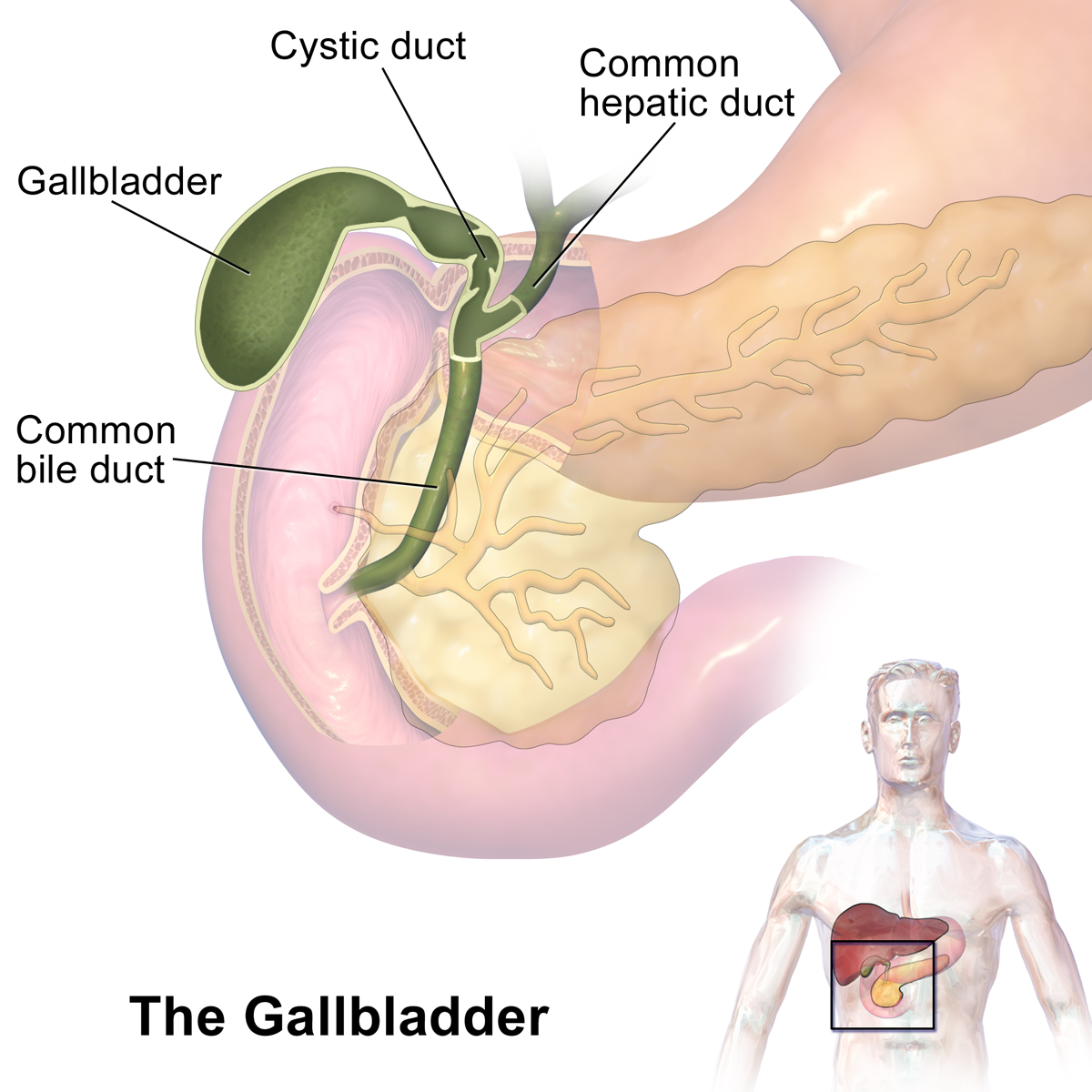
The small sac-shaped organ beneath the liver, in which bile is stored after secretion by the liver and before release into the intestine.
Example: GALLBLADDER is dilated, no stones, common bile duct appears normal.
fr: Vésicule biliaire
Heart
noun
A fist-sized organ that pumps blood throughout your body.
Example: The second stage is referred to as the haemolymphatic stage, in which the parasites multiply in the individual's bloodstream and are then carried to the lymph nodes and other organs such as the spleen, liver, HEART and endocrine system.
fr: Cœur
Intestine
noun
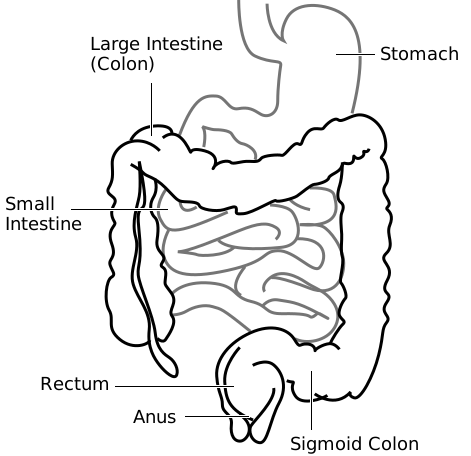
A long, continuous tube running from the stomach to the anus. Most absorption of nutrients and water happen in the intestines.
Example: Most drugs are absorbed in the small INTESTINE (which is about10.5ft long), some in the stomach and some in the colon.
fr: Intestin
Kidneys
noun
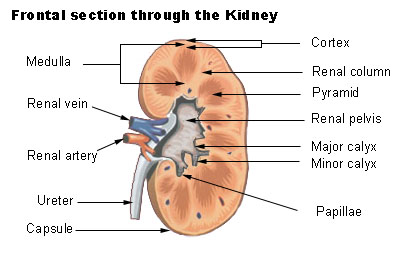
One of a pair of organs in the abdomen. The kidneys remove waste and extra water from the blood (as urine) and help keep chemicals (such as sodium, potassium, and calcium) balanced in the body.
Example: Prescription Medical Intervention was prescribed fluids during his stay in hospital, with regular monitoring of his bloods. underwent an ultrasound of his KIDNEYS, a chest X-ray and an ECG. was also catheterised during his stay.
fr: Reins
Liver
noun
A large lobed glandular organ in the abdomen of vertebrates, involved in many metabolic processes.
Example: Liual. (2002) demonstrated the antiproliferative activity of raspberry extracts to HepG2 human LIVER cancer cells.
fr: Foie
Lungs
noun
One of a pair of organs in the chest that supplies the body with oxygen, and removes carbon dioxide from the body.
Example: Reassurance and explanation: A possible explanation for your symptoms of chest pain and breathlessness is a clot originating in your legs (a DVT) which has travelled over a period of time to your LUNGS - a pulmonary embolus.
fr: Poumons
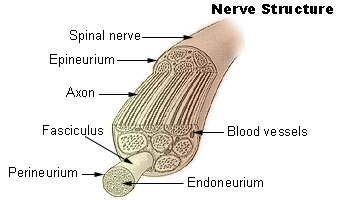
Nerve
noun
A whitish fiber or bundle of fibers that transmits impulses of sensation to the brain or spinal cord, and impulses from these to the muscles and organs.
Example: Every sensory system has a specific way of responding to stimuli, yet the end result essentially remains the same: the generation of an action potential to stimulate NERVE cells with a NERVE impulse that will transfer this signal to the central nervous system.
fr: Nerf
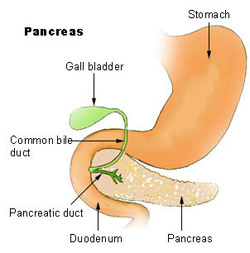
Pancreas
noun
A long, flat gland that lies in the abdomen behind the stomach. It produces enzymes that are released into the small intestine to help with digestion.
Example: Gastrointestinal disease - Such as chronic diarrhoea, chronic enteritis, gastritis and in rare cases, disorders of the PANCREAS and liver.
fr: Pancréas
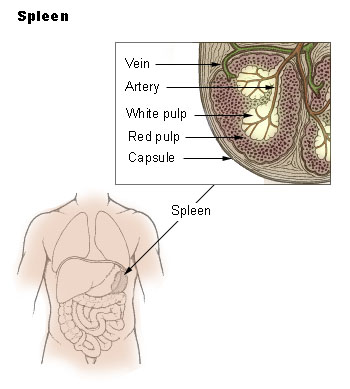
Spleen
noun
An organ that is part of the lymphatic system. The spleen makes lymphocytes, filters the blood, stores blood cells, and destroys old blood cells.
Example: On examination, such patients may have enlarged, non-tender lymph nodes, an enlarged live and or SPLEEN.
fr: Rate
Stomach
noun
The internal organ in which the major part of the digestion of food occurs, being (in humans and many mammals) a pear-shaped enlargement of the alimentary canal linking the esophagus to the small intestine.
Example: During surgical exploration the liver, gall bladder, STOMACH and small bowel all appeared normal.
fr: Estomac
Thyroid
noun
A large ductless gland in the neck which secretes hormones regulating growth and development through the rate of metabolism.
Example: THYROID and kidney function tests carried out in indicated proteinuria (+++) for which she was referred to the care of a nephrologist for further investigation. doesn't experience any dysuria.
fr: Thyroïde
Trachea
noun
A large membranous tube reinforced by rings of cartilage, extending from the larynx to the bronchial tubes and conveying air to and from the lungs; the windpipe.
Example: No wheeze present TRACHEA midline Cardiovascular System Pulse 104 irregular - indicative of atrial fibrillation BP 152 63 Heart sounds I + II + 0 JVP no raised No pedal oedema.
fr: Trachée
Uterus
noun
Organ located between the bladder and the rectum, intended to contain the egg, the embryo until its complete development.
Example: The cervix was closed, and the UTERUS a normal size.
fr: Utérus
Veins
noun
Any of the tubes forming part of the blood circulation system of the body, carrying in most cases oxygen-depleted blood toward the heart.
Example: Arterial supply of the breast (6) Venous drainage of the breast is primarily to the axillary vein, although the internal thoracic VEINS are also involved.