Hi! My name is Jade and I study Early Childhood Education. I have been in this programme for the past 2 years. This glossary contain 20 words that are related to my field of study. This glossary will help you better understand the meaning of the words used in Early Childhood Education. This glossary was made with information that I learned in my classes and what I found on google. So, if you want to become an Early Childhood educator, if you are a parent that's wondering the meaning of certain word used by the educator or if you just want to learn more about Early Childhood Education, Than this glossary is for you!
A need
Noun
to suffer from the lack of something important to life or health Give to those who need. 2 : to be necessary Something needs to be done.
Example: The child is hungry so he needs to eat.
en: Un besoin
Active learning
Noun
Active learning is an approach to instruction that involves actively engaging students with the course material through discussions, problem solving, case studies, role plays and other methods. Active learning approaches place a greater degree of responsibility on the learner than passive approaches such as lectures, but instructor guidance is still crucial in the active learning classroom. Active learning activities may range in length from a couple of minutes to whole class sessions or may take place over multiple class sessions.
Example: The kid is actively learning how to cut paper because is doing it himself.
en: Apprentissage actif
Attachment theory
Noun
Attachment theory focuses on relationships and bonds (particularly long-term) between people, including those between a parent and child and between romantic partners.
Example: The child and their parents have an attachment link.
en: La théorie de l'attachement
Bronfenbrenner's modal
Noun
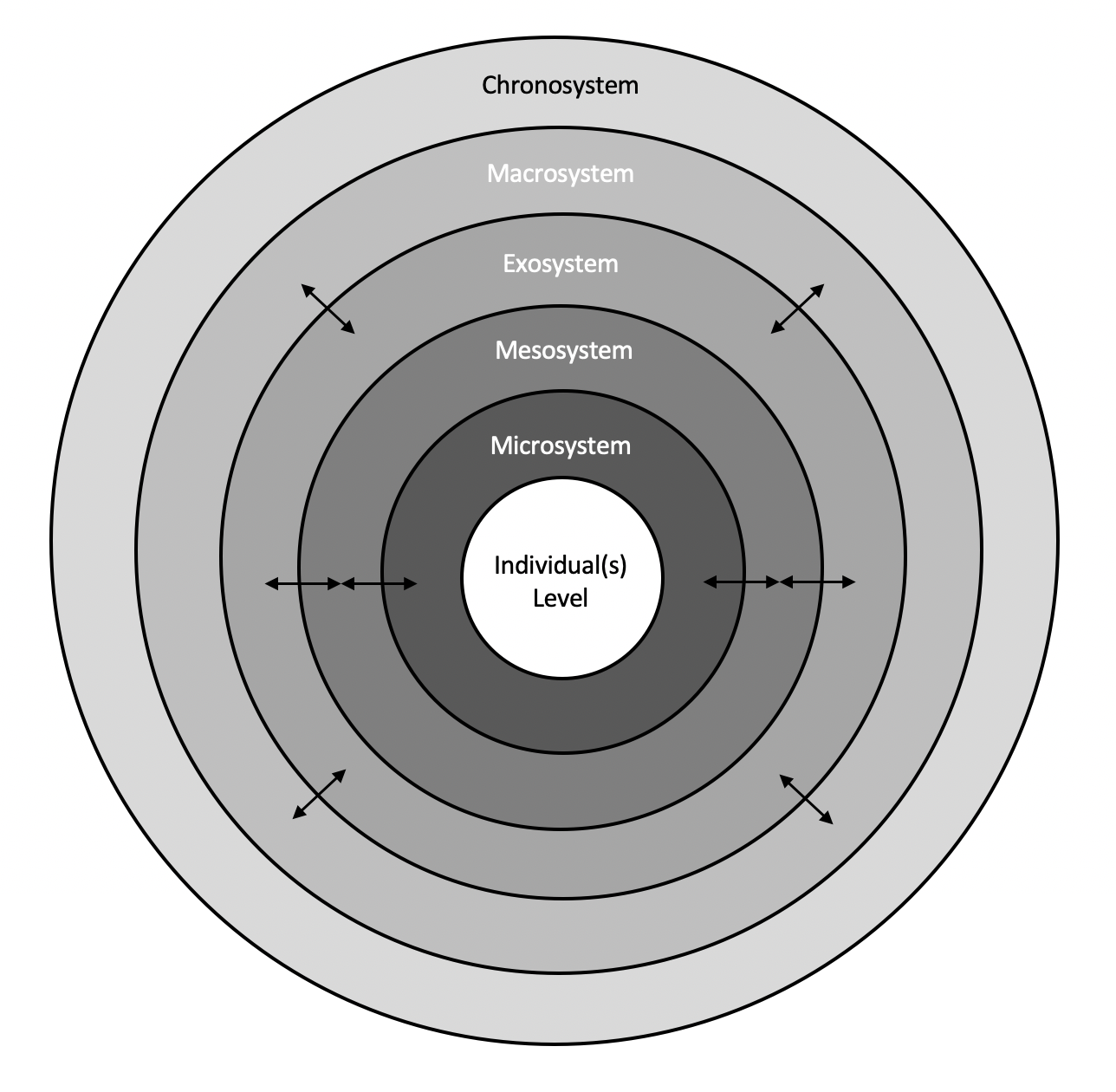
Bronfenbrenner's ecological systems' theory views child development as a complex system of relationships affected by multiple levels of the surrounding environment, from immediate settings of family and school to broad cultural values, laws, and customs.
Example: The child is in the center of this model, his mother is in his environment.
en: Le model de Bonfenbrenner
Cognitive development
Noun
Cognitive development means how children think, explore and figure things out. It is the development of knowledge, skills, problem solving and dispositions, which help children to think about and understand the world around them. Brain development is part of cognitive development.
Example: I 'm reading a book to help develop my child's cognitive development.
en: Développement cognitif
Development
Noun
The process in which someone or something grows or changes and becomes more advanced.
Example: The child will develop his motor skills by drawing often.
en: Développement
Early childhood day-care center
Noun
day-care centre, also called day nursery, nursery school, or crèche (French: “crib”), institution that provides supervision and care of infants and young children during the daytime, particularly so that their parents can hold jobs.
Example: I registered my child to an early childhood development center.
en: CPE (centre de la petite enfance) ou garderie
Early childhood curriculum
Noun
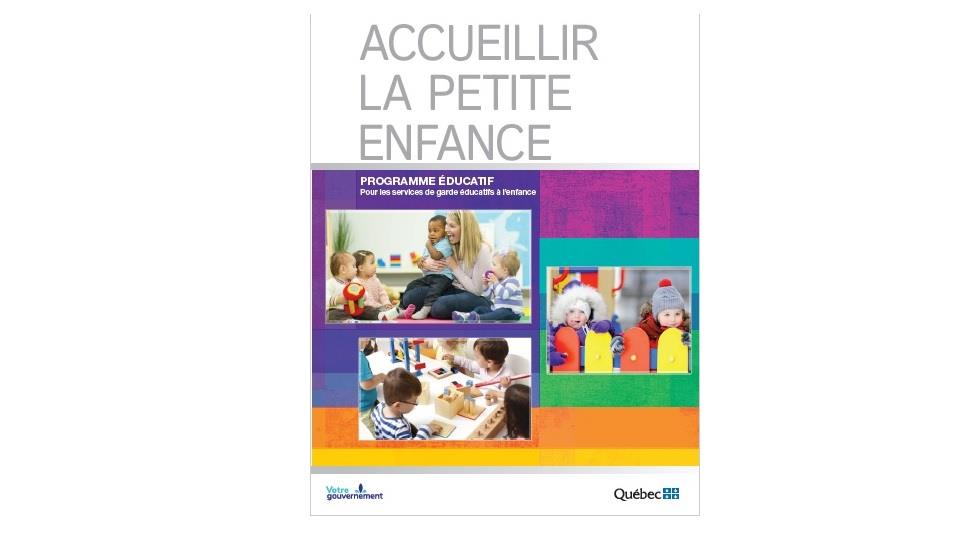
Early childhood is the period of human life from conception and birth through age 8 or 9. These are formative years in children’s development and learning when a high-quality program can build a solid foundation for their success and fulfillment in school and life.
Example: To guide my intervention, I'm using the early childhood curriculum.
en: Programme éducatif
Education purpose
Noun
Educational Purposes means use for the purpose of education, teaching, distance learning, private study and/or research.
Example: The educational purpose of my activity was for the child to learn how to cut paper.
en: Intention éducative
Educational intervention
Noun
Educational interventions provide students with the support needed to acquire the skills being taught by the educational system and should address functional skills, academic, cognitive, behavioral, and social skills that directly affects the child's ability access an education.
Example: I'm helping a kid solve a problem he has with his friend by using an education intervention.
en: Intervention éducative
Intervention tool
Noun
The Intervention Tools Chart is designed to be used by educators as a resource to locate interventions, instructional practices, and learning strategies that can be used within an RtI process.
Example: To do an adequate intervention, I'm using intervention tool.
en: Outils d'intervention
Language dimension
Noun
The dimensions of language ability assessed were vocabulary and grammar and were measured for both modalities of comprehension and production. From an initial sample of 1.929 kindergartners, about 600 children were followed over time (Tomblin & Zhang, 2006).
Example: While speaking, Tommy practices his language dimension.
en: Dimension langagière
Maslow's pyramid
Noun
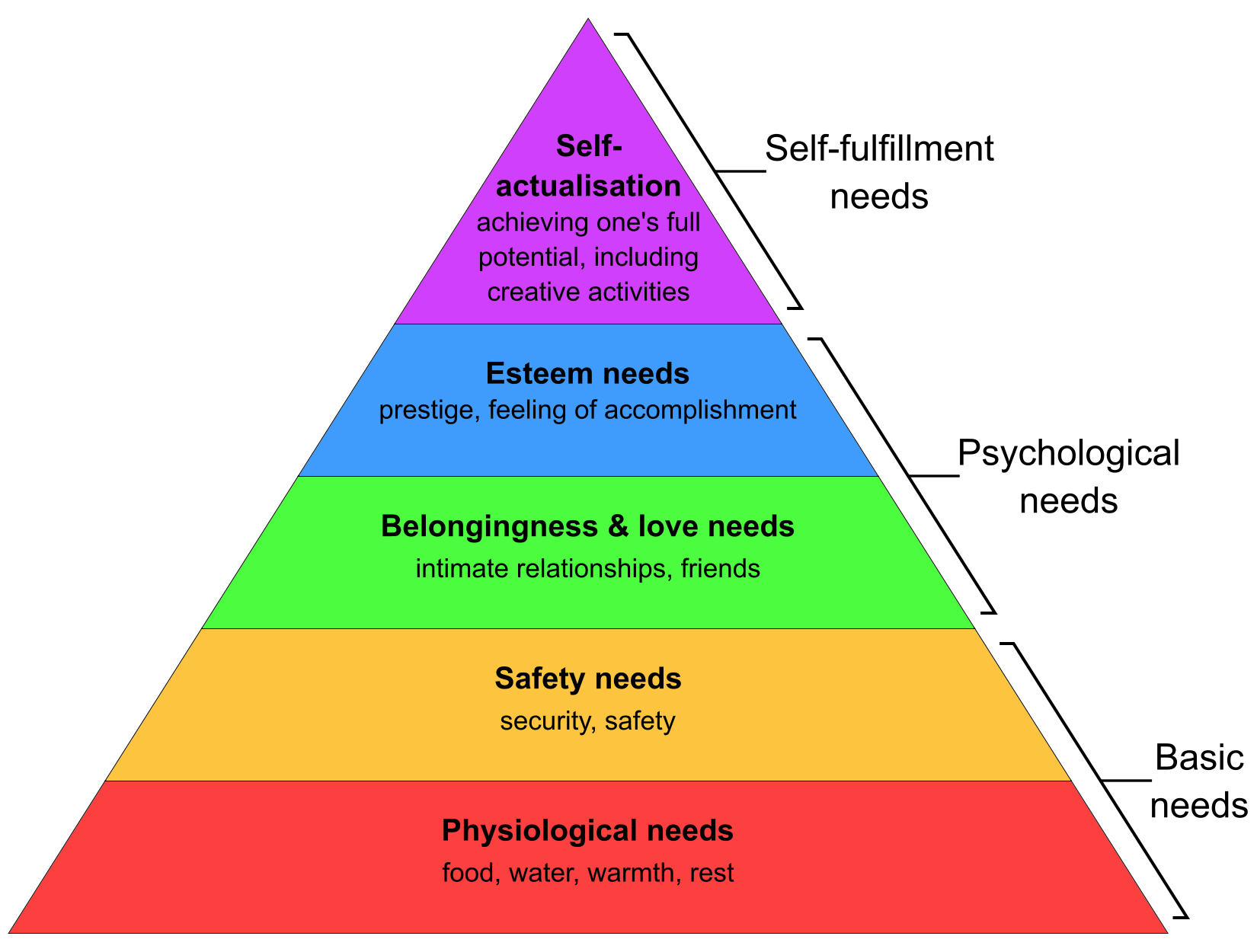
Maslow's hierarchy of needs is a model for understanding the motivations for human behavior. It maps different motivations onto a pyramid, with each level representing a different human need. These include physiological needs, safety, love and belonging, esteem, and self-actualization.
Example: I can know what the child's needs when I refer to Maslow's pyramid.
en: La pyramide de Maslow
Natural consequence
Noun
Natural consequences are those things that happen in response to your child's behavior without parental involvement. These are imposed by nature, society, or another person. You do not actually deliver a natural consequence yourself. Instead, you allow nature or society to impose the consequence on your child by not interfering.
Example: The child broke the paint brush so the natural consequence is that he doesn't have a paint brush anymore.
en: Conséquence naturelle
Open education
Noun
Open education is an educational movement founded on openness, with connections to other educational movements such as critical pedagogy, and with an educational stance which favors widening participation and inclusiveness in society.[1] Open education broadens access to the learning and training traditionally offered through formal education systems[2] and is typically (but not necessarily) offered through online and distance education. The qualifier "open" refers to the elimination of barriers that can preclude both opportunities and recognition for participation in institution-based learning. One aspect of openness or "opening up" education is the development and adoption of open educational resources in support of open educational practices.
Example: The educator is using an open education to help children learn in a fun but educative way.
en: L'approche ouverte
Physical and motor dimension
Noun
Motor development, or the growth of muscular coordination, occurs rapidly during the first five years of a child’s life. School-age children continue to develop and strengthen their motor skills in a more slow and detailed way. Motor development involves two separate components: gross-motor skills and fine-motor skills. Gross-motor skills are actions that use the large muscles in our bodies, such as those in our arms and legs for walking, running and jumping. Fine-motor skills are actions that use smaller muscles, such as those in our fingers and toes for writing or balancing.
Example: The child is going to develop is motor and physical dimension by running and jumping around.
en: Dimension physique et motrice
School daycare
Noun
Childcare services provided at school shall ensure care to children
at the preschool and elementary level of a school board, outside the
period where educational services are provided to them.
Example: After school, Ezekiel goes to the school daycare because his mom finish work too late.
en: Service de garde en milieu scolaire
Social-emotional development
Noun
Social-emotional development includes the child’s experience, expression, and management of emotions and the ability to establish positive and rewarding relationships with others (Cohen and others 2005). It encompasses both intra- and interpersonal processes.
The core features of emotional development include the ability to identify and understand one’s own feelings, to accurately read and comprehend emotional states in others, to manage strong emotions and their expression in a constructive manner, to regulate one’s own behavior, to develop empathy for others, and to establish and maintain relationships. (National Scientific Council on the Developing Child 2004, 2).
Example: Isaïa is learning how to express his emotion.
en: Développement socio-affectif
Temperament
Noun
Temperament, in psychology, an aspect of personality concerned with emotional dispositions and reactions and their speed and intensity; the term often is used to refer to the prevailing mood or mood pattern of a person.
Example: The child has an easy temperament.
en: Tempérament
Zone of proximal development
Noun
The zone of proximal development refers to the difference between what a learner can do without help and what he or she can achieve with guidance and encouragement from a skilled partner.
Example: My child is able to walk, but he is not yet able to run.