Hi, my name is Joanick Lehoux and I'm 21 years old. This is my third year at Cegep of Thetford in the business management program. This glossary is used to learn more about the profession of photographer and he may be useful to anyone who likes to take pictures.
Angle of view
Noun
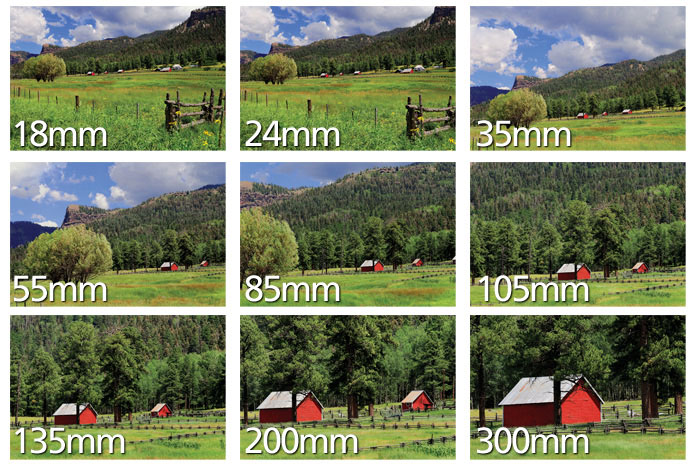
Also called “angle of view”, it is simply the angle of the lens which corresponds to the visible portion thanks to a camera lens. The latter is directly linked to the focal length (in millimeters). The larger your focal length, the smaller the angle of view and vice versa.
Example: By using this focal length, the photographer knew that he had only a tiny angle of view.
fr: Angle de champ
Artifact
Noun
This is a defect identified on an image, in particular due to excessive compression of the latter, for example in JPEG.
Example: Music is generally considered a pure cultural artifact.
fr: Artefact
Auto-focus
Noun
This is the system that allows you to focus on a subject automatically. There are several types depending on the camera.
Example: Focus (or autofocus) is the key setting for a successful self-portrait.
fr: Autofocus
Background
Noun
It corresponds to the area behind the main subject photographed. Depending on several parameters (the aperture of the diaphragm chosen, the focusing distance and the focal length in particular), this background may be blurred or sharp.
Example: On the horizon, a background of hills loomed harmoniously against the backdrop of the sky.
fr: Arrière-plan
Chromatic aberration
Noun
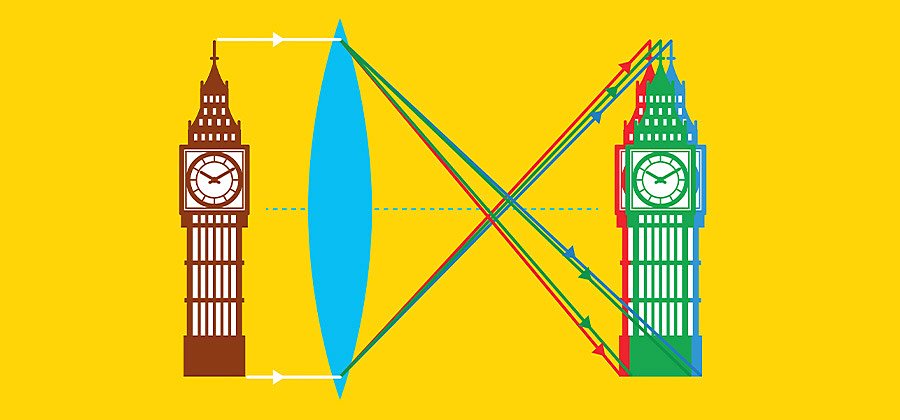
This is an optical defect found on some photo lenses. Concretely, on a high-contrast photo, you will see colored bands appear at the limit of two contrast zones
Example: When shooting against the light or when your background is very bright.
fr: Aberration chromatique
Flash
Noun
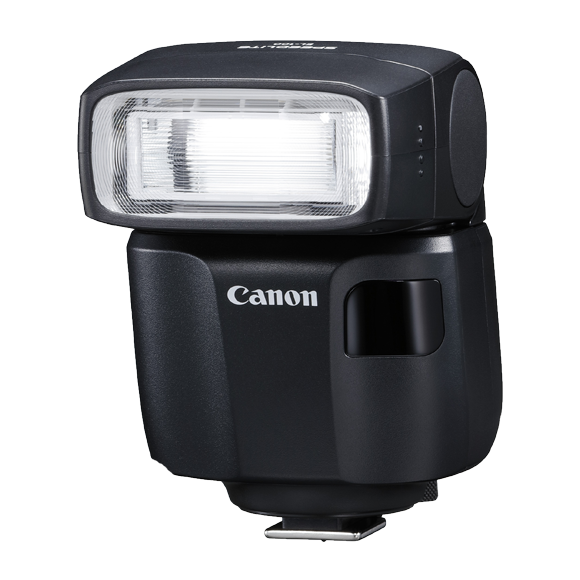
System integrated in the box or external (cobra flash/external flash) to artificially illuminate a scene during shooting.
Example: The glare hurt his eyes.
fr: Éclat
Foreground
Noun
Unlike the background, this is simply the area before your subject. It is also called “foreground”. You can voluntarily choose, for example, to blur this foreground for an aesthetic effect.
Example: The use of digital technology places the content of the tablet and the objects it designates in the foreground.
fr: Avant plan
Framing
Noun
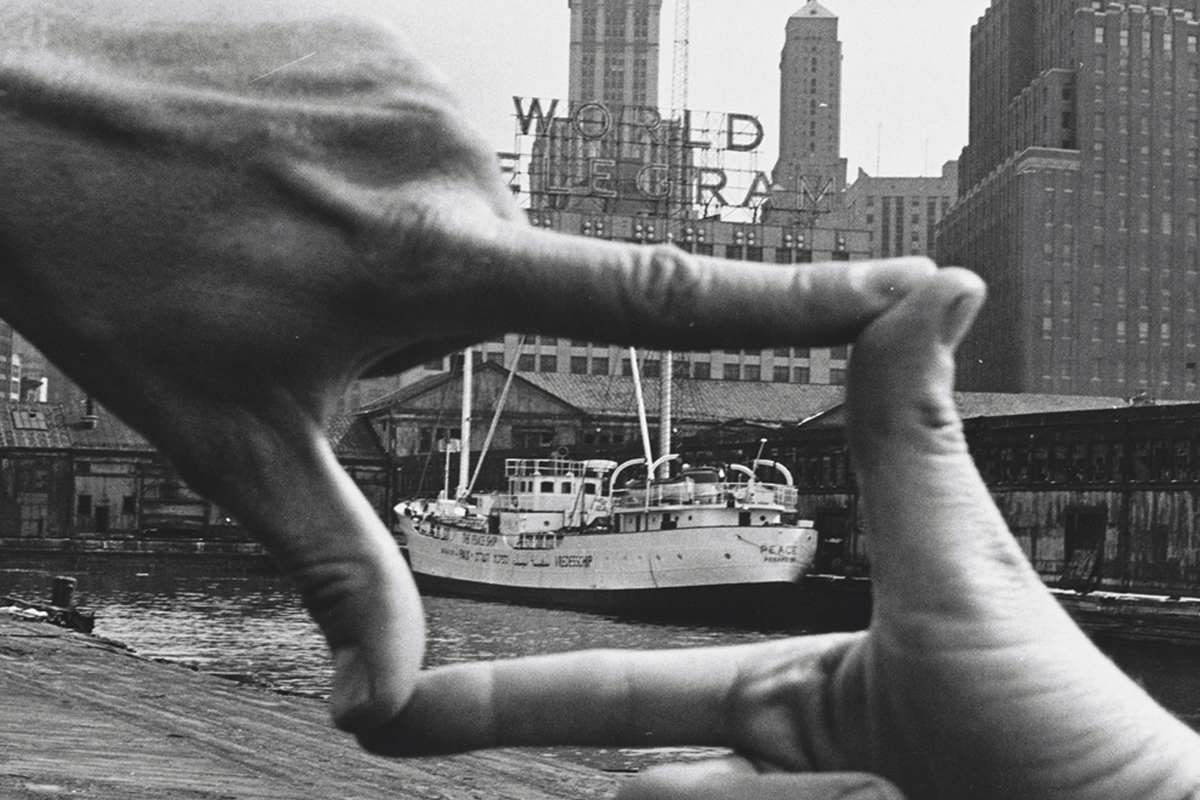
Action of placing a subject in a scene, inside the viewfinder of your camera. You can vary the frames in vertical/horizontal format. It contributes to the composition of an image.
Example: The framing of this photo is perfect.
fr: Cadrage
Golden hours
Adjective
English term assimilated to the “golden hours”, that is to say a few hours before sunset and a few hours after sunrise. The tints and soft light make for beautiful soft photos.
Example: Golden hour takes place just after sunrise and just before dusk.
fr: Heures dorées
Gradient filter
Noun
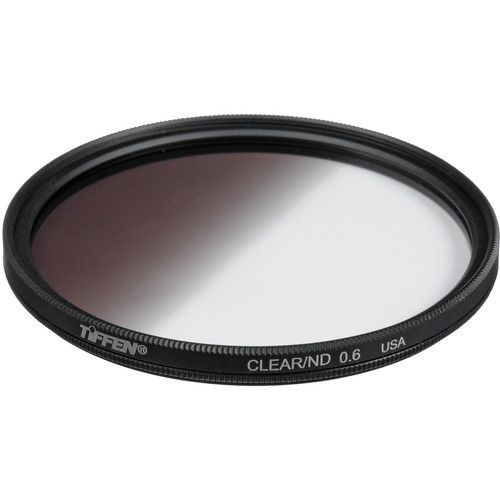
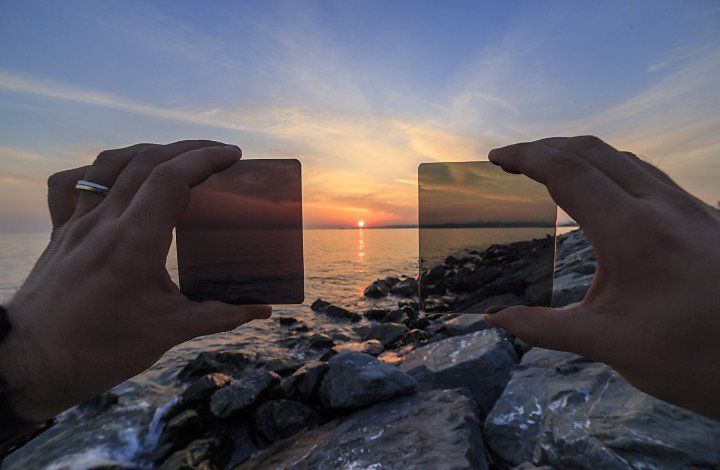
Also known under the generic term GND (“Graduated neutral density”), the latter essentially compensates for differences in light between different planes of the scene, for example the dark foreground and the clear sky.
Example: These gradient filters are broken.
fr: Filtre dégradé
Housing
Noun
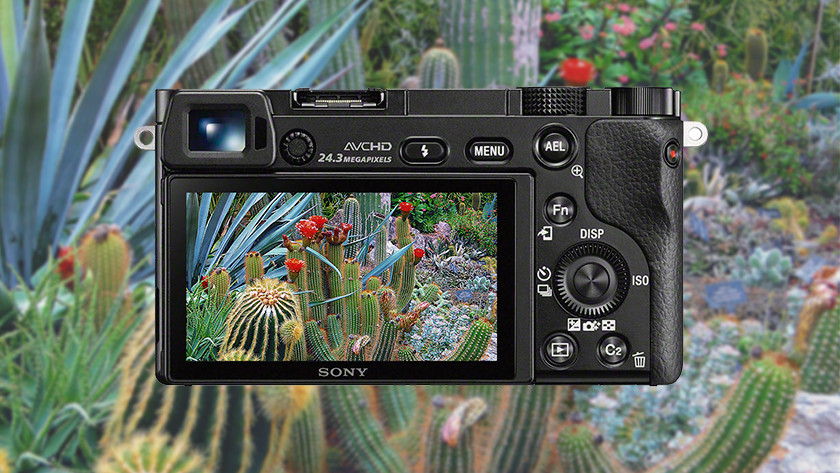
This is the element that, along with a lens, makes up your SLR camera. You can very well buy a bare body, that is to say without lens or in kit form, sold with a lens. A case alone, you will understand, does not allow you to take pictures.
Example: Luc's box is old.
fr: Boitier
Manual mode
Noun
This is the trickiest mode when you want to learn photography. It is necessary to perfectly master the notions of speed, ISO and aperture before photographing with this mode.
Example: I didn't have time to adjust my camera to put it in manual mode, so to my liking.
fr: Mode Manuel
Megapixel
Adjective
It is the unit of measurement of the size of your images. It's a good selling point to make people believe that we necessarily need "more megapixels" to take beautiful photos. If you don't print your photos or only in standard size, there's no need to go into a frantic race for megapixels.
Example: The front-facing camera has a resolution of 1.3 megapixels.
fr: Mégapixel
Millimeters
Adjective
This is the unit of measurement for focal length. When we talk about a 70-200mm photo lens, the focal length therefore varies from 70mm to 200mm. The longer the focal length, the more you can zoom in without moving.
Example: Thanks to my graduated ruler, I can measure all objects very precisely, in millimeters.
fr: Millimètres
Objective
Noun
This is the element that simply screws in front of your reflex camera. It is he who mainly influences the quality of the rendering of your photos. There are several types and are defined according to several parameters including the focal length, whether or not it is stabilized, its maximum aperture, its tropicalization, its weight, etc. There are several types of lens varying according to the price and the needs of the photographer.
Example: My camera lens is dirty.
fr: Objectif
Opacity
Adjective
A technical term often used for photo filters. It characterizes the level of transparency of the filter. Filters can be more or less opaque (black). An ND 1000 filter, for example, is entirely black.
Example: The opacity of the clouds was such that it seemed like the middle of the night.
fr: Opacité
Panoramic
Adjective
Said of an image with a large width/height ratio. The image is often 2 to 4 times longer than it is wide. It is a technique often carried out for landscape or architectural photography.
Example: A restaurant with a panoramic view.
fr: Panoramique
Sensor
Noun
An electronic system in your device that transforms light into information that makes the colors of each point appear in your image. It is the equivalent of a silver film.
Example: Lucie's sensor no longer works.
fr: Capteur
Stabilizer
Noun
This is a system included in some photo lenses. The latter reduces the risk of blurry photos by allowing you to take a photo more quickly. We gain several notches of speed depending on the stabilizer.
Example: A portable camera stabilizer system was invented by an American.
fr: Stabilisateur
Trigger
Noun
It is simply the button you press to take a photo. If autofocus is active, pressing halfway activates focusing using the collimators.
Example: My neighbor wanted to take a picture of the squirrel but his trigger was activated and scared him.