Glossary of the first partial module first approach to the elements of the context
A horizontal mortar joints
Adjective
To the small space between the two surfaces of the immediate bricks of a wall, which is filled with mortar
Example: Horizontal mortar joints are important in the process of building a house.
en: Juntas de mortero horizontales
Air-entrained concrete
Noun
It is when the air contained in the concrete is dispersed in the form of tiny spherical bubbles, connected to each other only by very small channels called pores, through which water escapes during the drying of the concrete and after curing.
Example: Air-entrained concrete is a building material.
en: Concreto con Aire
Architectural concrete
Noun
It is a material that, in addition to meeting structural and mechanical specifications, offers the possibility of giving personality to a work, combining pigments on additives to achieve different tones, textures, shapes, and finishes.
Example: Architectural concrete is a building material.
en: Concreto Arquitectónico
Asphaltic concrete
Noun
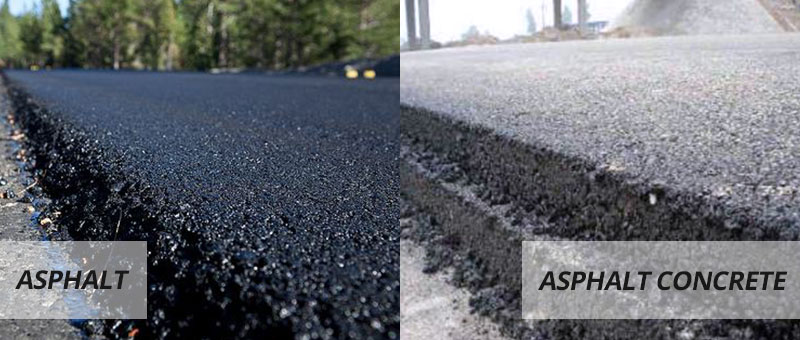
Asphalt concrete is a material composed of aggregates embedded in an asphalt cement matrix that fills the space left by the aggregates and binds them together. The asphalt cement remains flexible and provides structural integrity by covering the aggregates and giving the mix cohesive properties.
Example: The street is made of asphalt concrete
en: Concreto Asfáltico
Axes
Noun
They are the lines that relate to those cities that maintain intense relationships of all kinds between them.
Example: My colony has two axes.
en: Ejes
Backup wall
Adjective
Is a construction that allows dividing or delimiting a space
Example: My house has a backup wall.
en: Muro de respaldo
Brick courses
Adjective
A 'course' is a measurement referring to the dimensions of the brick AND mortar when they have been sandwiched together. One brick and the mortar together is equal to one 'course'.
Example: Brick courses are important for a build.
en: Cursos de Ladrillos
Cellular concrete
Noun
Aerated concrete is a special type of lightweight building material produced in the form of blocks or panels used for the construction of residential or commercial buildings.
Example: Cellular concrete is important for construction
en: Concreto celular
Colored concrete
Noun
A type of concrete in which pigments are added to give it color.
Example: Colored concrete is important for construction
en: Hormigón coloreado
Column
Noun
These are vertical elements of great structural importance in any building. Their function is to support bending and compression stresses caused by the elements they support or by natural forces such as earthquakes, wind, among others, to transmit them to the foundation.
Example: The column of my house is damaged
en: Columna
Cured concrete
Noun
It is the process by which concrete made with hydraulic cement matures and holds over time, as a result of continuous hydration of the cement in the presence of sufficient amounts of water and heat.
Example: Cured concrete is important in a construction
en: Hormigón curado
Dovetail insert
Noun
Facilitates roughing with ball nose end mills.
Example: Dovetail insert
is important in a construction
en: Inserto de cola de milano
Edge
Noun
It is a linear element that is not perceived as a path, but as a barrier to the city.
Example: The river is a natural edge
en: Borde
Exposed concrete
Noun
It is the one that is maintained during its useful life as it appears once the form work has been removed or after finishing the surface treatment operations.
Example: Exposed concrete is a building material
en: hormigón visto
Gravity load
Adjective
Are body charges that simulate the force of gravity as it affects the model.
Example: Gravity loads are important in a construction.
en: carga de gravedad
Green concrete
Noun
It is a general purpose gray cement with an addition of artificial possible typo in the production process, thus achieving the reduction of CO2 emissions compared to the manufacture of a general purpose cement.
Example: Green concrete is an important material in construction important in a construction.
en: Concreto Verde
Hanging off (of)
Adjective
Hanging ornament, from the arrival post, below the flight of stairs.
Example: The soybean is hanging from the structure.
en: Colgando de (de)
Insulating concrete
Noun
Monolithic insulating concrete powder is a composite of mineral wool and inorganic binders, resistant to high temperature. The addition of water (no Portland cement combination is required) will result in a foldable, mold able plastic mass that can be used as a finishing mortar.
Example: Is insulated concrete important in construction
en: Concreto Aislante
Journeys
Noun
Distance traveled between two places and the action of specifying said route.
Example: I always make a journeys
from home to my work
en: Trayecto
Ladder-type systems
Adjective
Types of stairs that exist in a building
Example: There are several ladder-type systems
en: Sistemas tipo escalera
Laterally
Adjective
Located next to something.
Example: Laterally my structure is located
en: Lateralmente
Masonry ties
Noun
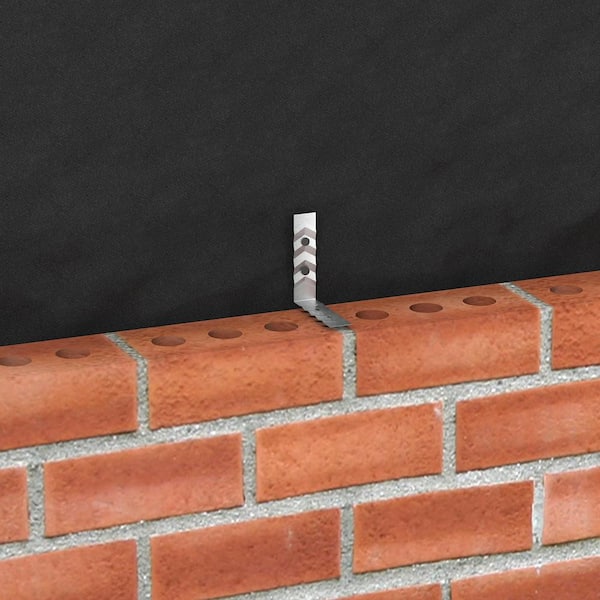
These ties are used to connect multiple masonry beams, often of different materials; anchor masonry veneer to non-masonry backing systems; and connect composite masonry walls.
Example: Masonry ties are important in a construction.
en: Lazos de Albañilería
Metal channel
Noun
It is a metallic structure whose manufacture is made with galvanized sheets. There is a wide variety of sizes and different gauges to carry out your construction project.
Example: In my house, a metal channel was used to fix dividing walls to the floor.
en: Canal metálico
Metal decking
Noun
They are another variant of decking, different from those made of wood and plastic, with specific applications.
Example: Metal decking used, above all, in the metallurgical and automotive industry.
en: Tarima metálica
Metal framing
Noun
Any structure in which the majority of its parts are metallic materials.
Example: The supermarket has a metal framing.
en: Estructura metálica
Metal grating
Noun
It is a reticular structure made up of load-bearing slabs joined orthogonally by transverse elements. The great versatility and aesthetics have diversified its use for all kinds of applications within the Industry and Construction. Its great resistance combined with a low specific weight, easy installation or a minimum maintenance requirement, are just some of the characteristics for which professionals trust this product to guarantee optimal results.
Example: A brush should be used to clean the high voltage metal grid.
en: Rejilla metalica
Metal panel
Noun
They are sheets placed vertically that protect or define a space. They have the function of protecting the interior of the warehouse and distribute the wind load to the Facade stringers.
Example: The facade of my house has a metal panel.
en: Panel metálico
Metal rod
Noun
A bar is a piece longer than thick, made of metal, wood or other material, which usually has a cylindrical or prismatic shape.
Example: The protection of my window is made of metal bars.
en: Barra de metal
Metal roofing
Noun
They are effective for excellent heat conduction and reflect the sun's rays.
Example: The party venue has a metal roofing.
en: Techo de metal
Metal stud
Noun
Metal part that is part of some type of mechanical device and is used to hold or support one or more parts of the mechanism itself.
Example: Today I went to buy metal stud.
en: Perno de metal
Metal tubing
Noun
Conductors and cable protection accessories made of metal.
Example: Tomorrow I will go to the construction site to learn how metal tubing is used.
en: Tubos metálicos
Milestones
Noun
They are reference points that are recognized by everyone in a site, they are elements that are seen and unlike nodes they are not penetrated.
Example: Yesterday I quote my friends at the milestone named the “Piedra Lisa”.
en: Hitos
Multi-story
Adjective
Buildings with two levels.
Example: My house is multi-storey
en: de varios pisos
Neighborhood
Noun
Part of a population of relatively large extension, which contains a spontaneous social grouping and which has a peculiar physical, social, economic or ethnic character by which it is identified.
Example: My neighborhood is Tabachines.
en: Barrio
Node
Noun
They are all meeting points
Example: Today I had to surround the node of the “Rey Coliman”
en: Nodo
Paths
Noun
It refers to the roads and routes through which it travels.
Example: Paths are important in cities
en: Senda
Plot
Noun
It is made up of forms and spaces whose position in space and their interactions are regulated by a type of plot or by a three-dimensional field.
Example: The plot of my colony is orthogonal
en: Trama
Porous concrete
Noun
It is a compound of cement, coarse aggregate, water and additives, which, when mixed, is used to manufacture totally permeable floors and pavements. floors and pavements that are totally permeable. The low presence of fine aggregate gives the concrete a porous structure, allowing water to pass through the structure, thus reducing the surface accumulation of water. water to pass through the structure, thus reducing the surface accumulation of rainwater.
Example: Porous concrete is important in construction
en: Concreto Poroso
Precast concrete
Noun
Precast concrete is a construction material obtained by mixing, pouring, and curing concrete in reusable molds of a given geometry under controlled environmental conditions. The resulting material will be transported to the construction site to be assembled according to certain guidelines to form a structure.
Example: Precast concrete is important in construction
en: Concreto Prefabricado
Prestressed concrete
Noun
Is a concrete variant that consists of applying an initial compression in the concrete before the external load is applied so that the tension of the external loads is counteracted in the most desirable way during the service period. This initial compression is introduced by high-strength steel wire or alloys (called "tendons") placed in the concrete section.
Example: Prestressed concrete is important in construction.
en: Concreto Pretensado
Reinforced concrete
Noun
Reinforced concrete is essentially the improved version of plain concrete since it overcomes certain mechanical limitations of the original material (concrete), however, it does so at the cost of generating new construction and maintenance limitations and inconveniences.
Example: Reinforced concrete is an important material in the construction of a building.
en: Concreto Reforzado
Relief angle
Noun
The angle of incidence (or point of incidence) is the point of reflection where the normal of light is located on some concave or convex reflective object. A convex mirror is a spherical mirror and images can be observed in reverse.
Example: The angle of the relief is important when building.
en: Ángulo de Relieve
Routes
Noun
They are all linear and have a starting point from which we are taken through a series of special sequences until we reach our destination.
Example: Yesterday I took a routes from my house to school.
en: Recorridos
Steel angle
Noun
It is a commercial profile whose design is compared to the letter “L” since the way in which this steel profile is bent forms a 90º angle, which in turn can generate a material with equal or unequal sides. From these characteristics also arises the name of this commercial steel material.
Example: The steel angle profile is a material that can be used for the manufacture of real estate, furniture, or accessories such as windows, doors, frames, bed stands, and tables.
en: Ángulo de acero
Steel beam
Noun
They are structural elements that support construction loads and transmit them to the vertical supporting elements (columns or walls).
Example: Steel beams are bars that work in bending Steel beams are commonly used to support floors and roofs in large structures such as commercial buildings and bridges.
en: Viga de acero
Steel column
Noun
They ayare structural elements that support construction loads and transmit them to the vertical supporting elements (columns or walls).
Example: The steel columns are covered with concrete, due to architectural requirements, in order to avoid corrosion.
en: Columna de acero
Steel framing
Noun
It is based on a frame or skeleton of any structure whose components are mostly steel columns and beams, these elements help us to support the floor, ceiling, and walls of a building.
Example: The building has a steel framing.
en: Estructura de acero
Steel joist
Noun
It consists of a structure composed of a series of steel rods, two lower and one upper, as well as a zig-zag wire rod that joins and contributes to the mooring of the concrete of the compression layer. In the lower part, a concrete pad is cast that serves to support the vaults and perform the function of formwork when casting, designed to support loads produced in floor or roof slabs. They can be armed or prestressed.
Example: The steel joists are responsible for being a foundation for the upper floors of an enclosure.
en: Vigueta de acero
Steel member
Noun
Steel members are capable of presenting large deformations and still resisting great forces. This implies that steel members can undergo large deformations during assembly.
Example: Steel members are used in both tall and lower-rise buildings. Among its advantages are its greater load capacity, an ideal ductility for seismic zones, more resistance to fire and better damping.
en: Miembro de acero
Steel plate
Noun
It is a material often used to create metal products. Manufactured to different thicknesses and widths, the steel plate is cut and welded together to create a final product.
Example: In the work, steel plates were used to make chimneys and railings.
en: Placa de acero
steel reinforcement
Noun
Steel reinforcement is a steel bar or work of steel wires utilized as a tension device in reinforced concrete and reinforced masonry structures to fortify and help the solid under strain.
Example: The reinforcing steel of the slabs is mainly placed in a direction parallel to that of the slab surfaces.
en: Refuerzo de acero
Steel reinforcing
Noun
Structural bearings ensure the controlled transmission of forces between the superstructure and the substructure. They also facilitate rotations around each axis and movements in all directions.
Example: A structural support is an element that is located between two elements of the structure (beams, columns, abutments, etc.).
en: Refuerzo de acero
Steel rod
Noun
Are long, rectangular-shaped metal bars used in a wide range of structural and architectural applications.
Example: Yesterday I went to the hardware store and bought a steel body.
en: Barra de acero
Steel sections
Noun
Steel sections are pieces of steel, it can form different shapes that can be used structurally due to its strength or demands of a steel structure.
Example: Reinforced beams are a classification of steel sections in a construction.
en: Selecciones de acero
Supports
Adjective
It is then that it serves as a support, a sustaining element, that receives the weight or on which new ideas, forms and opportunities for action are based.
Example: The structure supports live loads
en: Soporte
Tie (something) back to
Adjective
Join or fasten one thing to another with ropes, strings or similar materials.
Example: It is important to tie something in the construction
en: Atar (algo) de nuevo a
Unreinforced concrete
Noun
It is the concrete without reinforcement or reinforced only by shrinkage or temperature changes. Concrete without any other specific admixture or element, in contrast to concrete containing such an admixture or element, concrete without aeration.
Example: Unreinforced concrete is important in construction.