39 39 Architecture and urban legibility terms terms
This glossary is to be able to learn the words and/or concepts within architecture, as well as within urban legibility.
air-entrained concrete
Air-entraining in concrete is the intentional creation of small air bubbles in a batch by adding an air-entraining agent during mixing. A form of surfactant that allows bubbles of the desired size to form.
es: concreto con aire incluido
architectural concrete
Architectural concrete refers to concrete that while providing an aesthetic finish to the building also serves a structural function.
es: hormigón arquitectónico
asphalt concrete
Asphalt concrete is a composite material commonly used to pave roads, parking lots, airports, and the core of dams. It is composed of aggregates, such as crushed stone and sand, and fill mixed with petroleum asphalt.
es: concreto asfáltico
axis
An axis is a line connecting two points in space, about which forms can be arranged in an asymmetrical or symmetrical, balanced manner. It is an imaginary line that can denote structure, procession, direction, views, line of rotation and so on.
es: eje
backup wall
Common interior walls (backup walls) are cold-formed steel framed walls with water-resistant sheathing and concrete masonry. Critical components in masonry veneers exposed to moisture include: Drainage cavity behind veneer wythe.
es: pared de respaldo
brick courses
A course is a layer of the same unit running horizontally in a wall. It can also be defined as a continuous row of any masonry unit such as bricks, concrete masonry units (CMU), stone, shingles, tiles, etc.
es: cursos de ladrillo
cellular concrete
It is a construction material intended for heavy work. It is produced exclusively from natural raw materials, which is why it is made up of water, sand, cement and air.
es: concreto celular
colored concrete
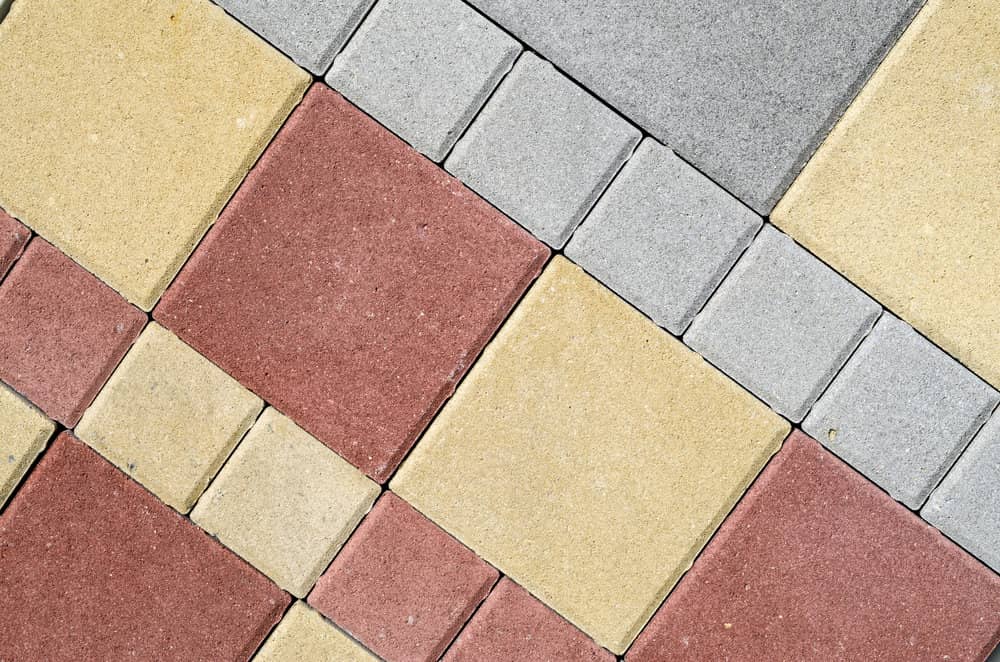
Colored concrete, also known as decorative concrete, allows traditional grey concrete to be stained and dyed different colors
es: hormigón coloreado
concrete block
A concrete block is a prefabricated masonry, made with fine concrete or cement mortar, used in the construction of walls and walls.
es: Bloque de hormigón
cured concrete
Curing of concrete is defined as providing adequate moisture, temperature, and time to allow the concrete to achieve the desired properties for its intended use.
es: curado del hormigón
dovetail insert
A joint made by inserting tenon on one piece into mortise holes in the other. verb. fit together tightly, as if by means of a dovetail.
es: inserto de cola de milano
edge
The edge in architectural space is a fringe, border area or space that can be produced and experienced through subjective practices as a predominantly linear space.
es: borde
exposed concrete
Exposed concrete refers to concrete whose surface is a visible part of the architectural and interior design of the building. Strictly speaking, this refers to concrete surfaces that were in contact with the formwork shell when they were produced.
es: hormigón visto
gravity load
Gravity loads are body loads available only in Structure. These loads simulate the force of gravity as it affects your model. When you define a gravity load, you specify the gravitational components of the load in each coordinate direction.
es: carga de gravedad
green concrete
Green concrete is defined as a concrete which uses waste material as at least one of its components, or its production process does not lead to environmental destruction, or it has high performance and life cycle sustainability.
es: concreto verde
hanging off
Word used as a constructive term
es: Colgado
horizontals mortar joints
In masonry, horizontal mortar joints are the spaces between bricks, concrete blocks, or glass blocks, that are filled with mortar or grout. If the surface of the masonry remains plastered, the joints contribute significantly to the appearance of the masonry.
es: Juntas de mortero horizontales
insulating concrete
is a system of formwork for reinforced concrete usually made with a rigid thermal insulation that stays in place as a permanent interior and exterior substrate for walls, floors, and roofs.
es: hormigón aislante
journey
refers to the route a person takes to get from one place to another
es: Trayecto
ladder type systems
Ladder system means two main air lines, generally one each side of the railway tracks, cross connected at regular intervals and able to be fed from any direction.
es: sistemas de escalera
laterally
From side to side, along a plane.
es: Lateralmente
masonry ties
A close-up of a masonry wall tie, mesh wall wire to bond face brickwork, and concrete blockwork walls.
es: Lazos de albañileria
milestones
They are reference points that are recognized by everyone in a site, they are elements that are seen and unlike nodes, they are not penetratedjavascript:void(0);
es: Hitos
multi-story
having more than two stories a multistory apartment building.
es: Varios pisos
neighborhoods
is a subdivision of a city or town, which usually has its own identity and whose inhabitants have a sense of belonging.
es: Barrio
node
Are confluences of streets, strategic points, junctions of paths, crossroads, essential to move around the city.
es: nodo
paths
They are conduits that the observer follows normally, occasionally or potentially.
es: Senda
plot
the layout of the buildings on the properties, the heights of the building and the built mass, the types of buildings, the local characteristics that the buildings represent.
es: Trama
porous concrete
Pervious concrete is a special type of concrete with a high porosity used for concrete finning applications that allows water from precipitation and other sources to pass through directly, thereby reducing runoff from a site and allowing groundwater recharge.
es: hormigón poroso
precast concrete
Precast concrete is a construction product that is produced by pouring concrete into a reusable mold or "mold" which is then cured in a controlled environment, transported to the construction site, and set in place.
es: Concreto prefabricado
prestressed concrete
Prestressed concrete is a form of concrete used in construction. It is substantially "prestressed" (compressed) during production, in a manner that strengthens it against tensile forces which will exist when in service
es: Hormigón pretensado
reinforced concrete
The construction technique of reinforced concrete, reinforced concrete or reinforced concrete consists of the combination of two materials, concrete and reinforcing steel. These materials are combined in order to form structural elements such as beams, columns, walls, foundations, slabs, among others.
es: hormigón armado
relief angle
is a letter indicating the 90° difference measured in a plane normal to the cutting edge generated by the angle between the flank and the top surface of the insert. It allows the cutting edge to work freely and to avoid friction on the workpiece.
es: ángulo de alivio
supports
It is the action that some structural elements perform to maintain a building
es: Soporte
tie something back to
Tie something so it doesn't move
es: Atar algo
transfers
is a term linked to the verb transferir (to transfer or send something from one place to another).
es: transferencias
unreinforced Concrete
Concrete without reinforcement or reinforced only for shrinkage or temperature changes.
es: hormigón no reforzado
Urban legibility
Quality that allows the study of cities or the simple visitor to clearly identify the most relevant urban elements.
es: Legibilidad Urbana
wedge anchor
is a generic term for a type of anchor used to fasten a variety of materials to concrete. Some companies have different brand names for their wedge anchors such as Kwik Bolt, Power Stud, and Thunderstud.